Humidity
Rain Inside With No Rain Outside
You See
Wet floors and dripping purlins on clear, cool mornings.
What It Means
Warm, moist air is hitting cold steel; foam on the outside warms the panel and cuts the drip.
Insulation Over Steel Roofs
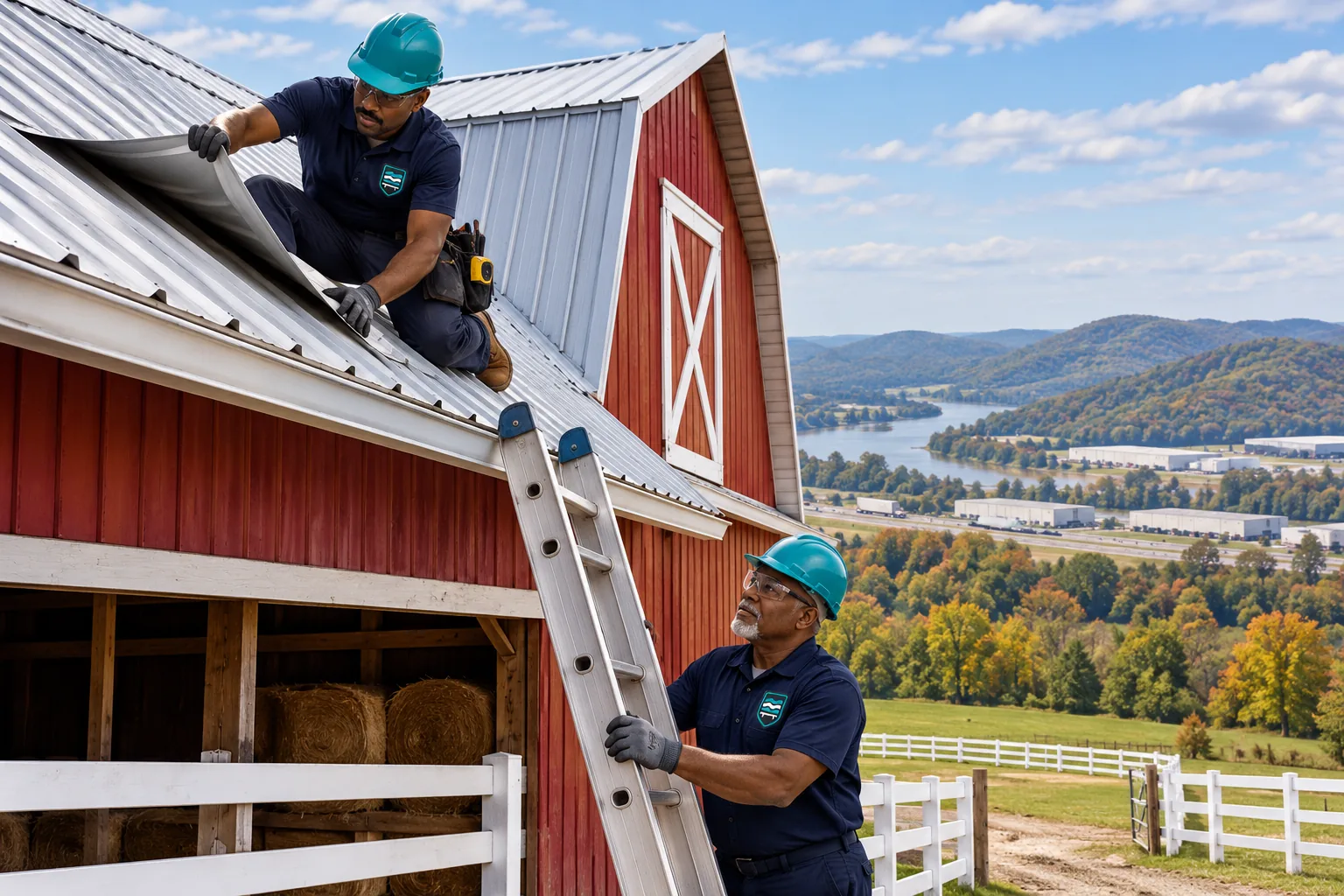
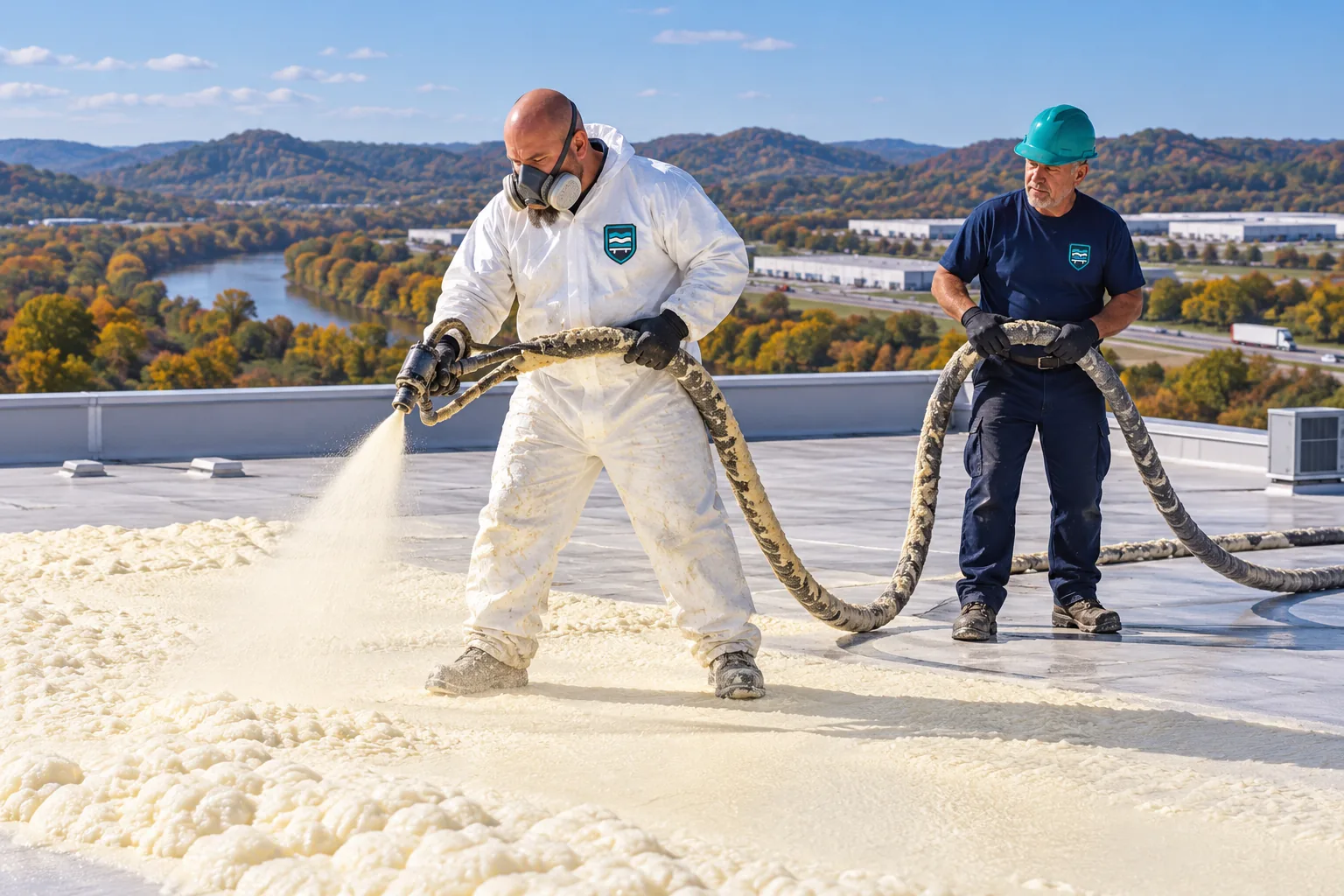
We install spray foam roofing in Shepherdsville over metal and low-slope roofs. First we check that the roof is dry and solid; then we spray foam and topcoat it.
Foam earns its cost when the building needs more than a seal. These four cases show when it does.
An exterior foam layer keeps the steel closer to inside temperature, which cuts the drip that bare panels cause.
One continuous insulating layer goes across ribs and fasteners in a single pass.
Tapered foam moves water toward drains, which a coating alone cannot do.
A coating by itself seals and reflects for less money when insulation is not the goal.
Each card names something an owner notices first, and what it says about foam versus coating.
Wet floors and dripping purlins on clear, cool mornings.
Warm, moist air is hitting cold steel; foam on the outside warms the panel and cuts the drip.
Workspace under bare steel that runs hot by midday.
There is no insulation between the sun and the room, and foam supplies a continuous layer.
Drip lines below every screw row on an older roof.
Foam buries the fasteners and ribs in one layer, then the topcoat seals the foam.
Puddles against parapets and in dips between purlins.
Foam can be built up and tapered so water moves toward drains or gutters.
Soaked insulation or damp laps found during the walk.
Foam needs a dry roof to bond, so wet areas are dried out or replaced first.
Employee or customer parking right under the roof edge.
Overspray travels, so parking near the work is blocked off and wind is watched during spraying.
Foam is one of several ways to deal with an uninsulated or ponding metal roof. Here is how the choices line up.
Foam fills the flats or buries the ribs, then a silicone or acrylic topcoat protects it from sunlight.
Extra foam is built up in low areas so ponding water runs off toward drains or gutters.
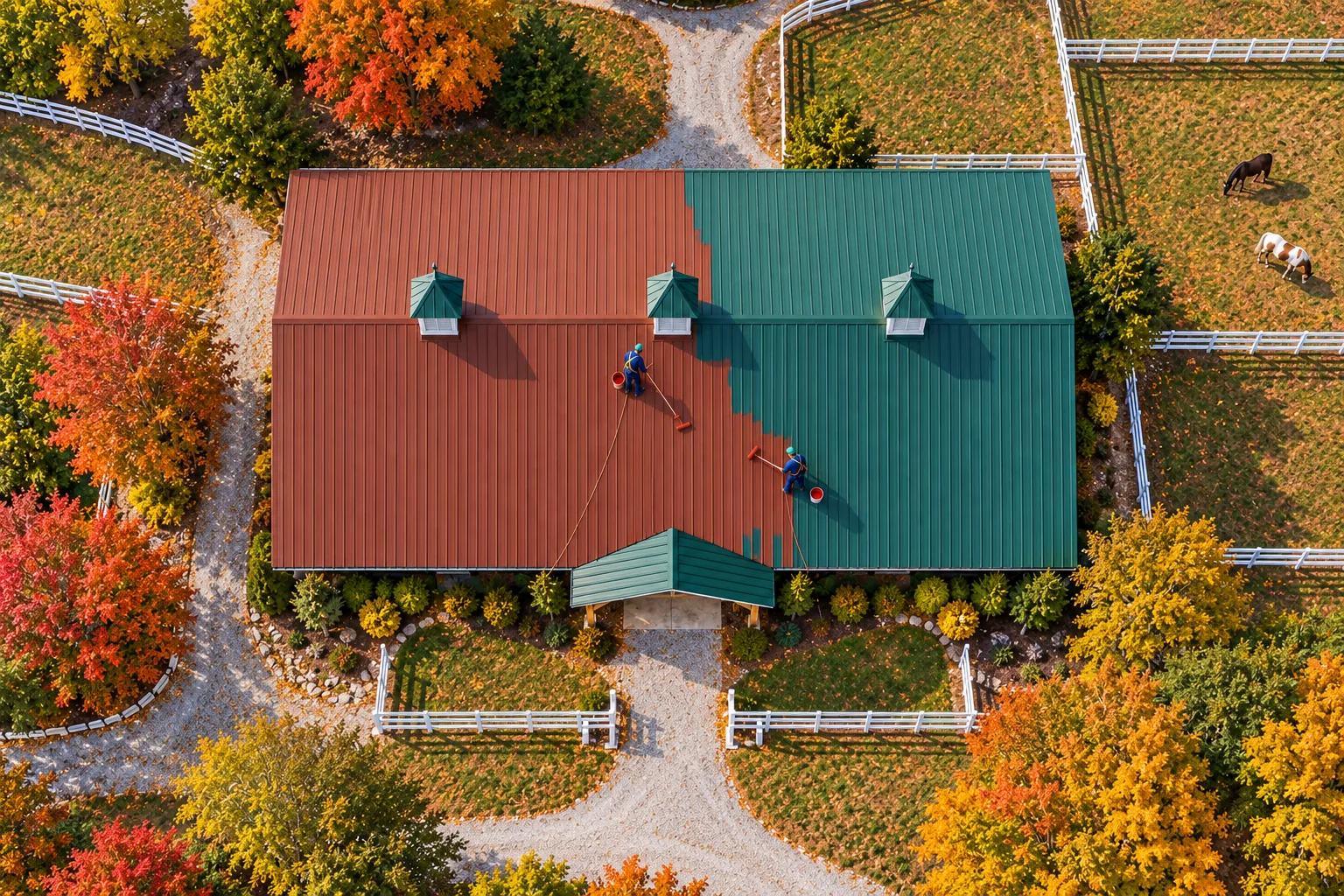
Roofs that need sealing and reflectance but no insulation get a primed, detailed coating system.
Chalking foam topcoats are cleaned, damaged spots repaired, and a fresh topcoat applied.
Foam answers problems a thin coating cannot reach. These are the four most owners care about.
A shop that swings with the weather all year.
Foam adds a continuous insulating layer over the whole roof deck.
Drips falling from purlins on cool mornings.
The steel stays closer to inside temperature, so less moisture condenses on it.
Water standing in dips long after a storm.
Foam can be tapered to move water toward drains.
An old metal roof that would otherwise be stripped.
Foam goes over the existing panels, so the old steel stays out of the landfill.
Tell us when the drips show up and whether the building has any insulation. That usually tells us if foam belongs in the plan.
(502) 293-5676Five decisions behind every foam job, starting with the roof walk.
We look for wet laps and soaked insulation, check the deck and framing, and measure edges, gutters, and curbs that foam will raise.
Bonding takes a dry, firm surface. Wet insulation or rotted framing is replaced before any spraying is scheduled.
Thickness follows the insulation goal and the drainage plan, with extra foam built up where water needs to move toward drains.
Gutters, edge metal, and curb flashings are re-detailed to meet the higher foam surface.
The topcoat protects foam from sunlight and needs periodic recoating. Walks after storms catch punctures before water reaches the foam.
When insulation is not the goal, one of these systems fits better.
Screws, laps, and rust on exposed-fastener panels.
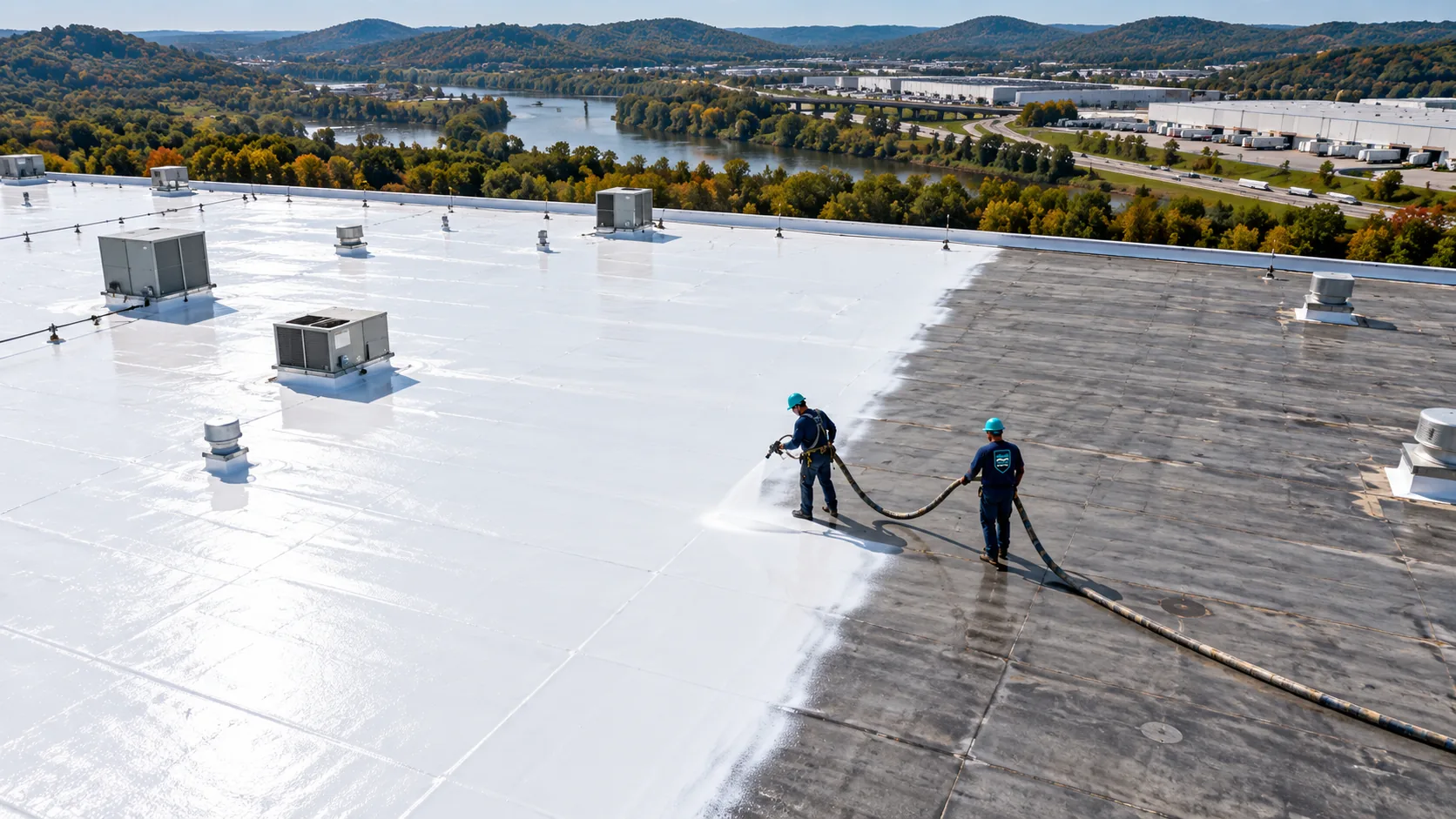
Standing water on low-slope panels calls for silicone.
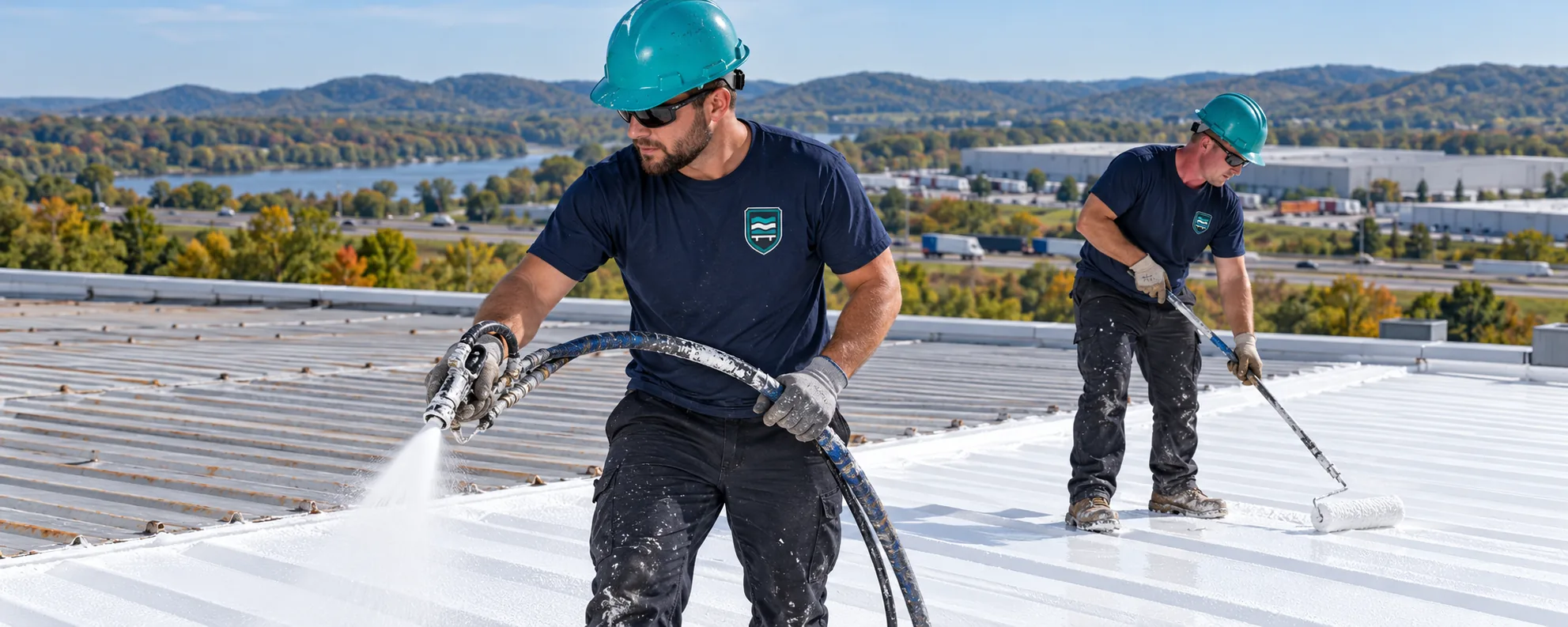
Pitched roofs that shed water fast suit acrylic.
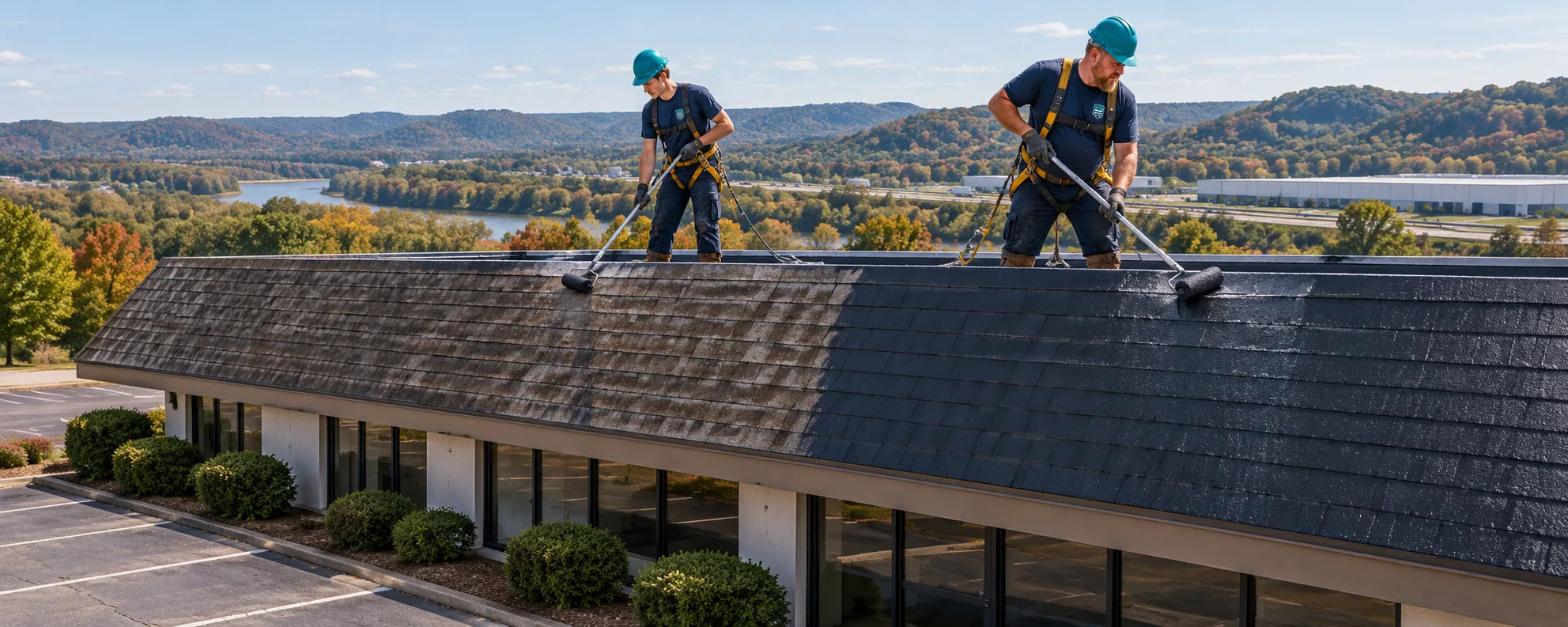
Flat, well-attached shingles the maker approves for coating.
Answers about spray foam over metal roofs in and around Shepherdsville.
It makes sense when the building needs insulation or slope; a coating alone fits when the roof only needs sealing and reflectance. Foam adds thickness, fills flats or buries ribs and screw heads, can be tapered toward drains, and gets its own protective topcoat. It raises edges and curbs and needs careful overspray control around parking.
Ask for two numbers on any topcoat: solar reflectance and thermal emittance, each on a 0 to 1 scale where higher means cooler, as the Department of Energy's cool roof guide explains. The Cool Roof Rating Council and ENERGY STAR list rated products. Compare aged values too, since dust from nearby truck traffic dulls a bright surface.
Large areas of rust-through, daylight showing through panels in many places, rusted purlins, bent framing, and wet, sagging insulation along whole bays all point past coating. Scattered problems point to restoration with some panel replacement; widespread ones point to re-paneling or a new roof before any foam or coating is considered.
An outside layer of foam keeps the steel closer to the temperature inside the building, so far less moisture condenses on the underside of the panels. Buildings that also run humid processes or open dock doors all day can still see some moisture, which is worth discussing during the walk.
The roof surface rises at the eaves once foam adds height. Gutters, drip edge, and edge metal are reset or extended to meet the new surface, and curb flashings are carried up so water still sheds over them. Those changes are part of the scope from the start.
Usually, yes. Spraying happens outside on the roof. Parking near the eaves is blocked off for overspray, rooftop air intakes are shut down or covered nearby, and wind is watched closely, with spraying paused when gusts would carry foam toward cars or neighbors.
Enter the roof size for a ballpark range, or call and tell us how the building handles heat and cold today.
Leave a name and number and we will call you back about your commercial roof.
Or call now: (502) 293-5676