Owner Questions, Plain Answers

Shepherdsville Metal Roof Coating Questions

Answers on how we inspect a metal roof and how we choose the coating, plus the rust, weather, permit, and cost questions Shepherdsville owners ask.

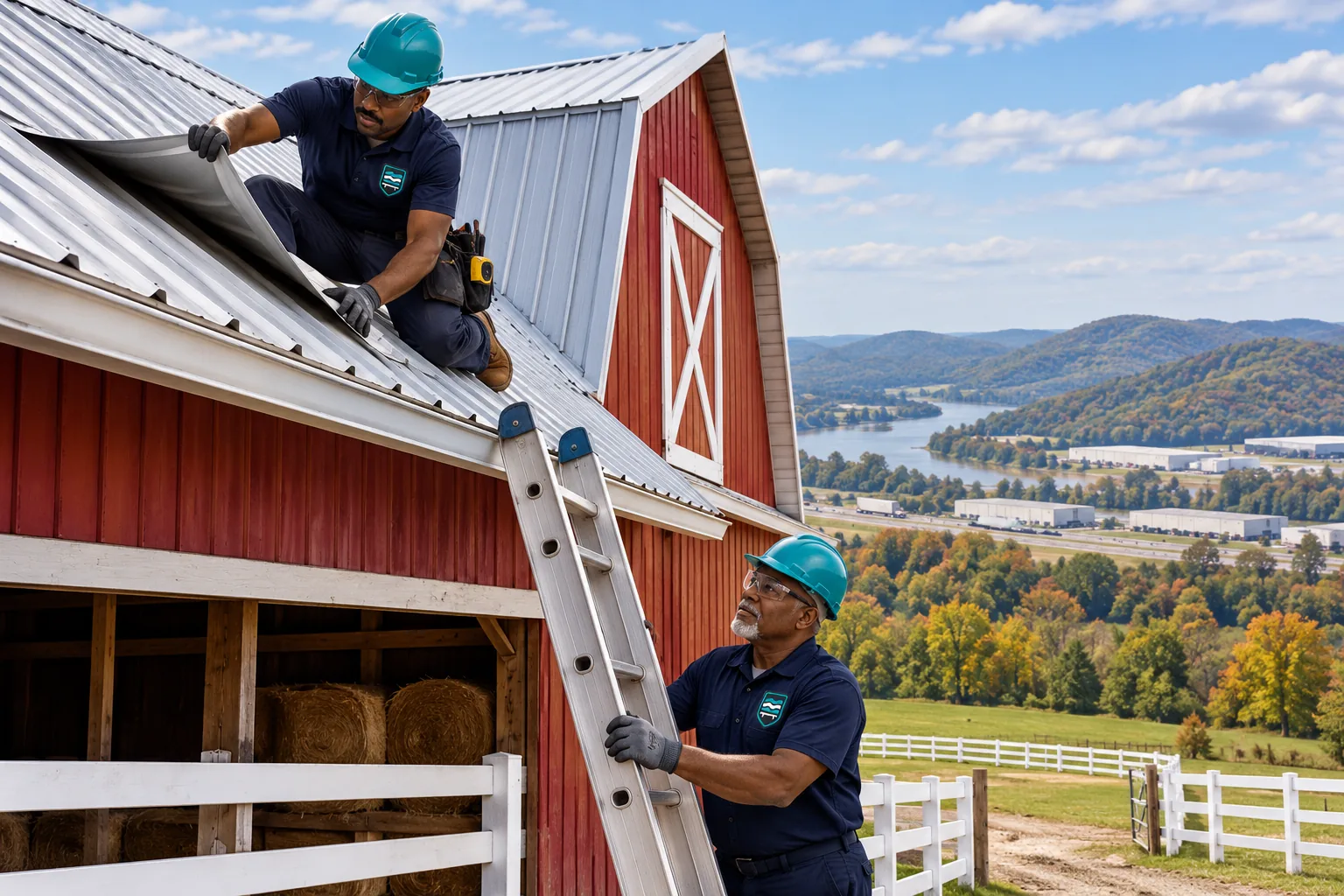
Roofer inspecting fasteners and panel laps on a commercial metal roof
1Inspect The Roof
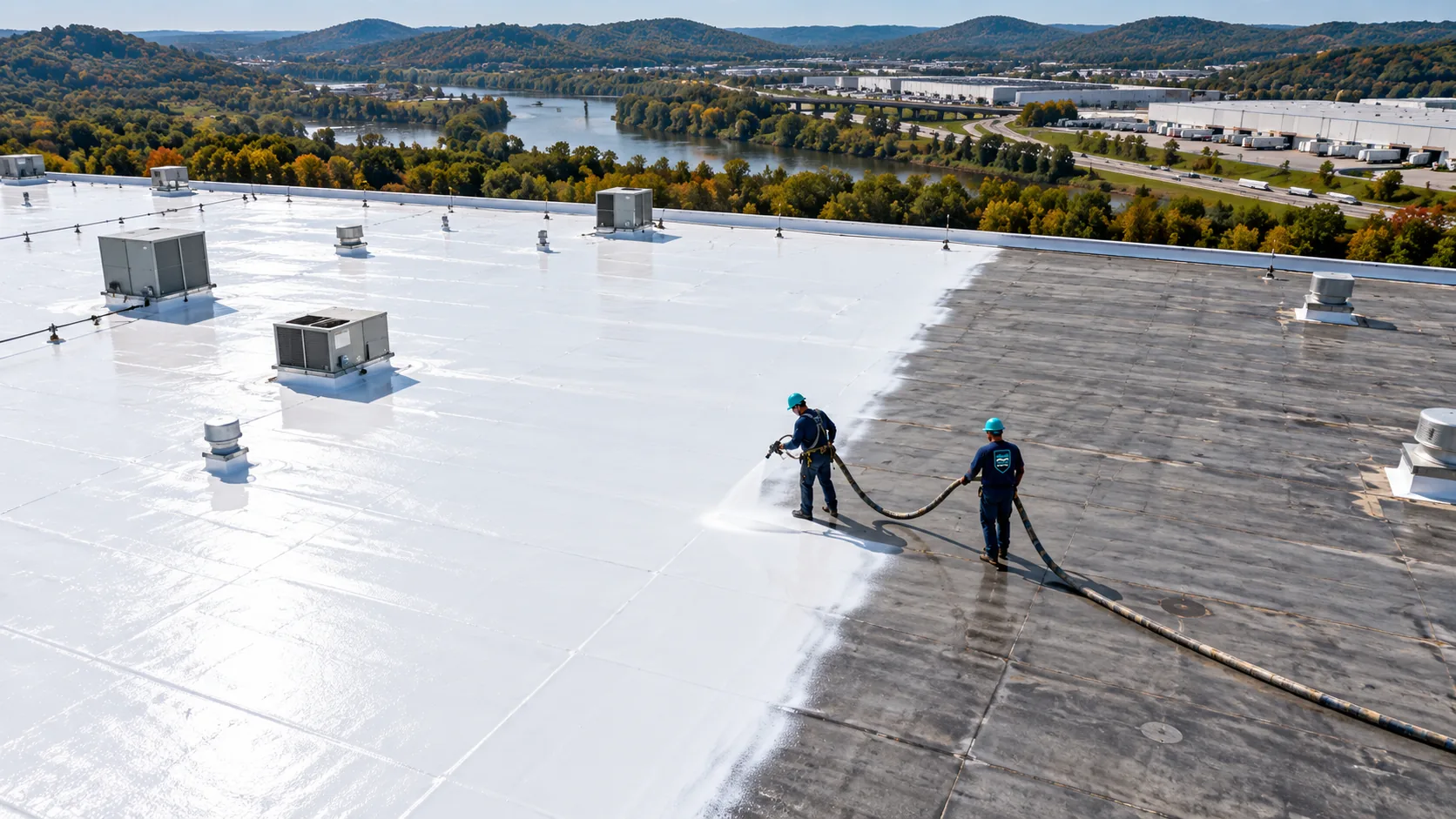
Aerial view of a low-slope commercial roof with a silicone coating
2Choose The Coating

Shepherdsville Metal Roof Coating Questions, In Brief

Metal roof coating is a fluid-applied membrane, usually silicone or acrylic, rolled or sprayed over a metal roof to seal fasteners, seams, and panel laps and reflect sunlight.

Shepherdsville Metal Roof Coating coats commercial metal roofs in Shepherdsville, Bullitt County, Kentucky, and nearby Mount Washington, Hillview, and Lebanon Junction, and also handles silicone, acrylic, and shingle roof coatings plus spray foam roofing.

Metal Roof Coating Basics

What does a coating actually do for a commercial metal roof?

A coating puts a continuous rubber-like skin over the metal so water has no path through screw holes, side laps, or end laps. On an older roof, that skin also slows rust by keeping rain and condensation off bare steel.

Most coating systems for metal include three layers:

  • Primer that grips the panel finish and locks down light surface rust
  • Seam and fastener detail, using brush-grade sealant or reinforcing fabric over laps and screw heads
  • Field coat spread across the whole roof at the thickness the manufacturer specifies

A white field coat also reflects sunlight, which keeps the panels cooler on summer afternoons.

Which metal roofs are good candidates for coating?

Metal roofs with solid panels, light to moderate surface rust, and leaks concentrated at fasteners and laps are the best candidates. Warehouses, manufacturing plants, shop buildings, churches with metal sections, and agricultural barns all fall in that group.

Coating works poorly when the steel itself has failed. Walk the roof and check for:

  • Rust-through holes you can push a screwdriver into
  • Panels that flex or buckle underfoot between purlins
  • Sagging at the eaves from rotted or bent framing

A few bad panels can be replaced before coating. Widespread section loss means re-paneling is the better path.

How does prep differ for standing seam and exposed-fastener R-panel roofs?

Exposed-fastener R-panel roofs need far more detail work than standing seam roofs, because every screw head is a leak point. Standing seam roofs hide their clips, so attention shifts to the seams, end laps, and trim.

Roof partExposed-fastener R-panelStanding seam
FastenersHundreds of screws to check, tighten, upsize, or replaceConcealed clips; only trim screws exposed
Side lapsLap sealant along every panel edgeRaised seams, often left uncoated or sealed at the top
End lapsCommon on long runs; sealed and reinforcedFewer, since panels often run eave to ridge
MovementLess thermal movement at each panelPanels float on clips, so the coating has to flex
Rust spotsAround screw holes and at lapsAt cut edges, trim, and low ends of panels

Some standing seam manufacturers limit coatings over their panels, so check the panel maker's guidance first.

Can a coating stop leaks on a leaking metal roof?

Coating stops most metal roof leaks when the leaks come from fasteners, laps, and flashing, since those are the spots the system seals with extra material. Finding the true source comes first, because water can travel along a purlin and show up feet away from the hole.

Common leak sources on Bullitt County metal buildings:

  • Neoprene washers that have cracked and shrunk
  • Screws backed out by years of heating and cooling
  • Open end laps on long panel runs
  • Gaps at ridge caps, curbs, and wall flashings

Leaks from a cracked skylight panel or a rusted-through gutter need those parts repaired or replaced before the roof is coated.

Rust, Fasteners and Seams

How is rust treated on a metal roof before it gets coated?

Rust is removed down to firm metal, then primed with a rust-inhibitive primer before any coating goes on. Coating straight over flaking rust traps a weak layer that later lets the coating peel.

Treatment changes with the type of corrosion you see:

What you seeWhat it isUsual treatment
Orange rust bloom on the surfaceLight red rust on painted steelWire brush, wash, rust-inhibitive primer
Flaking, scaly red rustHeavier corrosion with section loss startingGrind or scrape to firm metal, then prime
Chalky white or gray powderWhite rust on galvanized or Galvalume steelClean off, then a primer suited to that metal
Holes through the panelRust-throughPatch with metal or replace the panel

Primer choice comes from the coating manufacturer's system for that specific metal.

What happens to the old screws and washers?

Every exposed fastener gets checked, and loose, stripped, or rusted screws are tightened, replaced, or swapped for a larger-diameter screw that bites into fresh metal. Washers that have dried out and cracked are the usual reason an older R-panel roof leaks.

After the screws are firm, each head is covered with brush-grade sealant or a fastener cap, then coated again with the field coat. That double layer matters on the roof's high side, where water runs over hundreds of screw heads during every storm. Screws through panel ribs and lap screws at side laps get the same treatment.

How are panel laps and end laps sealed?

Panel laps and end laps are sealed with a reinforced detail, usually sealant or a base coat with polyester fabric embedded over the joint, before the full roof is coated. Laps move as the steel expands and contracts, so the joint needs more material than flat panel areas.

End laps on long warehouse runs collect the most trouble. Water sits on the upper panel edge, rust starts inside the overlap, and capillary action pulls water under it.

Crews clean and dry these joints, prime any rust, and build up the detail coat across the full width of the lap. Side laps on R-panel roofs get a narrower bead of sealant along the panel edge.

What about skylight panels, ridge caps, and curbs?

Skylight panels, ridge caps, and rooftop curbs each get their own detail work, because they are where the metal roof changes shape and water changes direction. A field coat by itself does little at these transitions.

  • Skylight panels in fiberglass or polycarbonate stay clear of the coating; their edges and fasteners are sealed, and cracked or yellowed panels are replaced.
  • Ridge caps have their closures checked and their fasteners and end overlaps sealed.
  • Curbs under HVAC units and exhaust fans get fabric-reinforced flashing where the curb meets the panel ribs.

Ridge vents that move air into the building must stay open, so crews mask the vent openings during spraying.

Can gutters and eave trim be coated along with the roof?

Gutters and eave trim can be coated with the roof when the metal is still solid, which seals leaking seams and joints at the gutter corners. Rusted-through gutter bottoms and crushed downspouts need replacement before any coating goes on.

Built-in gutters on older commercial buildings are common leak sources, since standing water and leaves sit in them for weeks. Those gutters get cleaned, rust-treated, and coated on the inside with a product rated for constant moisture.

Outside the gutter, check that downspouts discharge away from the wall. A coated gutter still overflows if the outlet is clogged.

Choosing a Coating System

Silicone or acrylic: which coating is better over metal?

Silicone and acrylic both work over metal, and the choice usually comes down to ponding water, slope, and how the roof will be recoated later. Silicone holds up where water sits; acrylic costs less per gallon and is easier to recoat with like material.

FactorSiliconeAcrylicUrethane systems
Ponding waterResists it wellSoftens under long pondingResists it well
Dirt pickupCollects dirt, dulls over timeStays cleanerModerate
Foot trafficSofter surfaceModerateTough, impact resistant
Recoating laterBonds well only to new siliconeAccepts new acrylicAccepts several top coats
Application windowCures in cooler, humid weatherNeeds warm, dry days to cureOdor during application

Most metal roofs have enough slope to drain, which keeps acrylic in play.

When is silicone the right choice for a metal building?

Low-slope metal roofs, flat spots that hold water, and roofs with heavy morning dew are where silicone fits best, because it keeps its seal under standing water. Long, nearly flat warehouse roofs with sagging purlins are a common example.

Silicone also cures quickly once it is down, so a passing shower has less chance to wash off fresh material.

On the downside, dust and pollen stick to its surface, which lowers reflectance as the roof ages. Later recoats will call for more silicone, since most other coatings fail to adhere to it. Plan for that before choosing it for a roof with heavy HVAC traffic.

When is acrylic the better pick?

Acrylic fits metal roofs with steady slope, little or no ponding, and owners who want a bright white surface that stays cleaner. Gable metal buildings, church roofs, and pitched barns shed water fast, which is where acrylic does well.

Acrylic is water-based, which keeps odor low around offices and occupied buildings during application. It needs dry weather and moderate temperatures to cure, so Kentucky's fall and late spring days suit it better than humid evenings.

Look for low areas near gutters or behind curbs before choosing it. Water standing in those spots for days wears acrylic first.

Should spray foam go over my metal roof instead of a coating alone?

Spray foam over metal makes sense when the building needs insulation or slope, while a coating alone fits when the roof just needs sealing and reflectance. Foam adds thickness, covers ribs and fasteners, and gets its own protective coating.

QuestionCoating onlySpray foam plus coating
Adds insulationMinimalYes, a continuous layer
Covers ribs and screw headsThin film that follows the profileFills flats or buries ribs
Fixes pondingLimitedCan be tapered toward drains
Changes roof edge heightBarelyRaises edges, gutters, curbs
Added weightVery lightLight, still more than coating
Fits uninsulated shopsSeals leaks onlyAlso reduces condensation drip

Foam needs a dry roof and careful overspray control around parking areas.

Can asphalt shingle roofs on commercial buildings be coated?

Shingle roof coating is an option for some commercial shingle roofs, such as offices, strip centers, and churches, when the shingles are flat, well attached, and approved for coating by the shingle or coating maker. It seals and reflects; it does nothing to fix shingles that have already failed.

Rule it out when you see:

  • Curled, cupped, or missing tabs
  • Bare spots where granules have washed into the gutters
  • Soft decking that dips between rafters
  • Multiple shingle layers already in place

Some shingle warranties end once a coating is applied, so check that paperwork first. Attic ventilation also needs a look, because a coating changes how the shingle surface handles moisture and heat.

Should I coat, restore, re-panel, or replace a metal roof?

Coating is the lightest fix and replacement the heaviest, and the right one depends on how much of the steel is still solid. A roof walk plus a look at the underside of the panels settles most cases.

Roof conditionBest fitWhat it involves
Solid panels, worn paint, some leaking screwsCoatClean, prime, detail fasteners, field coat
Rust at laps, many failed washers, scattered bad panelsRestoreReplace bad panels and screws, then coat
Rust-through across whole sectionsRe-panelNew panels on existing framing
Bent purlins, wet insulation, failed framingReplaceStructural repair and new roof

Restoration covers the middle ground that many older metal warehouses and shops fall into.

Weather in Bullitt County

How hard is Bullitt County weather on a metal roof?

Bullitt County weather keeps metal roofs wet often, with the nearby Louisville climate station averaging about 48.3 inches of precipitation and 13.4 inches of snow a year in its 1991-2020 normals from NWS Louisville. Rain arrives in every season, so lap joints and fastener holes see water most weeks.

Wet seasons speed up rust where the panel finish is worn. Look for it first on low panel ends, along end laps, and at gutters where water lingers.

Snow and ice add a second load. Ice dams at eaves and valleys hold meltwater against laps, so those joints get extra detail coat.

What happens to a coated metal roof in a hailstorm?

Hail usually dents the steel without breaking a cured elastomeric coating, because the coating stretches with the panel. Large hail can still split the coating at sharp dents or crack aging skylight panels.

After a storm, walk the roof and look for:

  • Round dents with cracked coating at the center
  • Exposed primer or bare metal in the dents
  • Cracked or holed skylight panels
  • Bent ridge caps and gutter edges

Dented panels that still shed water can be cleaned and recoated in the damaged areas. Photograph any damage before repairs if an insurance claim is likely.

Will a white roof coating raise winter heating costs in Kentucky?

A reflective roof can add a small winter heating penalty, though in mixed climates the U.S. Department of Energy's Guide to Cool Roofs says that penalty is usually smaller than the summer cooling savings. Kentucky sits in that mixed-climate group, with hot, humid summers and cold winters.

Real impact turns on what is under the metal. An uninsulated storage barn feels the summer drop most at the panels. A conditioned office with good insulation sees a smaller change in either season.

Low winter sun angles and occasional snow cover also shrink the winter effect on a roof.

When can coatings go on a metal roof in Kentucky?

Coatings go on when the panel surface is dry and both air and steel temperatures fall within the coating maker's limits, which in Kentucky usually means spring through fall. Dew point matters as much as temperature, because metal roofs collect condensation overnight.

Crews check three things before and during application:

  • Surface temperature of the panels, which can run far hotter or colder than the air
  • Dew point spread, so moisture stays off the steel
  • Forecast rain within the cure time printed on the data sheet

Late-morning starts are common on cool days, after the dew burns off the panel ribs.

Question About Your Own Roof?

Call with the panel type, the roof size, and where the water shows up. We can usually answer the first questions on the phone.

(502) 293-5676

Prep, Application and Downtime

What are the steps in coating a commercial metal roof?

The work follows a set order, starting with inspection and ending with a final thickness check, and skipping steps is the main reason coatings fail early.

  • Inspect your roof for rust, loose fasteners, open laps, and failed panels
  • Repair bad panels, skylights, and gutters
  • Clean with pressure washing and a cleaner suited to the coating
  • Treat rust and apply primer where the system calls for it
  • Detail fasteners, laps, curbs, and ridge caps
  • Apply the field coat in one or more passes to the specified thickness
  • Check thickness with a wet-film gauge and walk the roof for missed spots

Weather days pause the work between steps.

How is a metal roof cleaned before coating?

Cleaning removes dirt, oil, chalking paint, and loose rust so the primer and coating bond to the panel itself. A pressure washer and a cleaning solution approved by the coating maker handle most of it.

Problem areas get extra attention:

  • Grease near kitchen exhaust fans on retail and restaurant roofs
  • Bird droppings along ridge caps and parapets
  • Moss and algae on shaded north-facing slopes
  • Chalky oxidized paint that rubs off on your hand

The roof then has to dry fully. Water trapped in end laps and under trim can bleed out and blister fresh coating, so crews check those joints before priming.

Can my building stay open while the roof is coated?

Most buildings stay open and running, because coating work happens on the roof surface with no tear-off and no opening of the deck. Inside, the main signs of work are some foot traffic noise and occasional pressure washer sounds.

Plan for a few changes outside:

  • Parking near the eaves blocked off during spraying to protect cars from overspray
  • Rooftop air intakes shut down or covered while coating goes on near them
  • Lift or ladder access set up away from busy doors

Distribution buildings can keep dock doors working by coating in sections away from active truck aprons.

What upkeep does a coated metal roof need afterward?

A coated metal roof needs a walk-through twice a year and after major storms, with quick repairs to any cuts, peeled spots, or loose trim. Small breaks let water reach the steel, which restarts rust under the coating.

On each walk, check:

  • Fastener heads near HVAC units where technicians step
  • Gutters, downspouts, and scuppers for leaves and debris
  • Skylight panel edges and curb flashing
  • Chalking, dirt buildup, or thin areas on the field coat

Keep dated photos of the same spots each visit. That record shows how the coating is wearing and when a recoat is due.

Cost, Value and Taxes

What drives the cost of coating a metal roof in Shepherdsville?

Cost comes from roof size, the amount of rust and fastener work, the coating chemistry, and how easy the roof is to reach. Two buildings with matching square footage can differ widely once prep is counted.

Main drivers:

  • Number of exposed screws to replace or upsize
  • Linear feet of side laps and end laps to reinforce
  • Rusted panels, gutters, or skylight panels to replace
  • Coating type and the thickness the system requires
  • Roof height, lift access, and parking restrictions

Large, open warehouse roofs spread setup across more area. Small roofs with many curbs and penetrations take more labor per square foot.

How do I compare the reflectance of different metal roof coatings?

Roof coolness is measured with two numbers, solar reflectance and thermal emittance, each on a 0 to 1 scale where higher means a cooler roof, according to the DOE's Guide to Cool Roofs. Rated values for specific products are listed by the Cool Roof Rating Council and ENERGY STAR.

Ask for both values on any coating under consideration, and compare the aged numbers along with the new ones. Many roofs lose reflectance as they collect grime, so the DOE guide bases savings on aged values.

A bright white coating on day one reads very differently after a few years of dust from nearby truck traffic, and gentle washing with an approved cleaner brings much of it back.

Color matters too. White and light gray coatings reflect far more than tan or dark finishes.

Can coating a metal roof qualify for Section 179?

New roofs on existing nonresidential buildings can count as Section 179 property under IRS Publication 946, which names roofs among qualified real property improvements. Residential rental property is excluded.

For tax years beginning in 2026, Publication 946 lists a maximum Section 179 deduction of $2,560,000, with a phase-out once qualifying purchases pass $4,090,000.

Whether a coating counts as a roof improvement or a repair is a tax question, and the answer can differ for a full restoration with new panels versus a spot recoat over a few laps. Ask a CPA how your roof work should be classified before filing.

Permits, Codes and Utilities

Do I need a permit to coat a metal roof in Bullitt County?

Permit rules come down to which city the building sits in and how much of the roof changes, so confirm with the local office before work starts. A coating with no panel replacement is handled differently from a project that swaps panels, raises curbs, or adds spray foam.

LocationOffice to check first
ShepherdsvilleCity of Shepherdsville building resources
Mount WashingtonCity Building Code Department
HillviewHillview city hall, then the Bullitt County building inspector
Lebanon JunctionLebanon Junction city hall, then the Bullitt County building inspector
Unincorporated countyBullitt County inspector listed by the state

Have the roof area, panel type, coating product, and any structural changes written down before calling.

When does the state get involved in roof work on Kentucky buildings?

The Kentucky Department of Housing, Buildings and Construction handles inspection for certain building types even inside cities with their own code offices. Mount Washington's building page, for example, sends institutional and state-licensed buildings such as hospitals, nursing homes, and daycares to the state.

For metal roof coating, that matters when the job goes past cleaning and coating. Replacing panels over a daycare, adding curbs for new rooftop units, or changing gutters and drainage on a clinic can bring in a state review.

Keep the inspection records with the building's files. Insurers and future buyers often ask for them.

Which electric utility serves my building, and are there roof incentives?

Bullitt County lies in the service area of Salt River Electric, a Bardstown-based cooperative listed among the East Kentucky Power Cooperative owner-members. Check your electric bill to confirm which utility serves your meter.

Members can ask the co-op about current commercial efficiency programs. LG&E and KU list a Business Rebates program for their commercial accounts, focused on equipment and custom projects.

Roof coatings are missing from those published lists, so treat any incentive as unconfirmed until the utility approves it in writing. Pairing a coating job with new rooftop HVAC units is a separate topic worth raising with the utility.

Questions by Town

Are the big I-65 distribution buildings in Shepherdsville good candidates for metal roof coating?

Large distribution and fulfillment buildings along I-65 in Shepherdsville, including those around Cedar Grove Business Park, often have long metal roof runs where end laps and fastener rows are the main leak points. On roofs that size, a few hundred feet of open laps can let water drip onto racked product.

Coating these roofs goes in zones, so aisles under the work area can be cleared or covered. Watch for:

  • End laps on long panel runs over racking
  • Skylight panels set in rows across the roof
  • Exhaust fan curbs near loading docks

The busy holiday shipping season is a poor window for rooftop work over active aisles.

How does the Salt River affect roof drainage planning in Shepherdsville?

Buildings on lower ground near the Salt River in Shepherdsville need roof water carried well away from the walls, because saturated soil around the foundation is slow to drain after heavy rain. A metal roof dumps a lot of water fast through its gutters and downspouts.

Before coating, check:

  • Gutter size and slope at the eaves
  • Downspout outlets that discharge onto pavement or grass, away from foundations
  • Crushed or buried leader pipes near loading areas

Coating does nothing for a gutter that overflows. For site drainage and floodplain questions, the City of Shepherdsville is the office to ask.

Who approves commercial roof work in Mount Washington?

Mount Washington's own Building Code Department reviews, inspects, and approves construction inside the city limits using the Kentucky Building Code, and its page says permits must be issued before construction begins. Commercial owners along the US 31E corridor start there.

Bring these details to the permit desk:

  • Roof area and panel type
  • Coating product and number of coats
  • Any panel, skylight, or gutter replacement
  • New or raised curbs for rooftop units

Institutional and state-licensed buildings in the city follow the state path, so a clinic or daycare roof takes a different route.

Which Mount Washington buildings fit shingle or metal coating options?

Strip retail, offices, restaurants, and churches along the US 31E corridor in Mount Washington can carry metal, low-slope, or shingle roofs, sometimes all three on one property. A church with a shingled sanctuary and a metal fellowship hall addition is a typical mix.

For shingle sections, coating stays limited to flat, well-attached shingles with manufacturer approval. For metal sections, fastener and lap work comes first.

Mixed roofs need clean transitions. Flashing where a metal addition meets a shingled main roof is a common leak point and gets detailed before either surface is coated.

Where do Hillview owners confirm permit rules for roof coating?

Hillview is its own city in northern Bullitt County, next to Louisville Metro, so owners start with Hillview city hall and the Bullitt County building inspector rather than any Louisville office. The state housing and buildings department lists that county inspector.

Call with the scope clearly described:

  • Coating only, or coating with panel and fastener replacement
  • Square footage and roof slope
  • Rooftop units being moved or raised
  • Gutter or downspout changes

Buildings close to the Louisville Metro line deserve a quick address check, because a mailing address can name a different city from the one that issues permits.

What do older Hillview metal buildings need before coating?

Older metal service garages, small shops, and flex buildings in Hillview often show layers of past patching, such as tar over screw heads, mismatched replacement panels, and caulk smeared along laps. Those old repairs have to come off or be made compatible before a coating can bond.

Tar and asphalt mastic bleed through many light-colored coatings and stain them. Crews scrape them back, clean the area, and use a primer or bleed-blocking base the coating maker approves.

Mismatched panels may have different profiles at the laps. Those joints need careful sealing, since gaps between unlike ribs hold water.

How does permitting work for metal roof coating in Lebanon Junction?

Lebanon Junction is a small city in southern Bullitt County, so owners confirm permit needs with city hall and with the Bullitt County building inspector listed by the Kentucky Department of Housing, Buildings and Construction. State-regulated buildings can involve the state agency directly.

Coating-only work over sound panels is a smaller scope than re-paneling, so describe it accurately:

  • Panels being replaced, and how many
  • Ridge caps, trim, or gutters being reset
  • Spray foam being added, which raises the roof edge

Rural properties outside city limits go straight to the county inspector.

Is coating or spray foam better for farm and shop buildings around Lebanon Junction?

Farm buildings and metal shops around Lebanon Junction get a straightforward coating when the goal is stopping leaks and rust, while spray foam fits better when the building also needs insulation. Uninsulated steel equipment sheds and shops gain the most from the foam option.

Condensation dripping from the panel underside on cool mornings points toward foam, since an exterior foam layer keeps the steel closer to inside temperature.

Before either system goes on, look for:

  • Rust at the bottom edges of panels near the ground or eaves
  • Loose ridge cap closures letting birds in
  • Barn skylight panels that have turned brittle

Getting Started

What should I gather before a metal roof inspection?

A record of where and when the roof leaks is the most useful thing to have ready, because leak patterns point straight to the laps, fasteners, or flashings at fault. Note whether drips appear during every rain or only with wind from one direction.

Also pull together:

  • Photos of ceiling stains, wet insulation, or rust on purlins
  • Panel type and roof age, if known
  • Past repair invoices and the products used
  • Roof access points such as hatches, fixed ladders, or lift areas
  • Operating hours and dock or parking limits

Interior photos help match a ceiling stain to a specific panel run.

What happens during a metal roof coating inspection?

An inspection covers the roof surface, the edges, and the underside of the panels where it can be reached. The crew walks each panel run and photographs fasteners, laps, ridge caps, skylight panels, gutters, and curbs.

Typical checks include:

  • Screw tightness and washer condition on sample rows
  • Rust depth at end laps and low panel ends
  • Adhesion test patches for the primer and coating
  • Panel flex between purlins
  • Gutter and downspout flow

The findings sort into repairs needed first, the coating system that fits, and spots to watch.

How can I tell if my metal roof is past the point of coating?

A metal roof is past coating when rust has eaten through panels across large areas or the framing under them has failed. At that stage, a coating only hides steel that keeps losing strength.

Warning signs from inside the building:

  • Daylight showing through panels in many places
  • Rusted purlins or bent framing members
  • Wet, sagging insulation along whole bays

From the roof, look for panels that crumble at the edges when pressed. Scattered problems point to restoration with panel replacement; widespread ones point to re-paneling or a new roof.

Still Have A Roof Question?

Enter the roof size for a ballpark range, or call and ask about your building.

Call Us (502) 293-5676