Metal Roof Coating
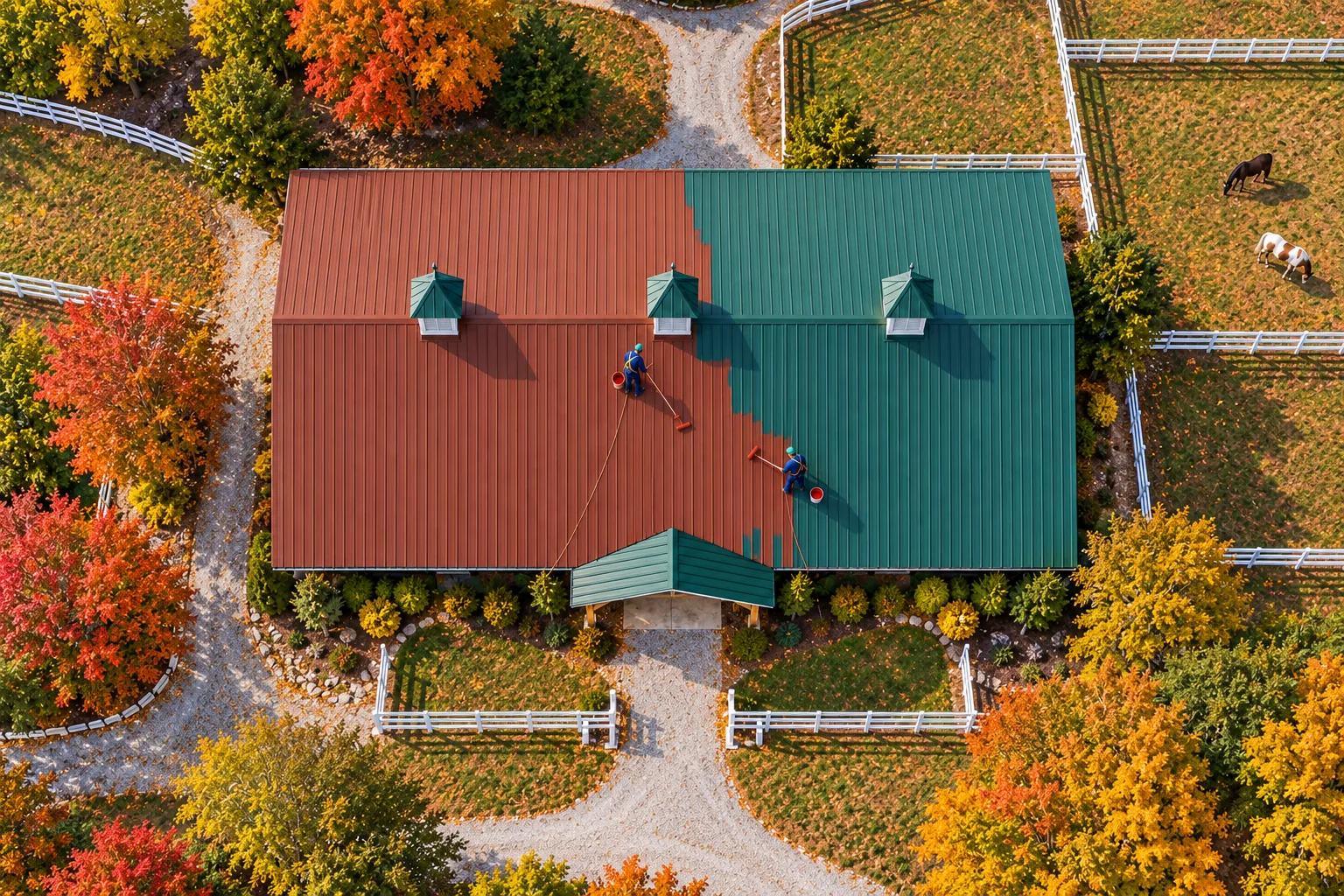
Exposed-fastener R-panel and standing seam roofs on warehouses, plants, shops, and barns. Screws are tightened or upsized, laps reinforced, rust primed, and the whole roof gets a field coat.
Metal roof coating in ShepherdsvilleCommercial Metal Roofs · Bullitt County
We coat commercial metal roofs in Shepherdsville. Step one is a walk of every fastener row and lap; step two is sealing those details and coating the whole roof.
Most metal roofs in Bullitt County land in one of four conditions. Match yours below; the inspection confirms which one it really is.
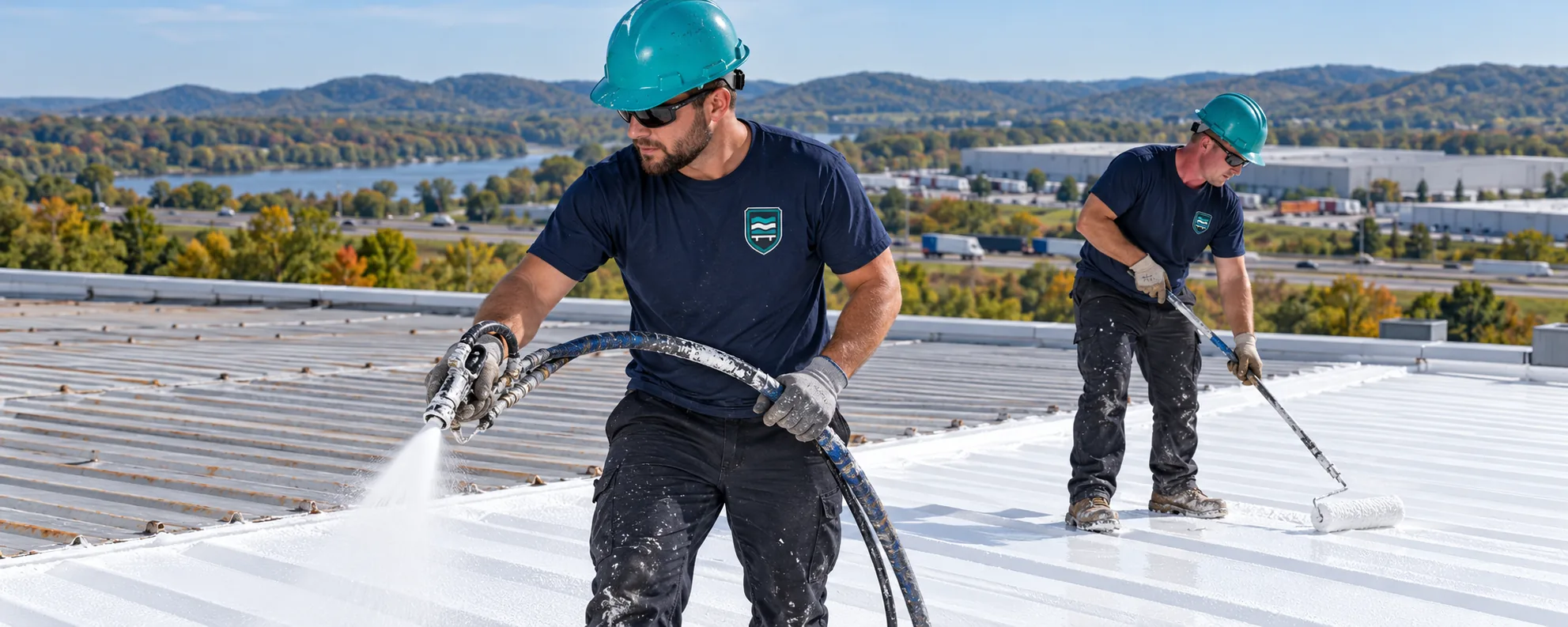
Fasteners get tightened or upsized, laps get detailed, and a field coat goes over the whole roof.
Bad panels and failed screws come out first, then the restored roof is primed and coated.
Spray foam adds a continuous insulating layer over the ribs, and a coating protects the foam.
Coating would only hide failing steel here, so new panels or a new roof is the right call.
Every metal roof job runs through the same five decisions. The answers change from roof to roof; the order stays put.
A roof walk checks screw tightness, washers, end laps, ridge caps, gutters, and skylight panels, and we look at the panel undersides from inside where we can reach them.
Firm steel with surface rust says yes. Panels a screwdriver pushes through, or framing that sags at the eaves, point to panel work before any coating.
Slope and standing water decide most of it: silicone where water sits, acrylic where the roof drains fast, foam where the building also needs insulation.
Fastener heads, side laps, end laps, curbs, and ridge caps get sealant or fabric-reinforced detail coats before the field coat goes on.
Prep drives price as much as square footage does. A coated roof needs twice-yearly walks and quick touch-ups so water never reaches bare steel again.
We coat commercial roofs five ways. Each tile says which roof it fits.
Exposed-fastener R-panel and standing seam roofs on warehouses, plants, shops, and barns. Screws are tightened or upsized, laps reinforced, rust primed, and the whole roof gets a field coat.
Metal roof coating in Shepherdsville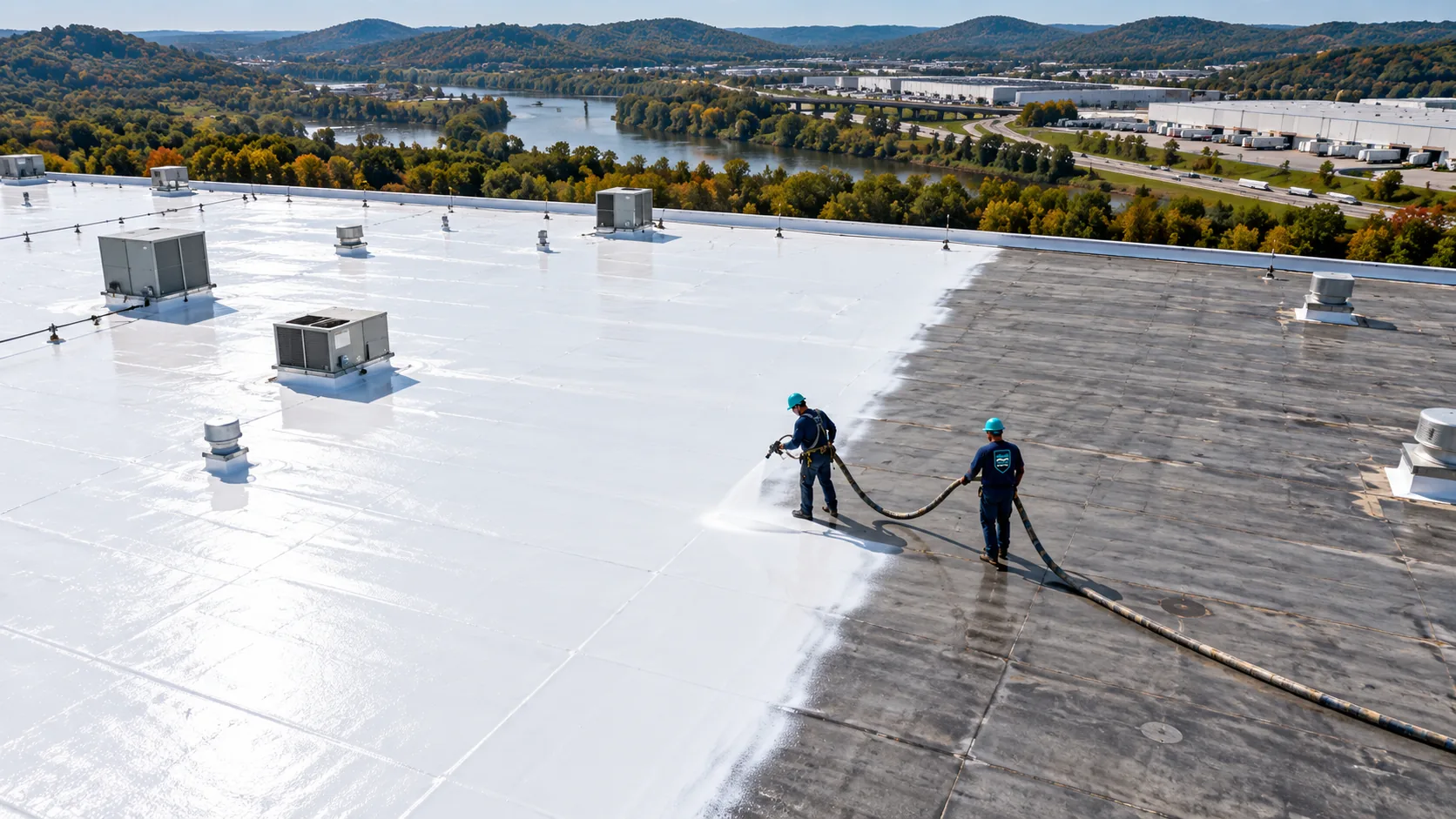
Low-slope metal and flat spots that hold water for days, where silicone keeps its seal under standing water.
Silicone roof coatingPitched gable buildings that shed water fast, where a bright white acrylic stays cleaner and recoats easily.
Acrylic roof coating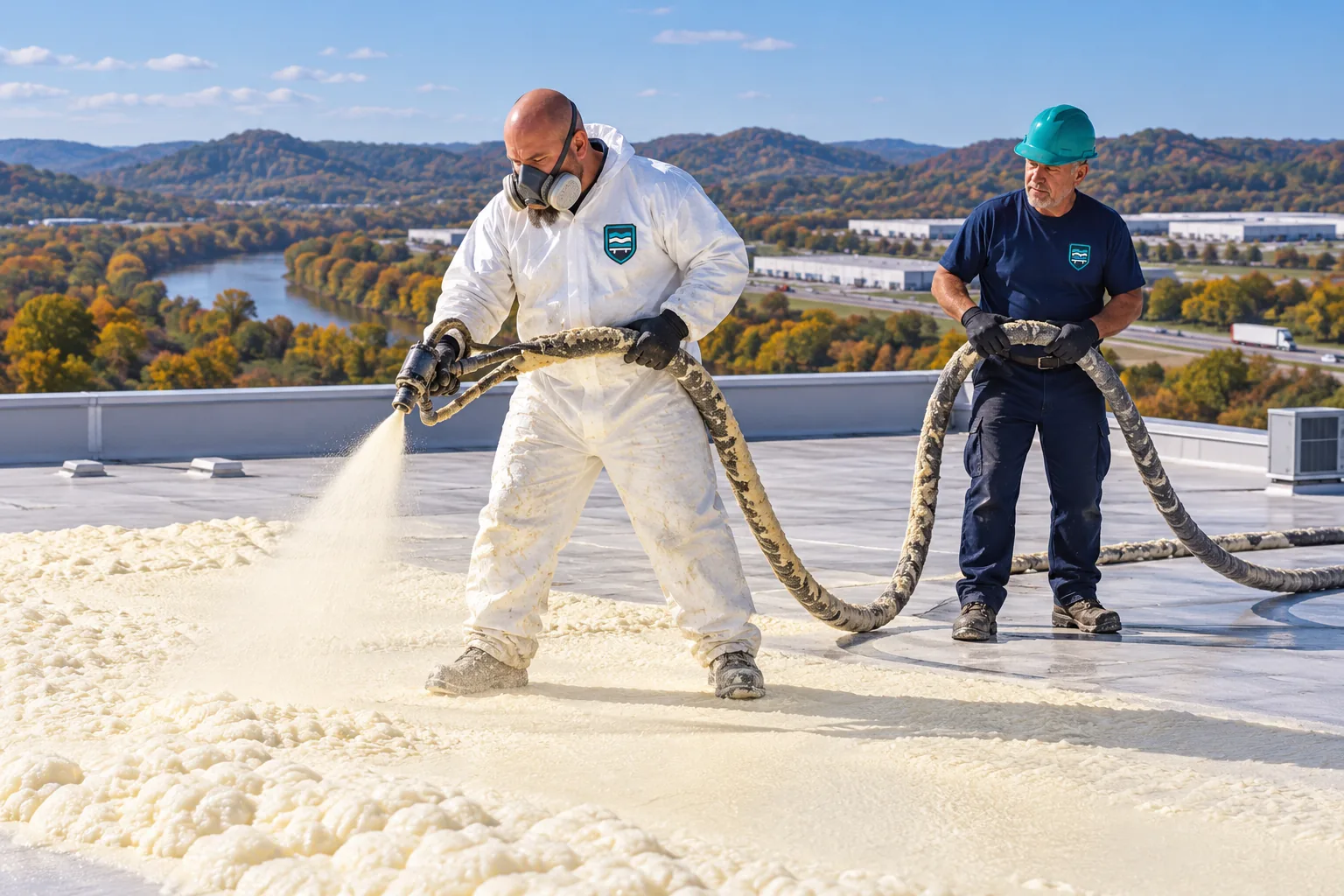
Uninsulated steel shops and plants that drip condensation or need slope added toward the drains.
Spray foam roofing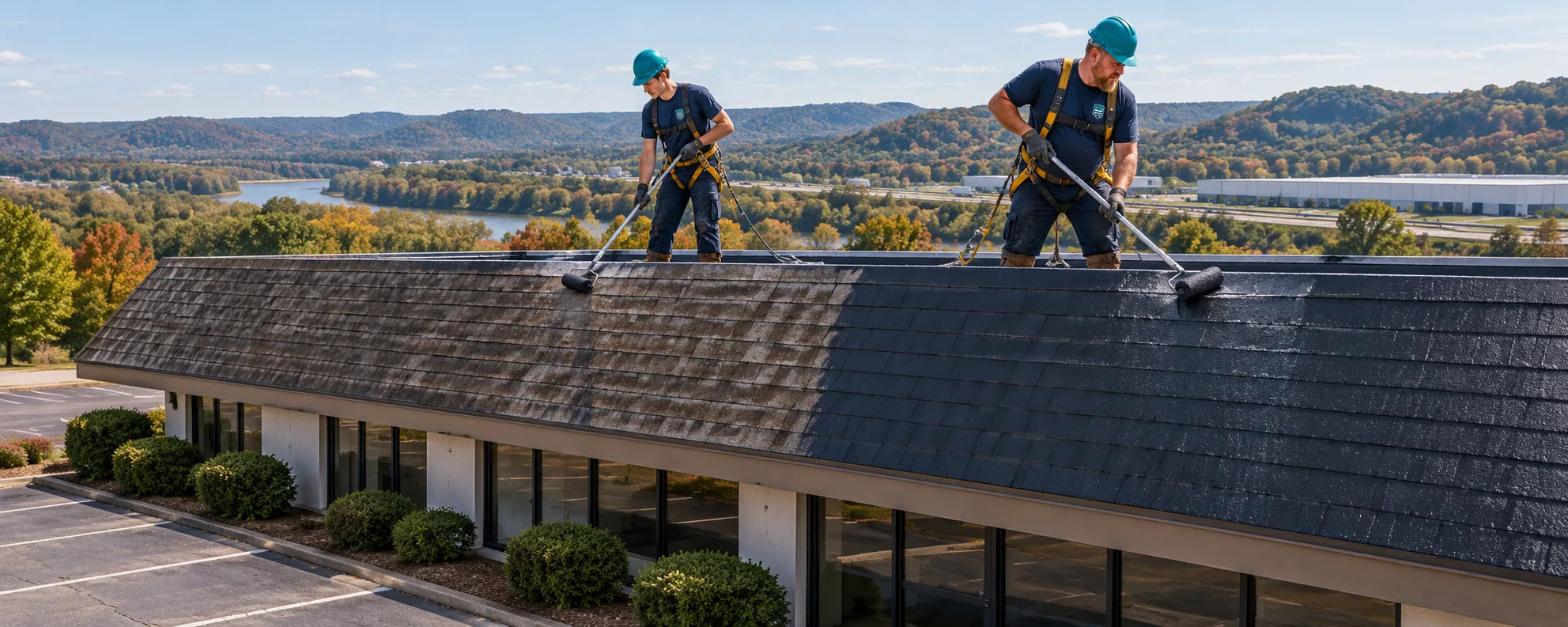
Flat, well-attached commercial shingles on offices and churches, when the shingle maker approves a coating.
Shingle roof coatingTell us where the drip lands and which way the panels run. That points us to the lap or fastener row before anyone climbs the ladder.
(502) 293-5676Four failures cause most metal roof leaks we see. Here is what the coating system does about each one.
Drips below screw lines after every rain, worst on the high side of the roof.
Screws are snugged or upsized, then each head gets sealant or a cap under two coats.
Rust stains spreading from the overlap where two long panels meet.
The joint is cleaned, primed, and built up with fabric embedded in a base coat.
Orange bloom where the factory paint has worn thin on low panel ends.
Rust is brushed back to firm metal and locked under a rust-inhibitive primer.
A shop or warehouse that bakes under bare steel on July afternoons.
A white field coat reflects sunlight, so the panels run cooler.
Grouped by what drives them. Each card says what you notice and what it means for the coating plan.
Stains on the ceiling several feet from any screw row.
Water enters at a lap or fastener upslope and runs along the framing, so the source gets traced before anything is patched.
Icicles and meltwater backing up at gutters and valleys in winter.
Ice dams hold water against the lowest laps, so those joints get an extra detail coat.
A white powder that rubs off on your hand.
The factory finish is oxidizing. Washing removes it so the primer grips the steel itself.
Scuffs and cracked washers along the path technicians walk.
Service paths get a closer screw check, and a walkway pad or thicker coat can follow that route.
Round dents after hail, some with bare primer in the center.
Dented panels that still shed water are cleaned and recoated in the damaged spots.
Water on the floor with no rain the night before.
That is condensation under bare steel; foam on the outside keeps the panels closer to inside temperature.
We coat commercial metal roofs in Shepherdsville and in the seven towns below.
Outside these towns? Call us or send us a message.
Strip retail, offices, and churches where metal additions meet shingled main roofs.
Older service garages and flex buildings carrying years of tar and caulk patches.
Farm buildings and steel shops where condensation drips from bare panels on cool mornings.
Properties with a shop, a storage building, and an office, each under its own metal roof.
Storefront strips and small commercial roofs permitted through Louisville Metro.
Roofs that need a careful walk after hail to find dents with split coating.
Church halls and school-area buildings coated around services and the school day.
Six answers about coating a metal roof. More are on our metal roof coating FAQ.
It lays one continuous rubbery skin across the panels, so screw holes, side laps, and end laps stop letting water through. On older steel that skin also keeps rain and overnight condensation off bare metal, which slows rust. A white topcoat adds one more effect: the panels stay cooler on summer afternoons.
In most cases it can, when the water gets in at fasteners, laps, or flashings, because those are the spots the system builds up with extra material. Tracing the real entry point comes first, since water often runs along a purlin and drips several feet away. A cracked skylight panel or a rusted-out gutter gets repaired before coating.
The share of solid steel decides it. Worn paint with a few leaking screws is a coating job. Rust at the laps plus scattered bad panels calls for restoration: replace those panels, then coat. Rust-through across whole sections means new panels, and failed framing or wet insulation means a new roof.
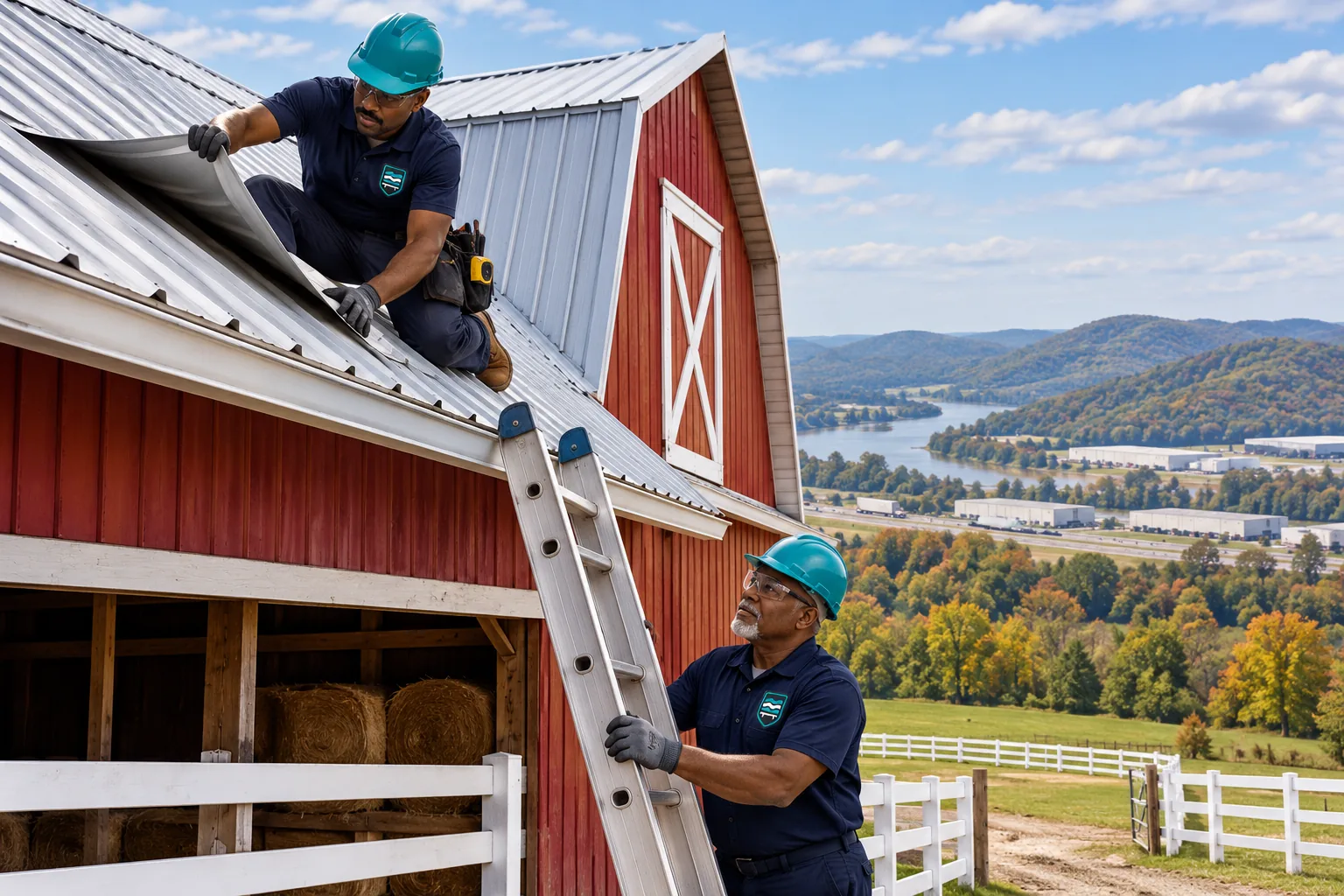
Pole barns, equipment sheds, and livestock buildings with solid panels are coated the same way as a warehouse: screws, laps, and ridge closures first, then the field coat. Barn skylight panels that have turned brittle get replaced, and loose ridge closures that let birds in are reset before coating starts.
Sections can be coated on their own when the rest of the roof is solid, which is common on long warehouse runs and on additions. The new coating stops at a clean line, usually a lap or the ridge, so water has no way to run under the edge of the coated area.
Fairdale is one of our service areas. Buildings there sit inside Louisville Metro, so roof permits go through Louisville Metro Construction Review instead of a Bullitt County office. For an address outside our listed towns, call and describe the building and the roof, and we will tell you whether we can take the job.
Enter the roof size and condition for a ballpark range, or call and talk through the leak you are chasing.
Leave a name and number and we will call you back about your commercial roof.
Or call now: (502) 293-5676