Metal Roof Coating
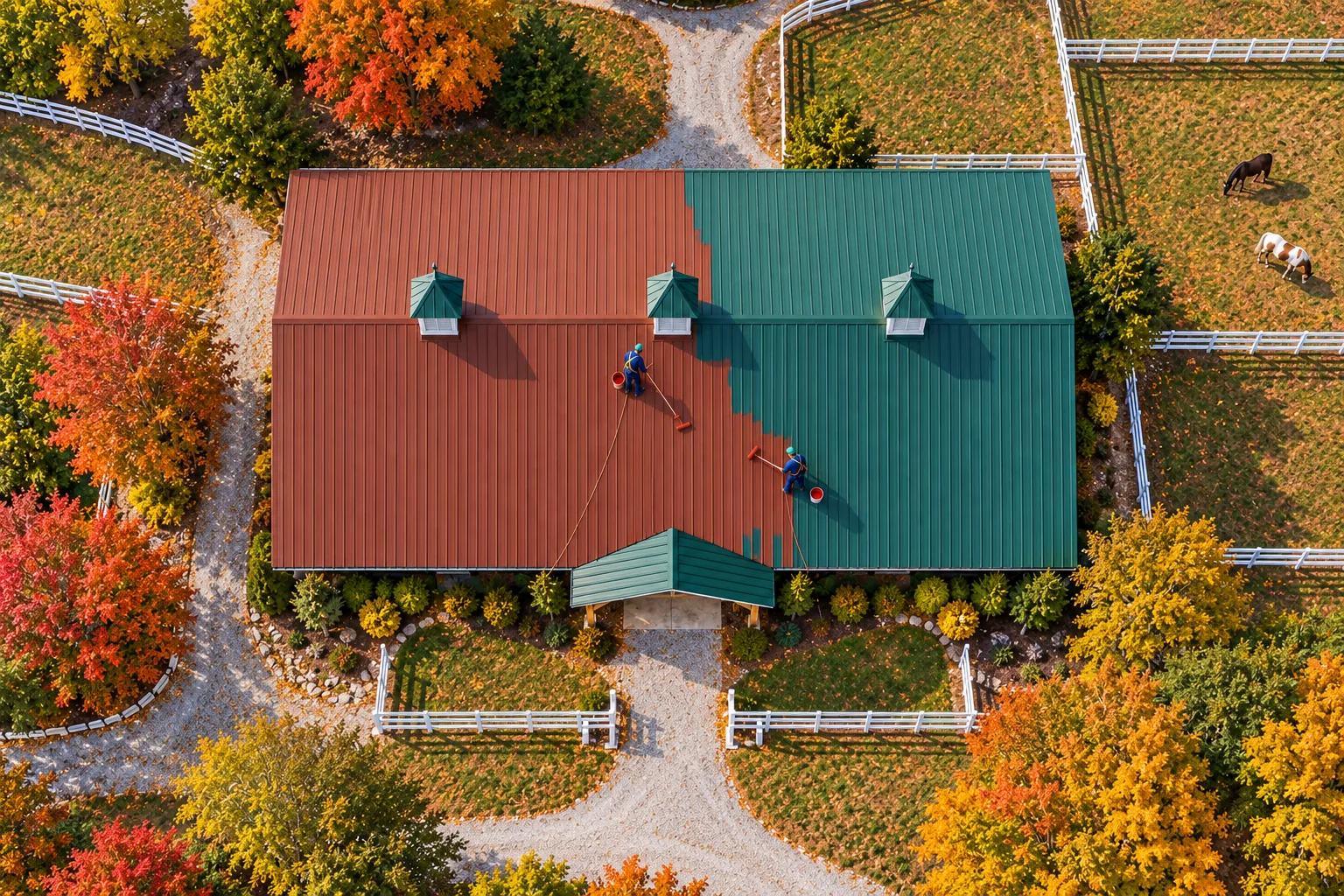
Exposed-fastener and standing seam panels with leaks at screws and laps. Fasteners and laps are detailed, rust is primed, and the roof is coated.
Five Systems, One Inspection
We offer commercial roof coating services in Shepherdsville in five systems. First we inspect the roof; then we coat it with the system that fits its slope and condition.
Each card names the roof that system fits best.
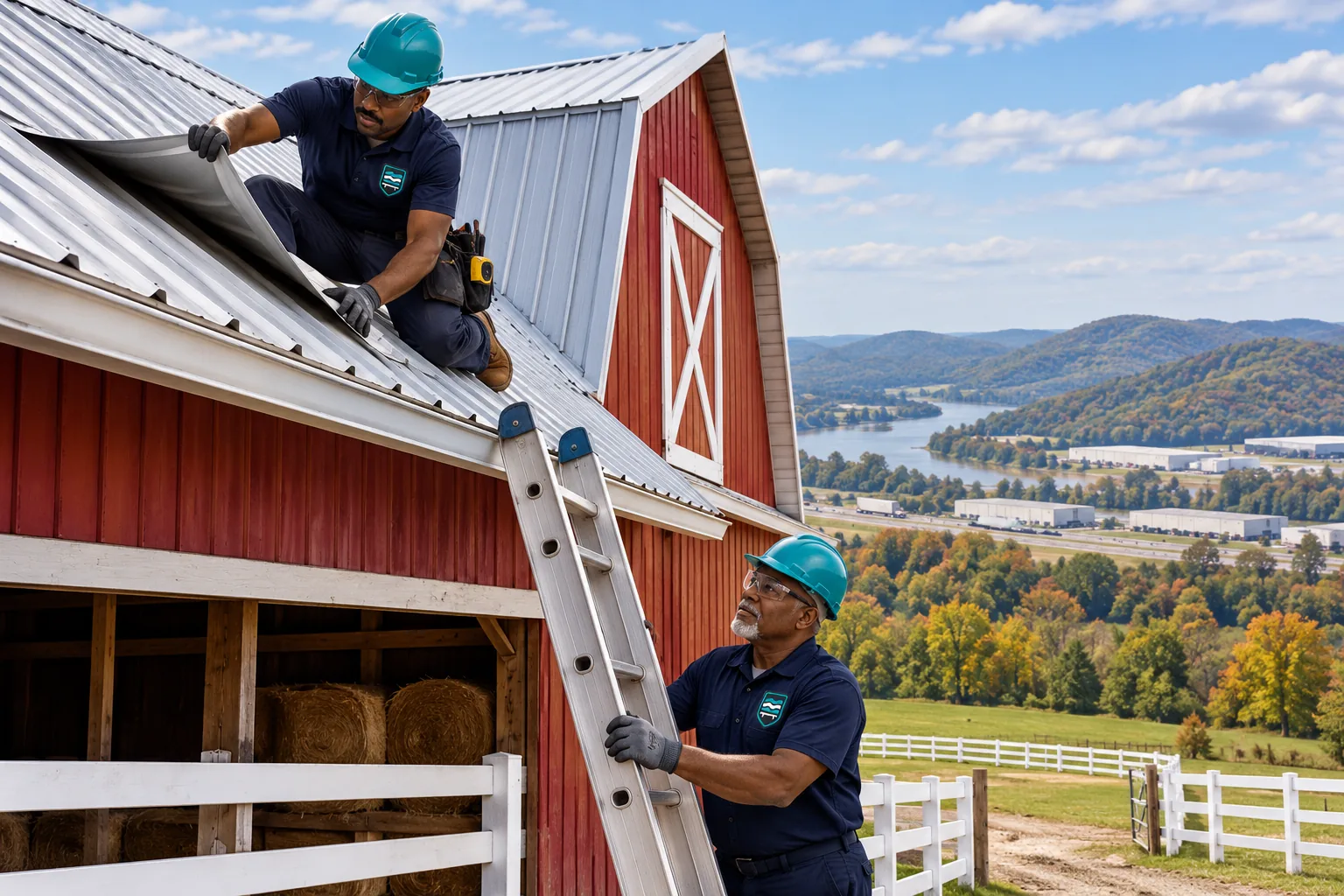
Exposed-fastener and standing seam panels with leaks at screws and laps. Fasteners and laps are detailed, rust is primed, and the roof is coated.
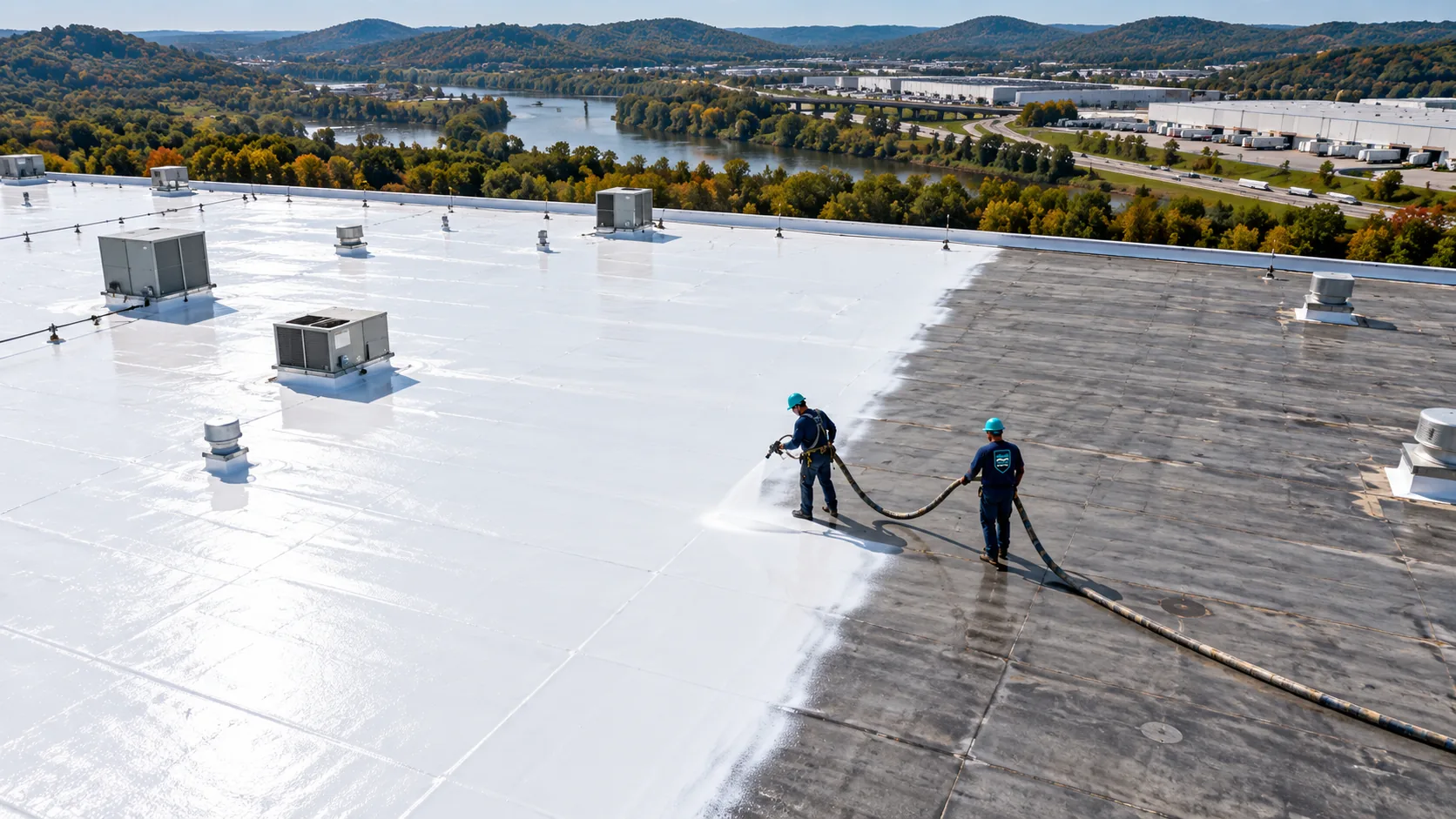
Low-slope roofs where water stands for days. Silicone keeps its seal under ponding, and later recoats stay silicone.
Pitched roofs that shed water quickly get a water-based, bright white coat that recoats with more acrylic.
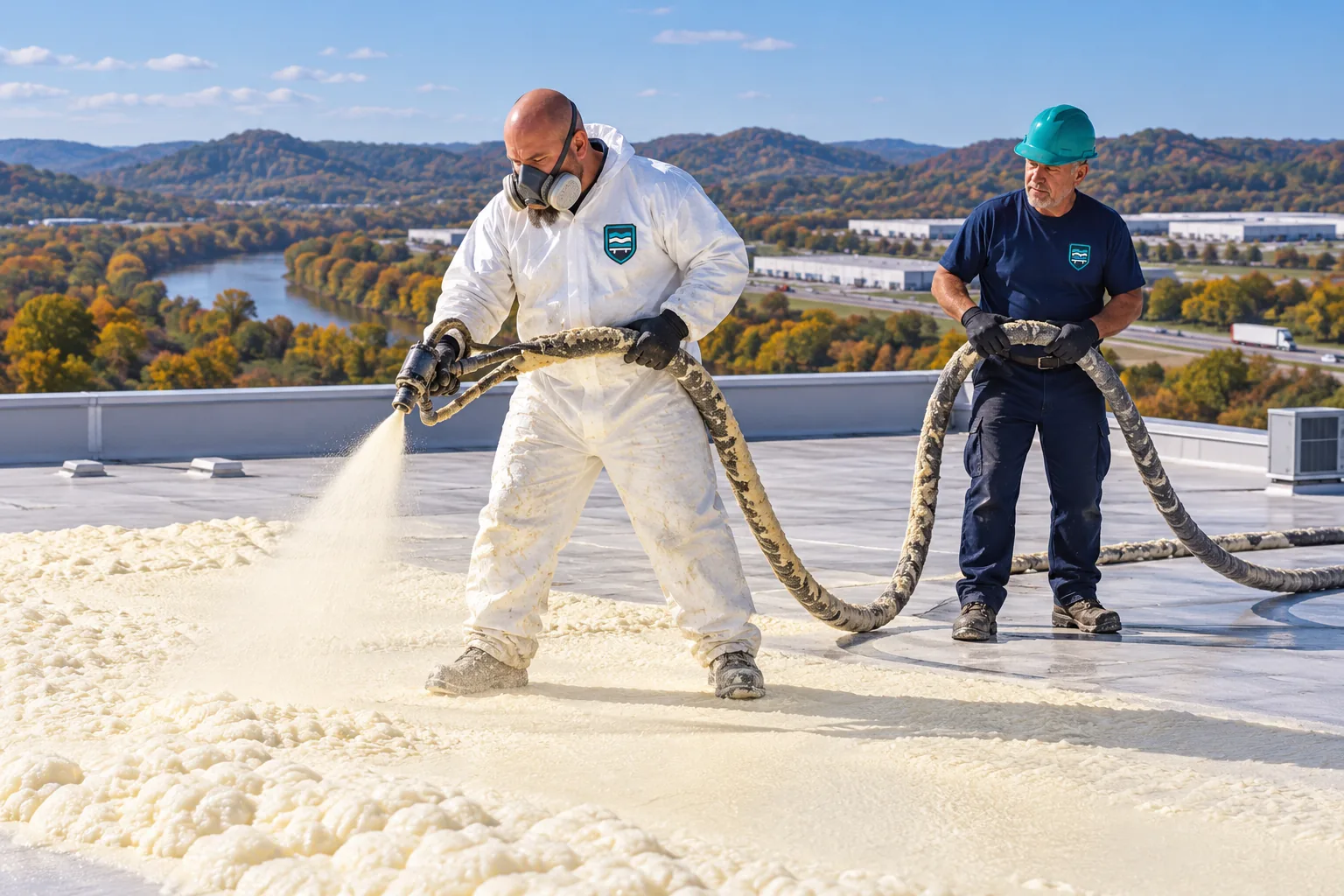
Buildings that need insulation, added slope, or relief from condensation drip, with a protective topcoat over the foam.
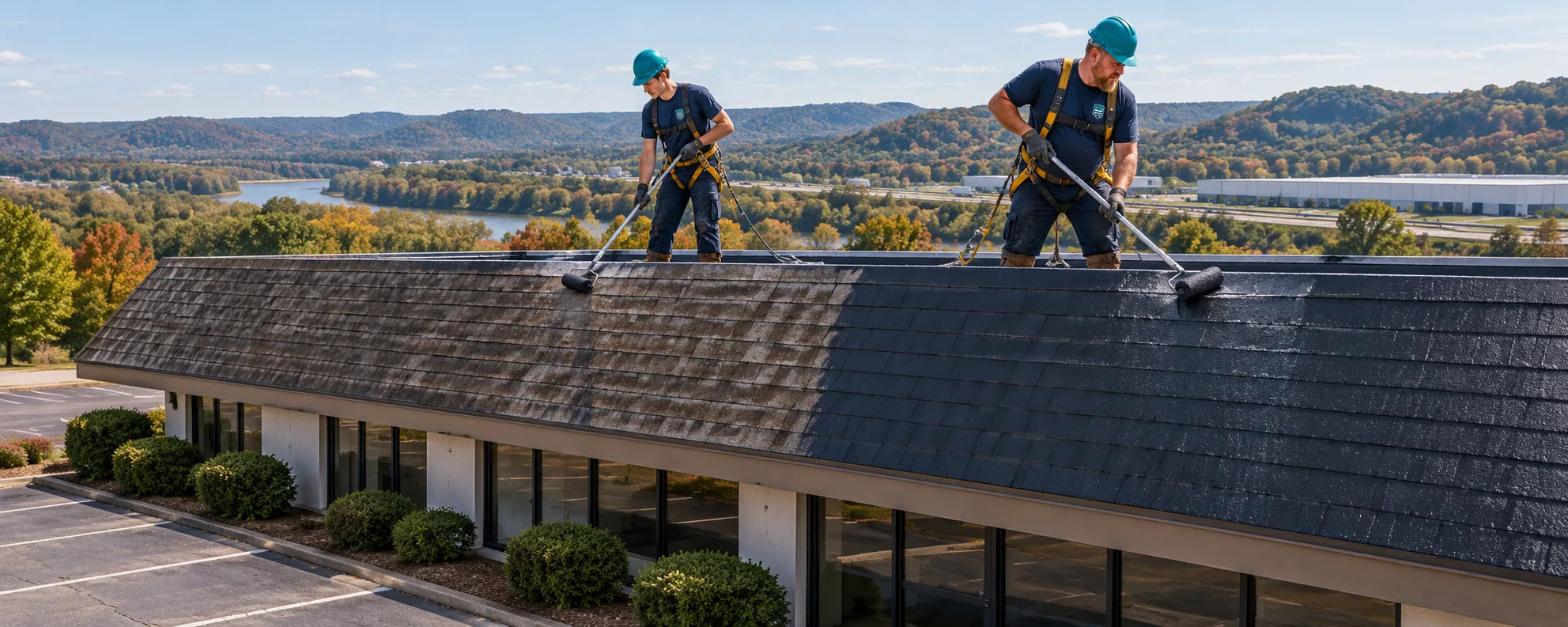
Commercial shingle roofs that are flat, well attached, and approved by the maker. Anything worse is a replacement call.
Four common roofs and the system each one starts with.
Fastener and lap detail plus a full field coat seals the roof where it actually leaks.
Ponding calls for a coating that keeps its seal under standing water.
Insulation solves both, and foam supplies it in one continuous layer under a topcoat.
Failed shingles and failed steel are past coating, so replacement comes first.
Describe the roof shape, what it is made of, and where water shows up inside. A short call usually narrows it to one or two systems.
(502) 293-5676The same five decisions run every coating job, whatever the system.
Every job starts with a roof walk covering fasteners, laps, seams, drains, gutters, curbs, and skylight panels, plus a look underneath for wet insulation or rusted framing.
Failed panels, cracked skylights, rusted gutter bottoms, and wet insulation get fixed first, since a coating seals in whatever is under it.
Slope, ponding, insulation needs, foot traffic, and how the roof will be recoated later point to one of the five systems.
Washing, rust treatment, primer, and detail coats at laps, screws, and curbs go on before the field coat; skipped prep is where early failures start.
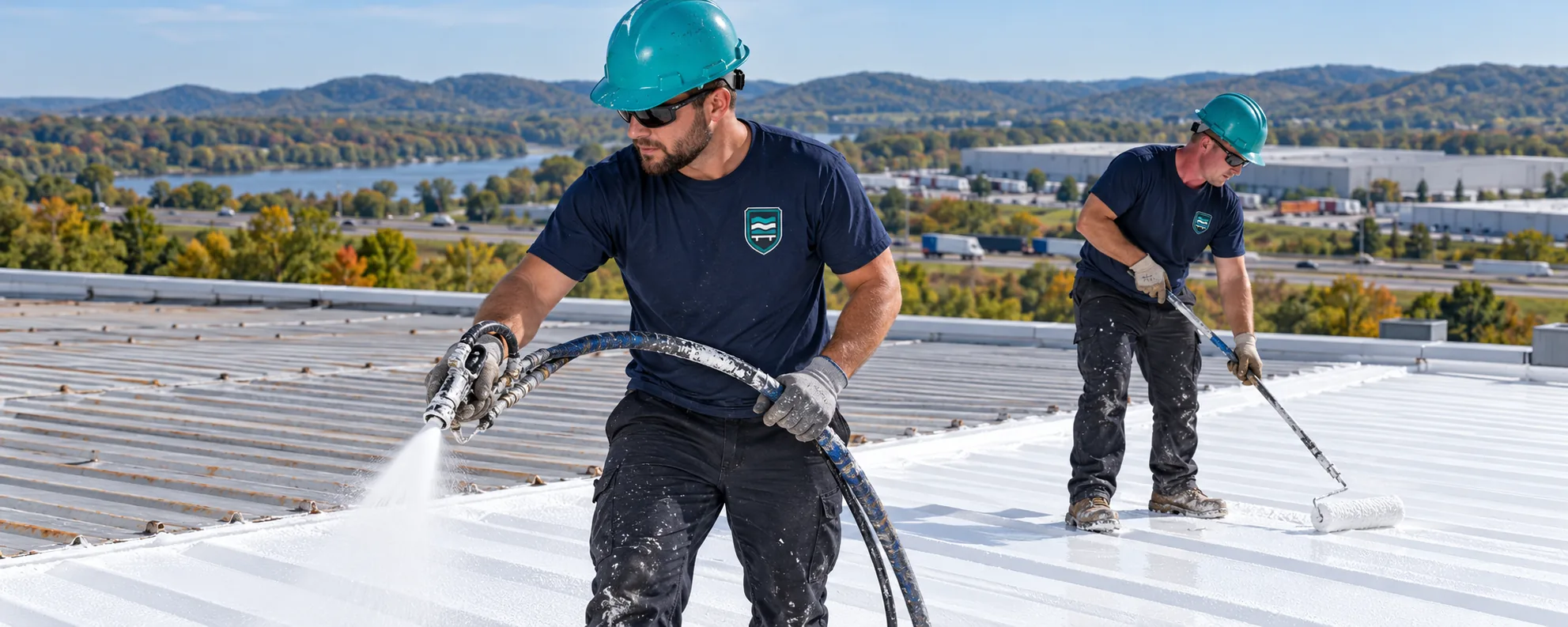
The field coat goes on in one or more passes to the specified thickness, checked with a wet-film gauge, then the roof is walked for missed spots.
Answers that apply across every coating system we offer.
Each exposed fastener gets checked. Loose, stripped, or rusted screws are tightened, replaced, or swapped for a larger-diameter screw that bites into fresh metal, since dried, cracked washers are the usual reason an older R-panel roof leaks. Then every head is covered with sealant or a cap and coated again with the field coat.
These are where the roof changes shape and water changes direction, so each gets its own detail. Skylight panels stay uncoated, with edges and fasteners sealed and cracked panels replaced. Ridge caps get closures checked and overlaps sealed. Curbs get fabric-reinforced flashing at the panel ribs, and ridge vents are masked during spraying.
Both work over metal; ponding, slope, and future recoats decide it. Silicone resists standing water but collects dirt and bonds well only to new silicone. Acrylic costs less per gallon, stays cleaner, and recoats with acrylic, but softens under long ponding. Urethane systems resist foot traffic. Most metal roofs drain well enough to keep acrylic in play.
Roof size, how much rust and fastener work the roof needs, the coating chemistry, and access. Screws to replace or upsize, linear feet of laps to reinforce, panels or gutters to swap, and the required thickness all count.
Roof height, lift access, and parking limits matter too. Big open roofs spread setup across more area; small roofs with many curbs cost more per square foot.
Repairs come as part of coating work: replacing failed panels, screws, skylight panels, and gutters before the coat goes on. Our focus is coating systems, so a roof that needs one small repair and no coating is better served by a repair contractor.
On mixed buildings it is common. A sloped metal section can take acrylic while a flat wing that ponds takes silicone, and a shingle sanctuary is judged separately. Where two systems meet, the joint is detailed so each coating ends at a clean, sealed line.
Enter the roof size for a ballpark range, or call and describe the roof so we can point you to the right system.
Leave a name and number and we will call you back about your commercial roof.
Or call now: (502) 293-5676