Age
Screw Rows On The Slope
You See
Drip lines below fastener rows on the rafters.
What It Means
Washers dried and cracked; screws get snugged or upsized, then sealed before the acrylic goes on.
Pitched Metal That Drains Fast
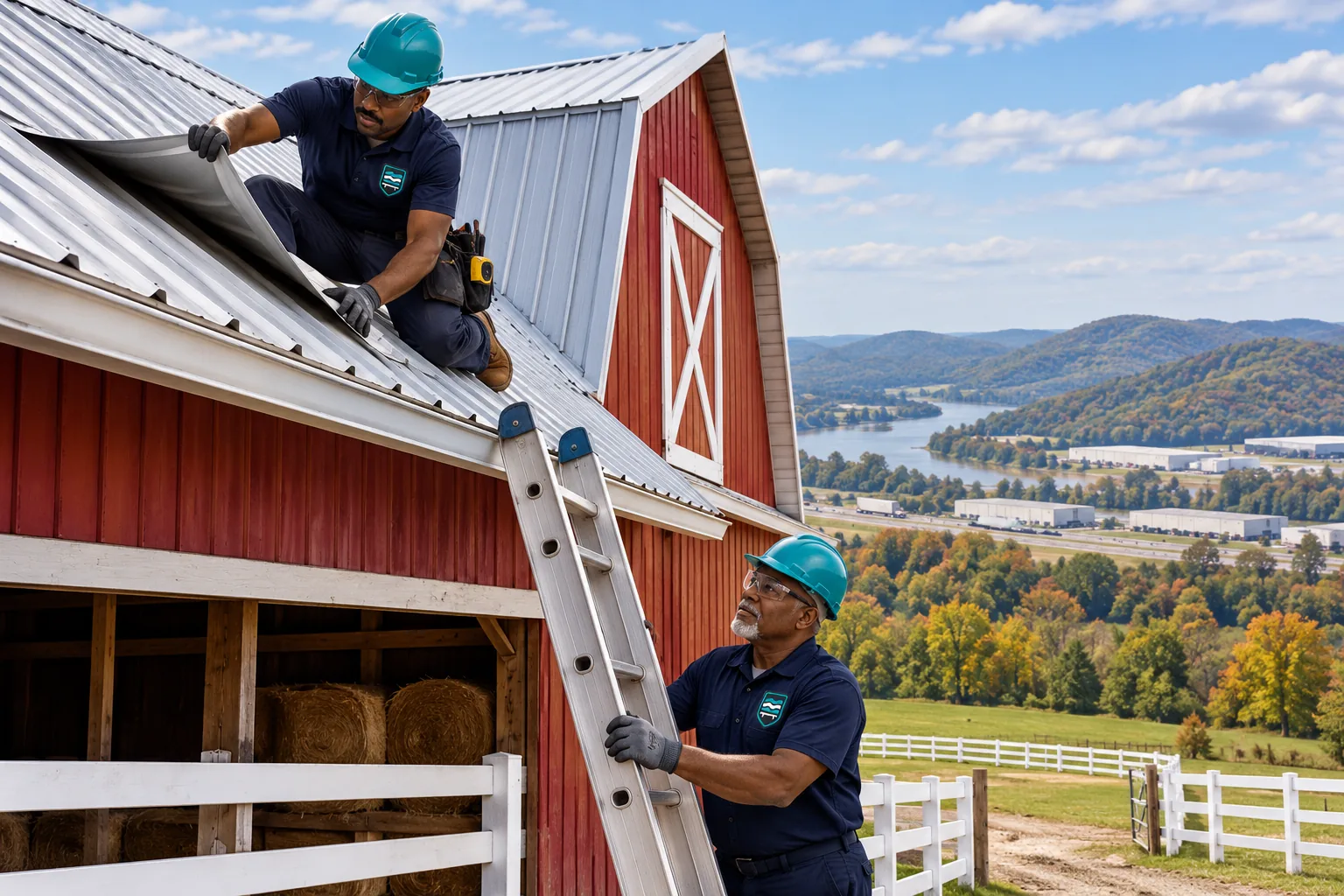
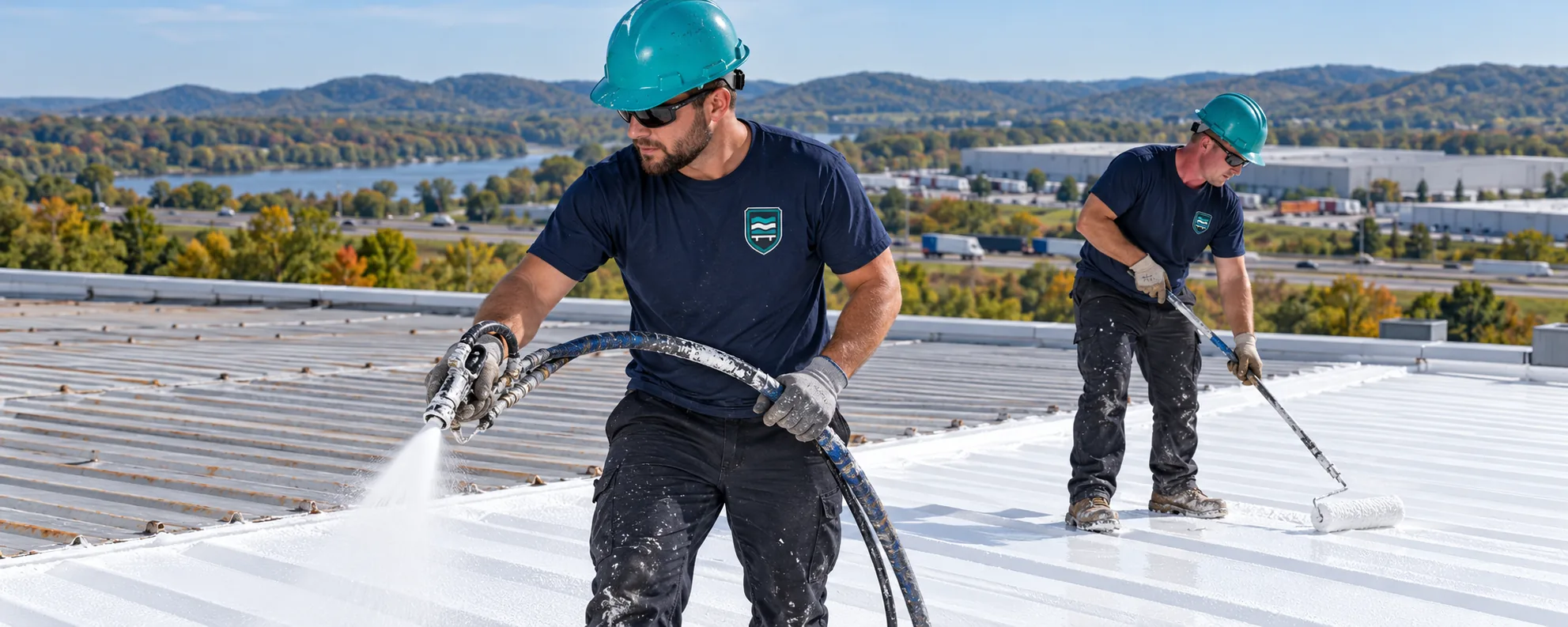
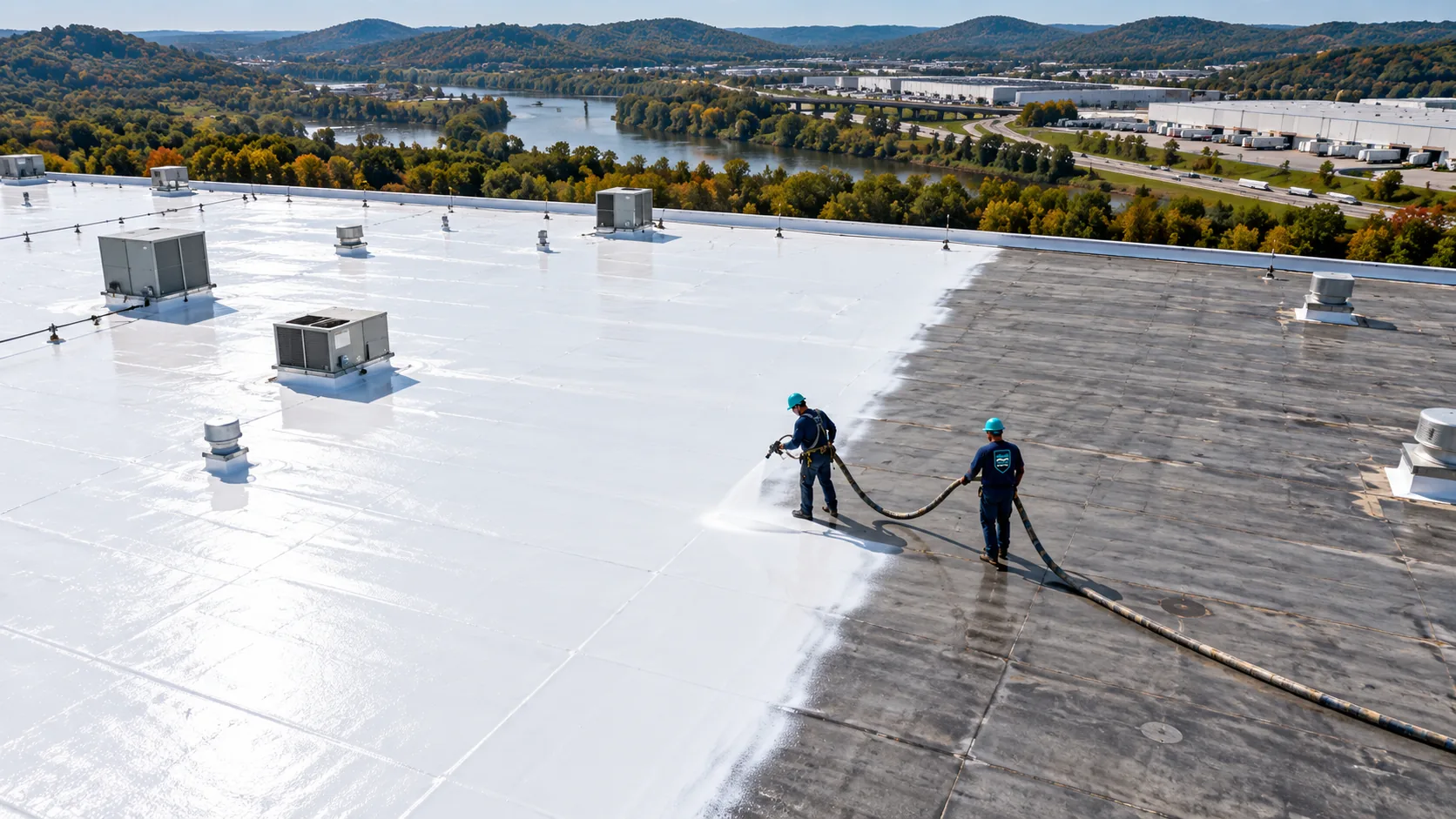
We apply acrylic roof coating in Shepherdsville on gable metal buildings that drain well. First we check slope and low spots; then we prime, detail the laps, and coat.
Acrylic is the right pick on some roofs and the wrong one on others. These four cases sort it out.
Steady slope keeps water moving, which is where acrylic does well and costs less per gallon than silicone.
Odor stays low while this water-based coating goes on over people working below.
Less dirt sticks to acrylic than to silicone, so the white surface stays cleaner on a well-drained roof.
Standing water wears acrylic first, so ponded areas call for silicone or added slope.
Steep metal sheds water well yet still leaks at its details. These are the conditions we find on gable buildings.
Drip lines below fastener rows on the rafters.
Washers dried and cracked; screws get snugged or upsized, then sealed before the acrylic goes on.
Gaps under the ridge where closures pulled loose.
Closures are reset and cap overlaps sealed so wind-driven rain stops getting under the ridge.
Panels that look pale and leave white dust on a glove.
Oxidized paint is washed off so the primer and acrylic bond to sound panel finish.
Water lingering in a strip along the eave.
Those areas get checked closely, since standing water wears acrylic first; they may need silicone.
Cool, damp evenings arriving earlier each week.
Acrylic needs warm, dry days to cure on the panels, so late-season roof work is scheduled around the forecast.
Stains where a metal roof meets a taller wall.
Wall flashing gets fabric-reinforced detail, because acrylic over an open joint will not hold.
Acrylic is one of four ways we coat metal here. These are the options that compete for a pitched roof.
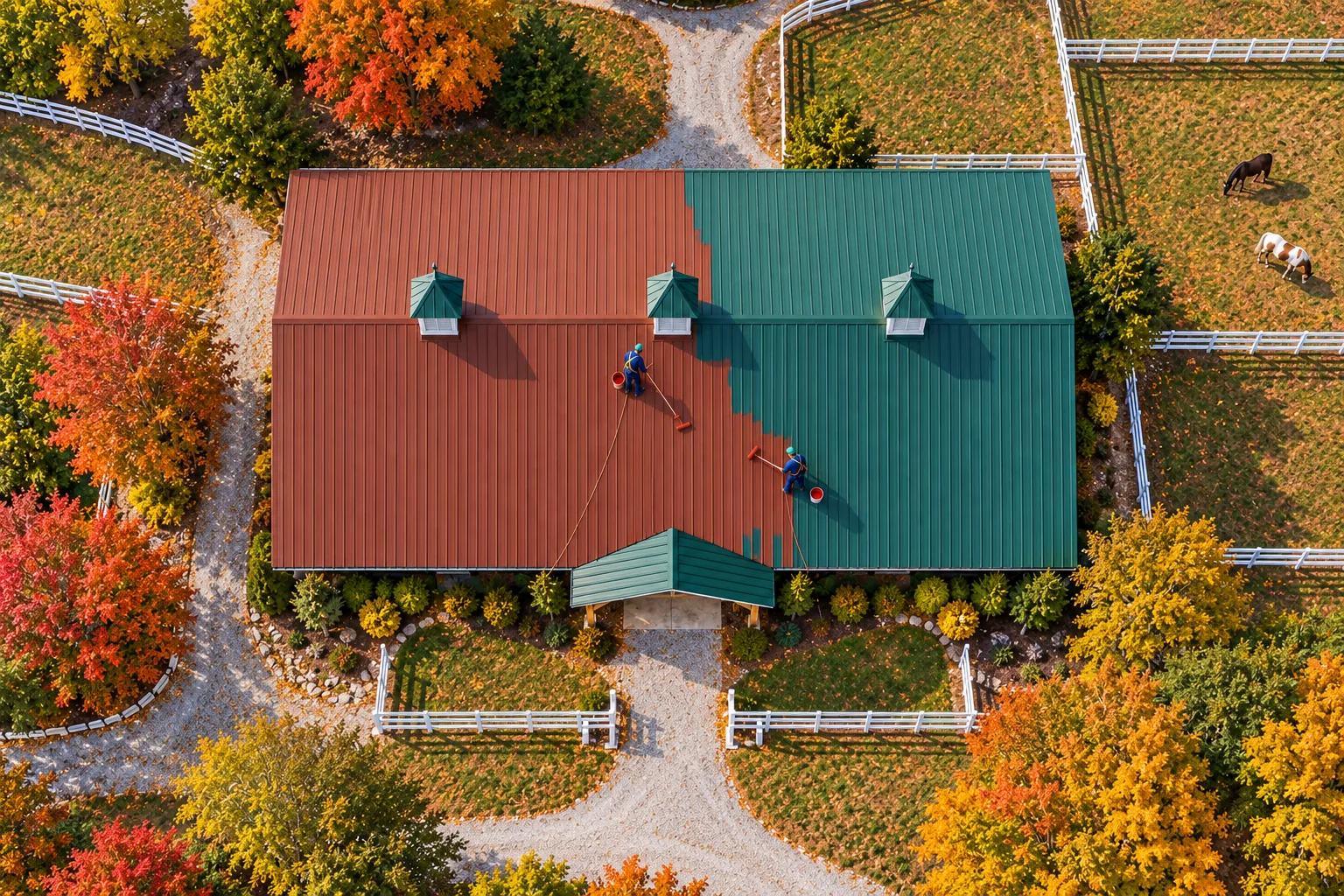
Pitched metal with light rust gets primer, detailed screws and laps, and a white acrylic field coat.
A sloped roof with a few ponding strips can take acrylic on the slopes and silicone in the low areas.
Roofs crossed often by HVAC technicians may take a tougher, impact-resistant urethane system.
A few rusted-through panels are replaced to match the profile, then the whole slope is coated.
On a roof that drains, acrylic answers four common complaints at a lower material cost than silicone.
Hot upper floors and attics under dark, faded panels in July.
A bright white acrylic reflects sunlight, so the panels run cooler on summer afternoons.
Staff, students, or congregations working right under the roof.
Acrylic is water-based, keeping odor low while the coat goes on.
Pitched panels that would otherwise be stripped and hauled away.
Coating the panels in place keeps that steel on the building and out of the landfill.
A coating that will need refreshing someday.
Acrylic accepts new acrylic, so a later recoat is a clean, wash-and-coat job.
Tell us the roof pitch and what sits underneath. That helps us confirm acrylic fits and plan around the people inside.
(502) 293-5676Five decisions that decide whether acrylic goes on, and when.
We confirm slope, look for ponding strips near gutters and behind curbs, check screw rows and ridge caps, and test how well the old paint holds.
Panels with chalking paint and light rust move ahead after washing and priming. Rust-through or loose framing gets fixed before the acrylic is scheduled.
Slopes that drain get acrylic; any strip that holds water gets silicone or added slope, since ponding wears acrylic first.
Curing takes dry panels and moderate temperatures, so fall days and late spring suit it better than humid evenings.
Material runs less per gallon than silicone, and recoats stay acrylic. Twice-yearly walks catch scuffs near units before water reaches the steel.
These systems cover the roofs acrylic does not suit.
Screws, laps, and rust on exposed-fastener panels.
Standing water on low-slope panels calls for silicone.
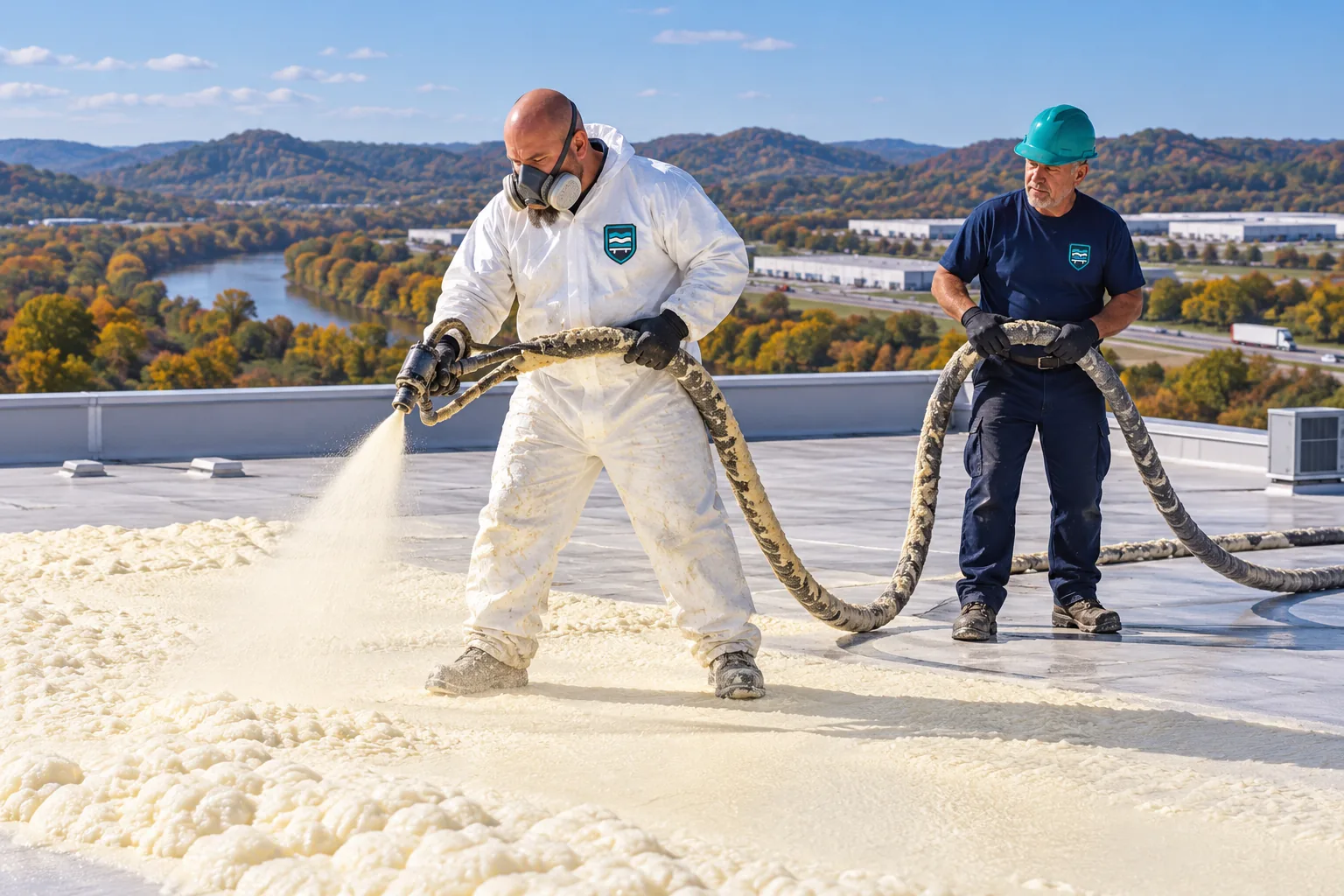
Insulation and added slope under a protective topcoat.
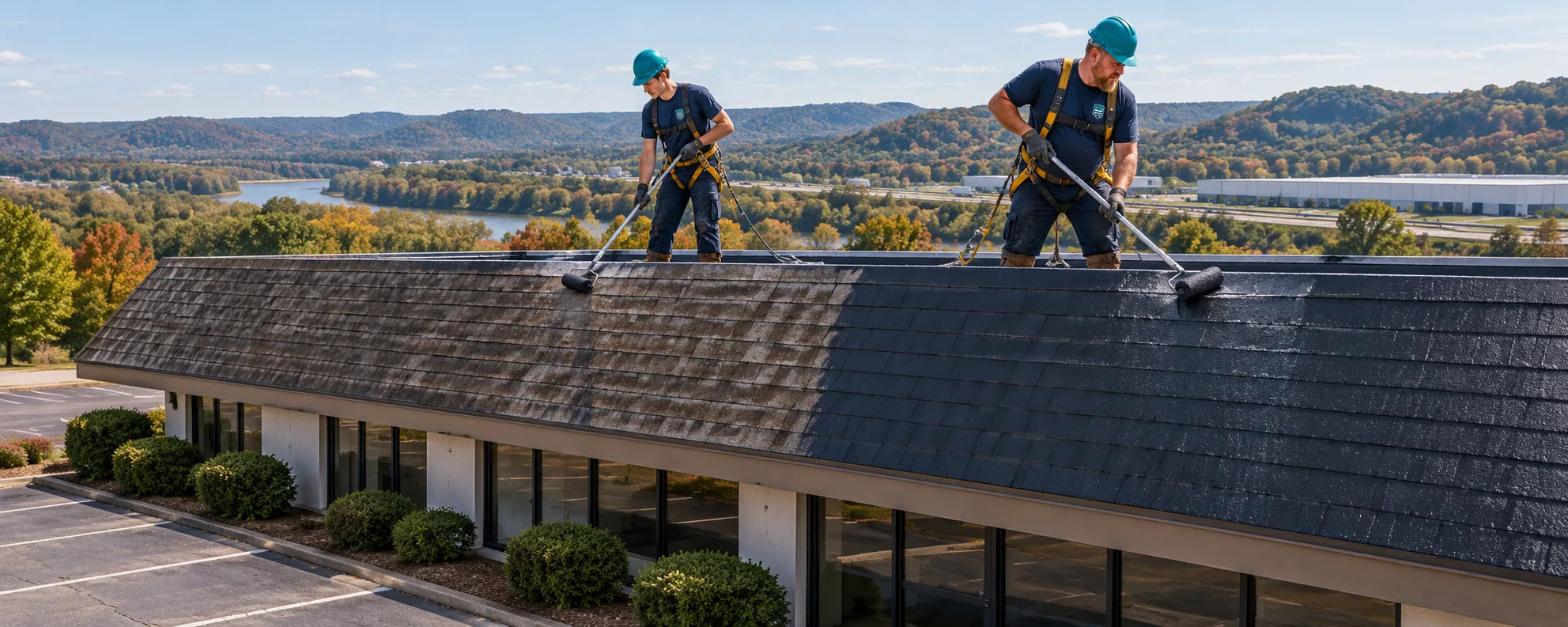
Flat, well-attached shingles the maker approves for coating.
Answers about acrylic on pitched metal roofs around Shepherdsville.
Metal roofs with steady slope, little or no ponding, and an owner who wants a bright white surface that stays cleaner are the best match. Gable buildings, church roofs, and pitched barns shed water fast, which is where it does well. Check for low areas near gutters or behind curbs first; water standing there for days wears acrylic first.
A reflective roof can add a small heating penalty in winter, but in mixed climates like Kentucky the Department of Energy's cool roof guide finds it usually smaller than the summer cooling savings. Insulation matters most: an uninsulated barn feels the summer drop at the panels, while an insulated office sees less change either way.
Acrylic goes on when the panels are dry and both air and steel temperatures sit inside the coating maker's limits, which here usually means spring through fall. Crews watch panel surface temperature, the dew point spread, and any rain forecast inside the cure time, and they often start late morning once dew burns off.
Odor is mild, since the coating is water-based rather than solvent-based. Offices, schools, and churches under the roof can stay in use. Rooftop air intakes near the work are still shut down or covered while coating goes on around them, then opened once the coat has set.
Ridge caps get their closures checked and reset, and the fasteners and end overlaps along the cap are sealed before the field coat. Ridge vents that move air into the building stay open, so the vent openings are masked while coating goes on nearby.
Yes, once the old coat is washed, any loose or peeling areas are scraped back, and adhesion is confirmed with a test patch. Acrylic accepts new acrylic, which makes it the easier system to refresh. Bare spots where steel shows through get primed first.
Enter the roof size for a ballpark range, or call and tell us what the building is used for.
Leave a name and number and we will call you back about your commercial roof.
Or call now: (502) 293-5676