Age
Different Roofs, Different Ages
You See
One newer building beside two older ones with faded paint.
What It Means
Each roof gets its own plan, so the newer building might need only screw checks while the others need coating.
Several Buildings, One Property
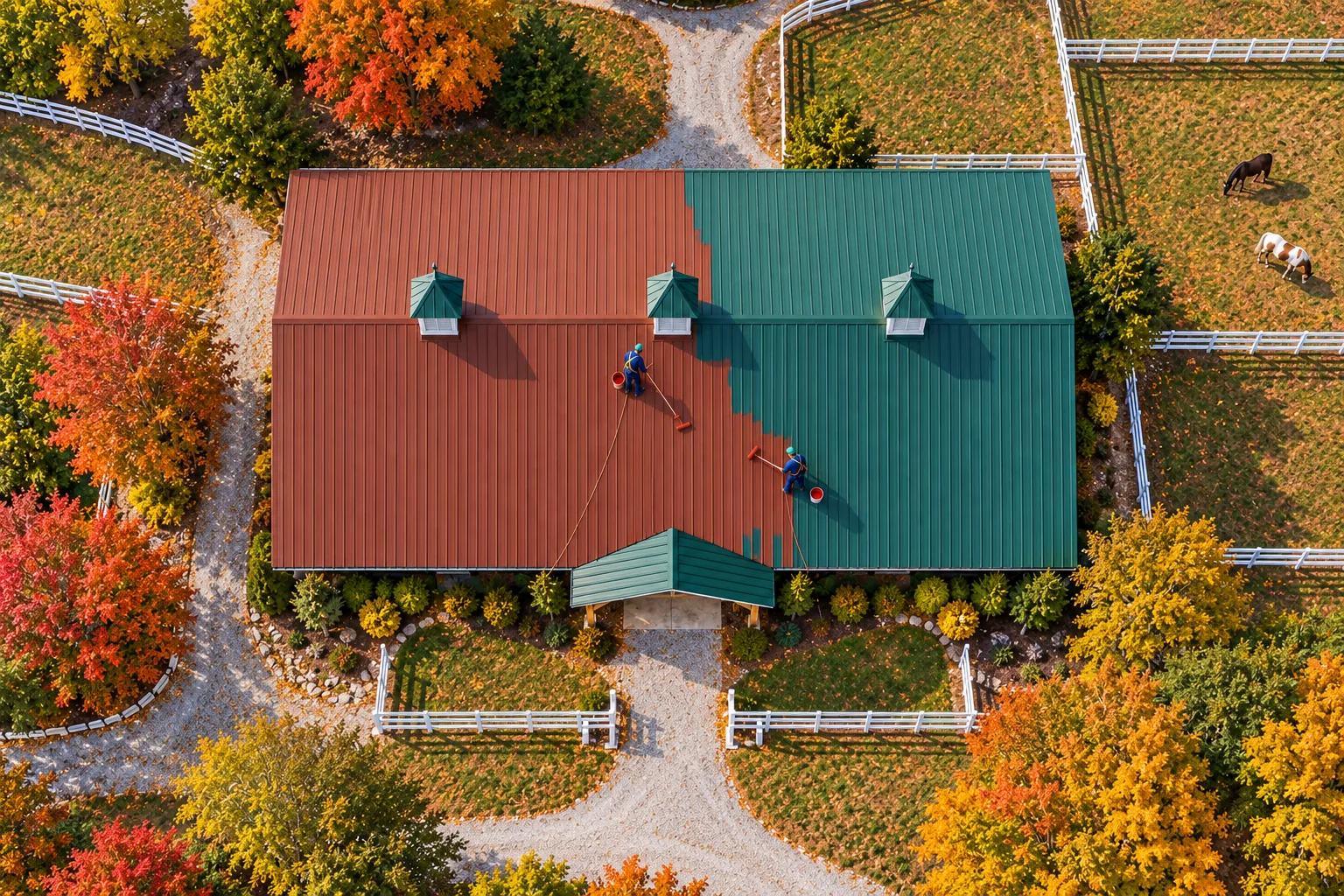
We coat metal roofs on Brooks properties that carry more than one building. First we walk every roof on the lot; then we coat them in order of need.
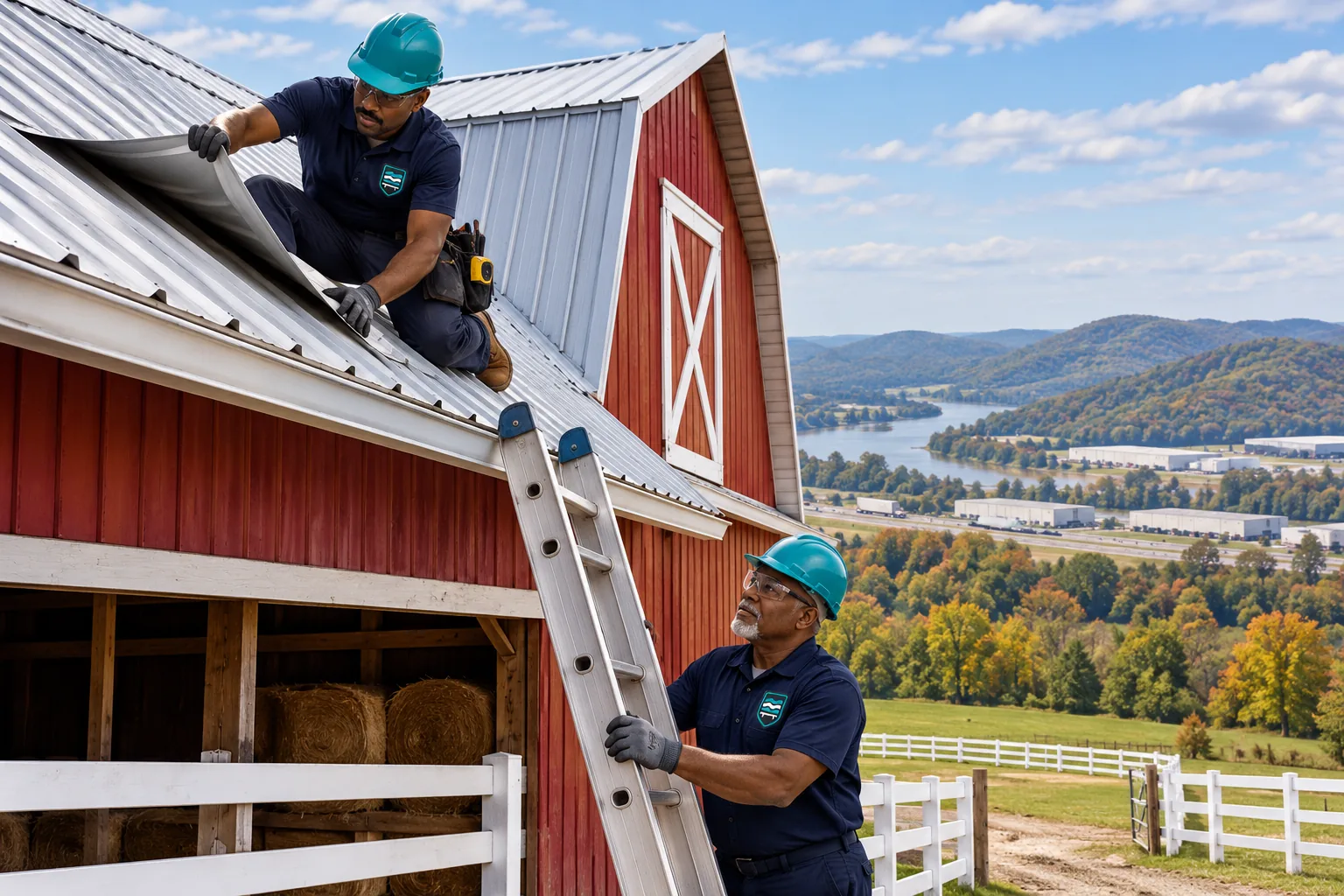
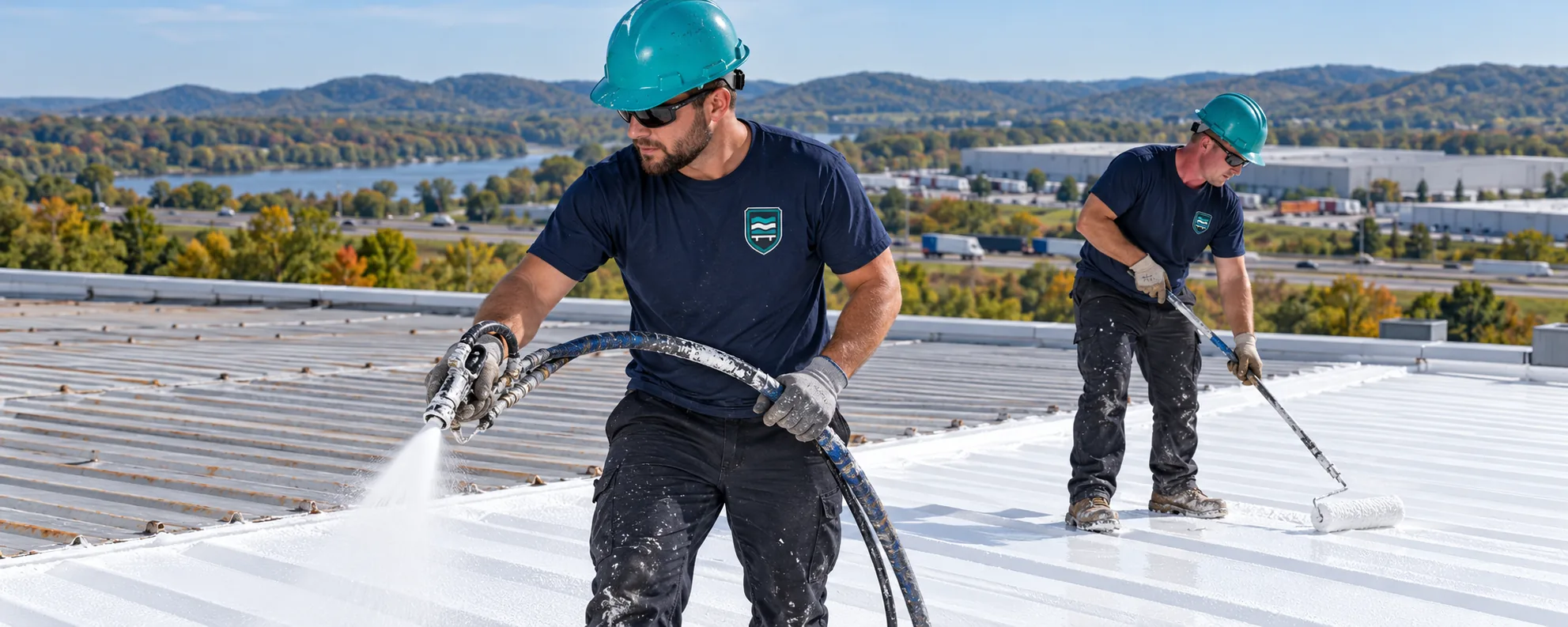
Brooks is an unincorporated community just north of Shepherdsville, and many commercial properties there hold a shop, a storage building, and an office on one lot, each under its own roof.
We inspect them all in one visit and rank them. The roof leaking onto equipment goes first, the building with surface rust follows, and a solid roof gets a watch list instead of a coating.
Four conditions that turn up when several metal buildings share one lot.
One newer building beside two older ones with faded paint.
Each roof gets its own plan, so the newer building might need only screw checks while the others need coating.
Water from one roof dumping against another wall.
Downspouts get redirected away from neighboring walls and foundations before any coating work.
Lifts that cannot reach the far side of the shop roof.
Staging gets planned building by building so equipment can move without blocking the work.
Raised screw heads along the shop's high side.
Heating and cooling loosened them; they are snugged or upsized before the shop roof is coated.
Three gains of coating a multi-building property in one planned sequence.
A patch here and a patch there across three roofs.
One plan coats each roof in order, so repairs stop chasing leaks from building to building.
Lifts and material showing up separately for each roof.
Grouping the buildings into one job sets up equipment once for the whole lot.
Three old roofs that could all be stripped someday.
Coating the solid ones in place keeps that steel on the buildings and out of the landfill.
Roofs on one lot aging on three different schedules.
Coating them on one plan puts their future recoats on a shared schedule.
Four ways we coat roofs on a Brooks property with several buildings.
The building leaking onto equipment or stock is coated first, and the rest follow on a schedule.
Exposed-fastener shop roofs get screws, laps, and primer before the field coat.
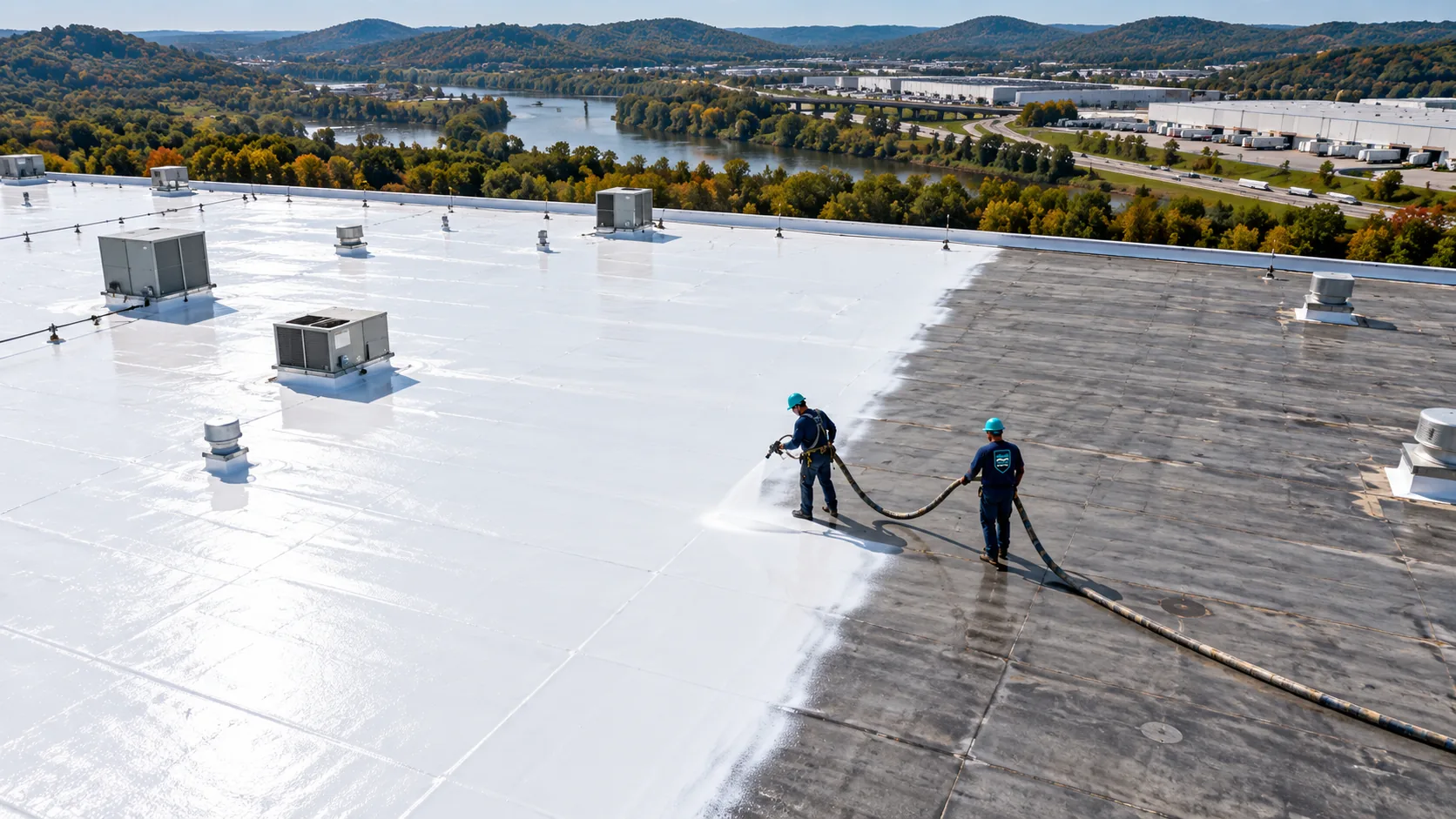
Low-slope storage buildings that hold water take silicone.
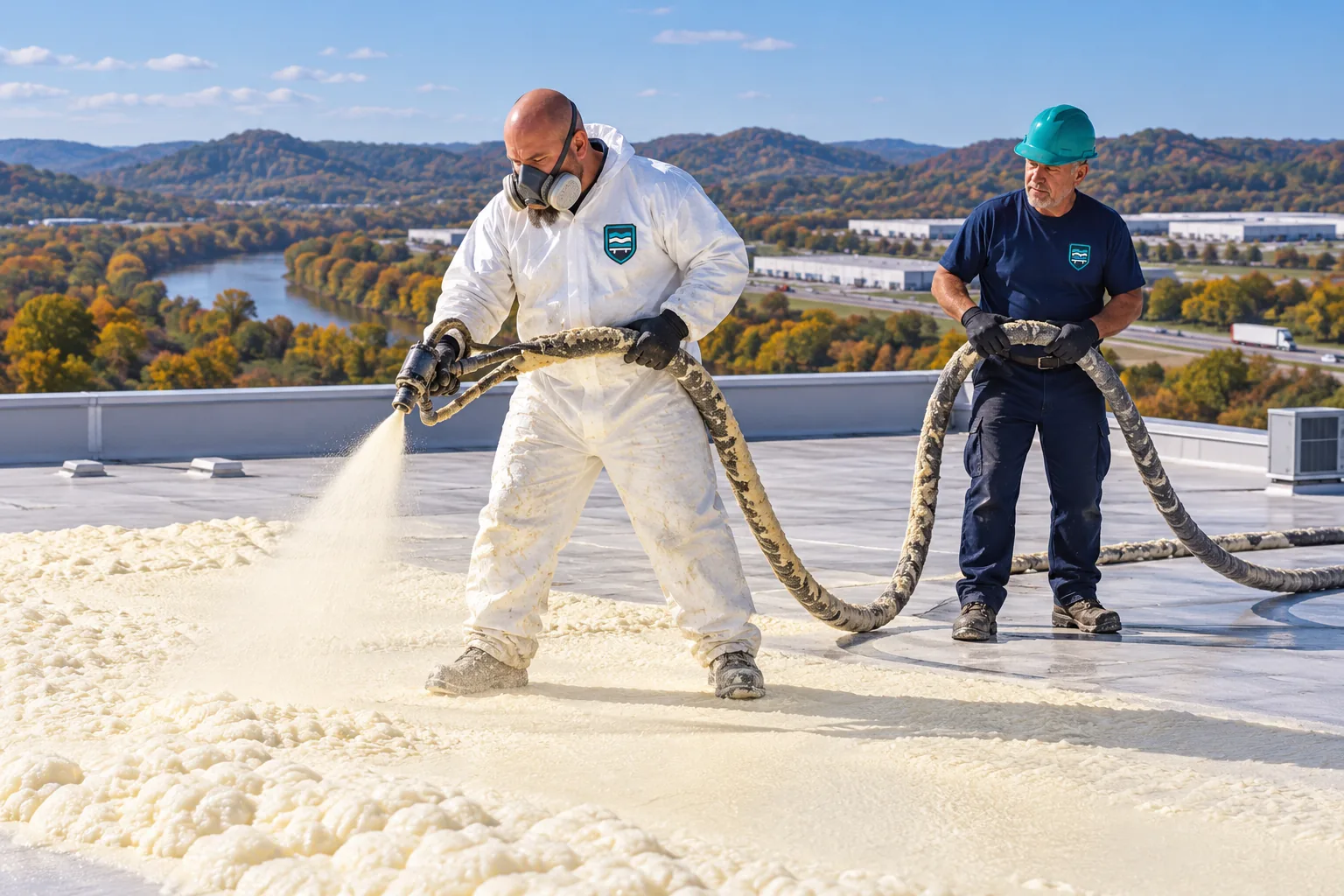
A shop that is heated or cooled can take foam under a topcoat.
Tell us how many buildings sit on the lot and which one leaks worst. We will plan the walk to cover them all in one visit.
(502) 293-5676Five decisions for a property with more than one building.
We walk every roof on the lot in one visit, checking screws, laps, gutters, and rust on each, and note how the buildings drain onto one another.
The roof leaking onto equipment or stock leads. Roofs with surface rust follow, and solid roofs go on a watch list.
Shop roofs with slope take acrylic, flat storage roofs that hold water take silicone, and heated shops can take foam.
Brooks is unincorporated, so roof work there goes through the Bullitt County building inspector rather than a city office.
Equipment sets up once and moves roof to roof, keeping lanes open for trucks and customers using the lot.
We coat commercial roofs in Brooks and these nearby towns.
Is your property somewhere else? Call us or send us a message.
Mixed metal and shingle roofs along US 31E.
Older metal garages with layers of past patching.
Farm and shop roofs prone to condensation drip.
Storefront roofs permitted through Louisville Metro.
Roofs checked closely after hail for split coating.
Church and school-area roofs coated around occupancy.
Answers for owners of multi-building properties in Brooks.
Brooks is an unincorporated community with no city building office of its own. Work goes through the Bullitt County building inspector listed on the Kentucky Department of Housing, Buildings and Construction sheet for the county. Have the roof area, panel type, coating product, and any panel or structural changes written down before calling.
That is how most multi-building jobs run. The worst roof goes first, and the rest are scheduled by need and budget. Each roof keeps its own records, and the first coat is chosen so later buildings can match its system for easier upkeep.
Each roof gets the system that fits it. A sloped shop might take acrylic, a flat storage building silicone, and a heated office or shop foam with a topcoat. Matching systems across buildings makes later recoats simpler, so we weigh that as well.
Runoff dumping against a neighboring wall or foundation causes damage of its own. Gutters and downspouts get sized and pointed away from other buildings, and buried leader pipes near drives are checked for crushing before the roofs are coated.
Lifts and roof material are staged one building at a time, and lanes stay open for trucks and customers. Parking near any eave being sprayed is blocked off to protect vehicles from overspray, then reopened when that section is done.
One visit covers every roof on the lot when access allows. Each building gets its own notes on screws, laps, rust, gutters, and drainage, and the report ranks them by need. A building that shows a hidden problem, such as wet insulation, gets a closer second look before its coating is planned.
Enter the size of the worst roof for a ballpark range, or call and list the buildings on the lot.
Leave a name and number and we will call you back about your commercial roof.
Or call now: (502) 293-5676