Weather
Open Transition Flashing
You See
Stains on the wall where the addition meets the main building.
What It Means
Water gets behind the step or wall flashing, so it is rebuilt and detailed before either roof is coated.
Mixed Roofs Along US 31E
Mount Washington metal roof coating for buildings with more than one roof type. First we inspect the transitions; then we coat each roof with its own system.
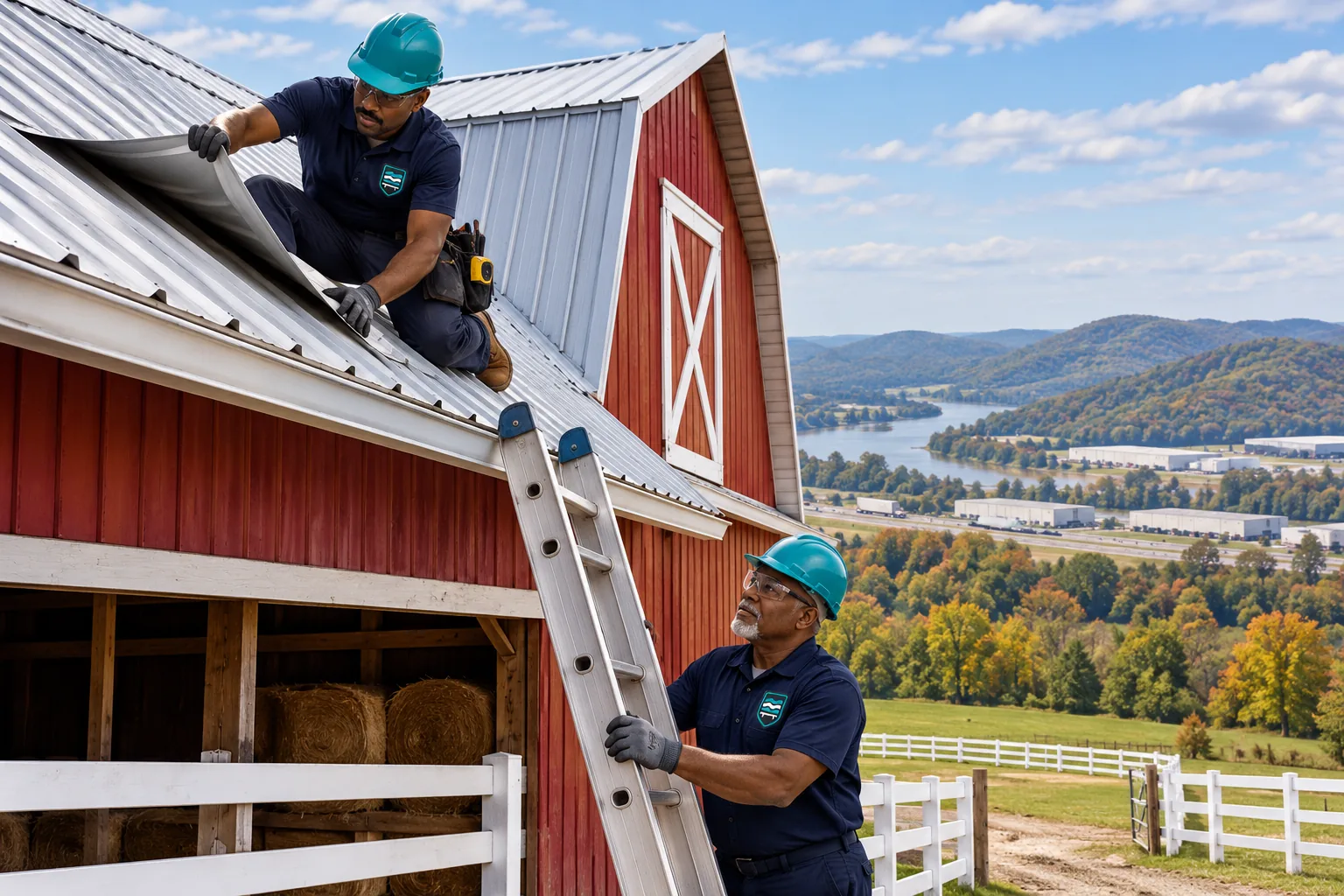
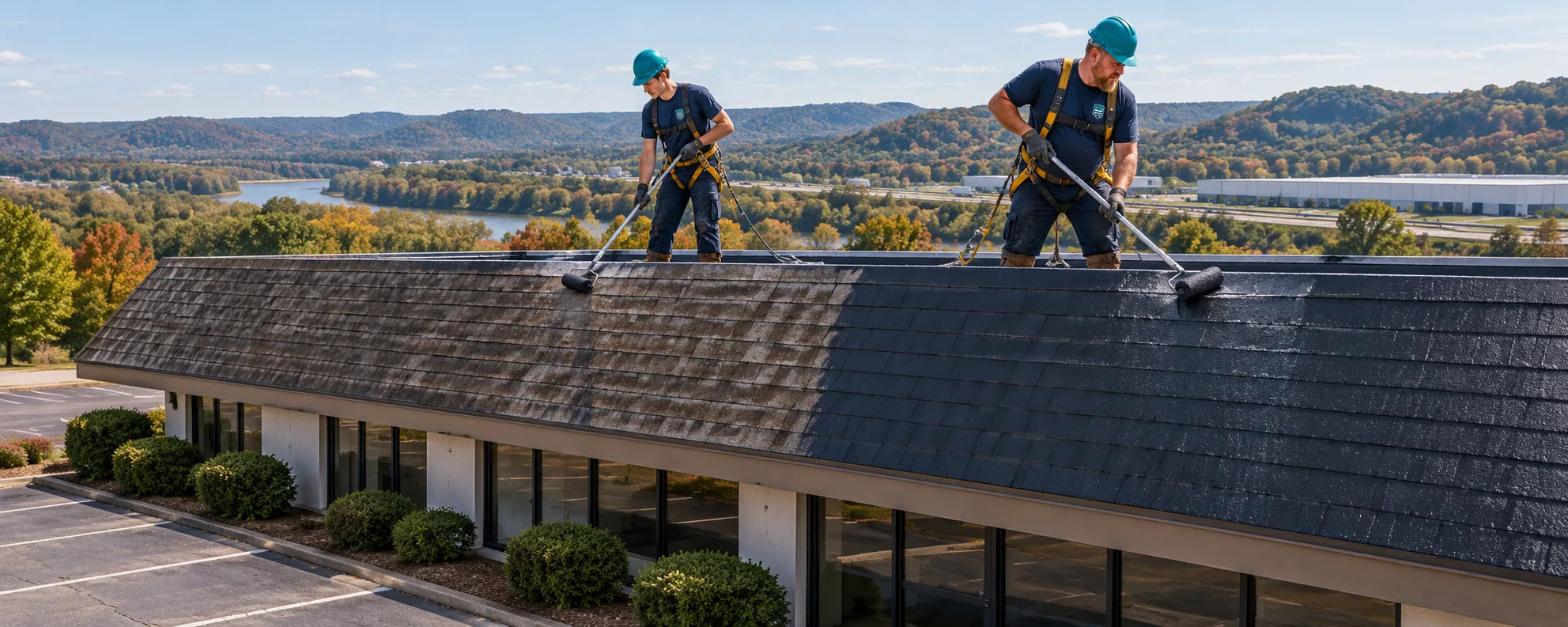
Strip retail, offices, restaurants, and churches along the US 31E corridor often carry metal, low-slope, and shingle roofs on one property. A shingled sanctuary with a metal fellowship hall addition is a typical mix.
The leak usually starts where those roofs meet. We detail that joint first, then coat the metal with a metal system and coat the shingles only if they qualify.
Four conditions that show up where Mount Washington roofs change material.
Stains on the wall where the addition meets the main building.
Water gets behind the step or wall flashing, so it is rebuilt and detailed before either roof is coated.
Drips at mitered corners and end caps along the eave.
Solid gutters are sealed and coated with the roof; rusted-through bottoms are replaced first.
Granules washing out of downspouts on the shingled side.
Shingles losing granules no longer qualify for coating, so that side waits for replacement while the metal is coated.
Screw heads lifted along the addition's high side.
Heating and cooling backed them out; they are tightened or upsized and sealed before the field coat.
Three gains a coating brings to a Mount Washington building with a metal section.
Water showing up where two roofs meet.
Detailed flashing plus a continuous coat closes the joint between the two roof systems.
A metal addition that would otherwise come off.
The addition is coated in place, so the steel and the business inside stay put.
A metal fellowship hall or shop wing that heats up in summer.
A white coat reflects sunlight and keeps the panels cooler.
A metal addition that will need attention again someday.
A coated addition can take a fresh compatible coat later instead of new panels.
Four ways we coat roofs on Mount Washington properties.
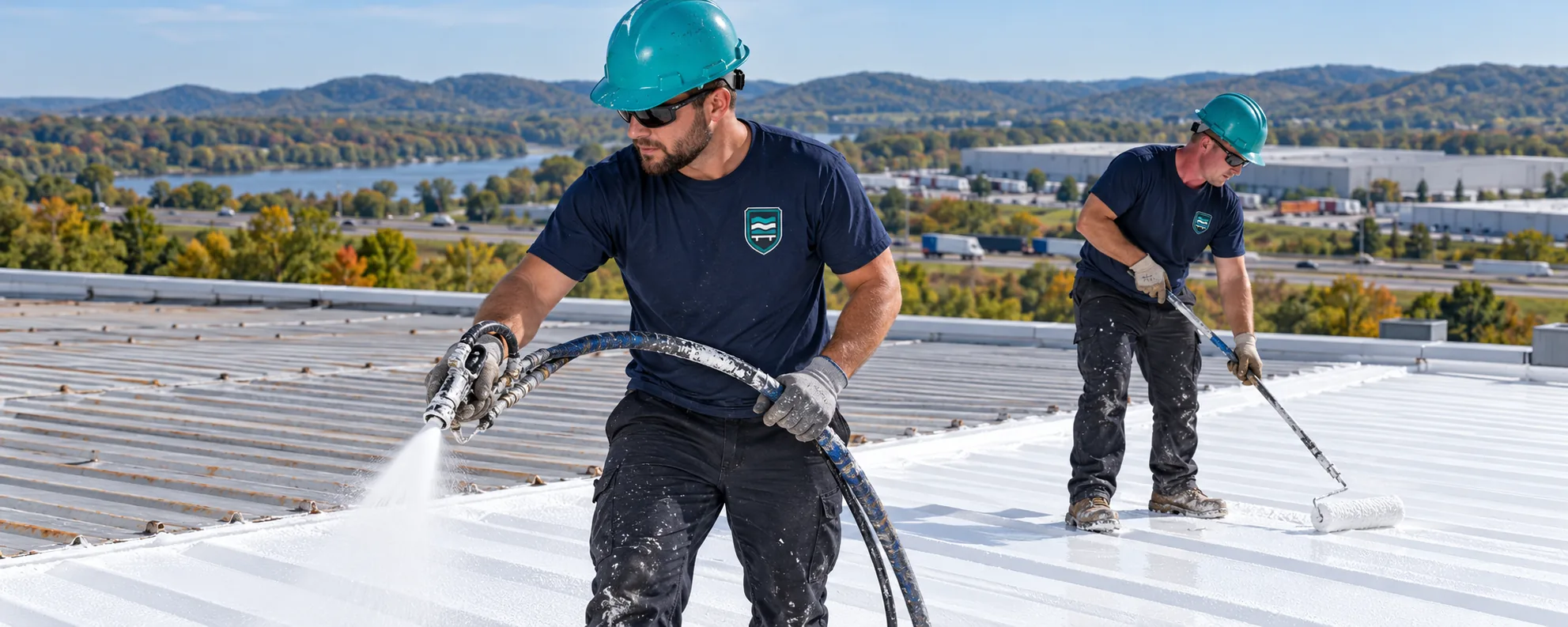
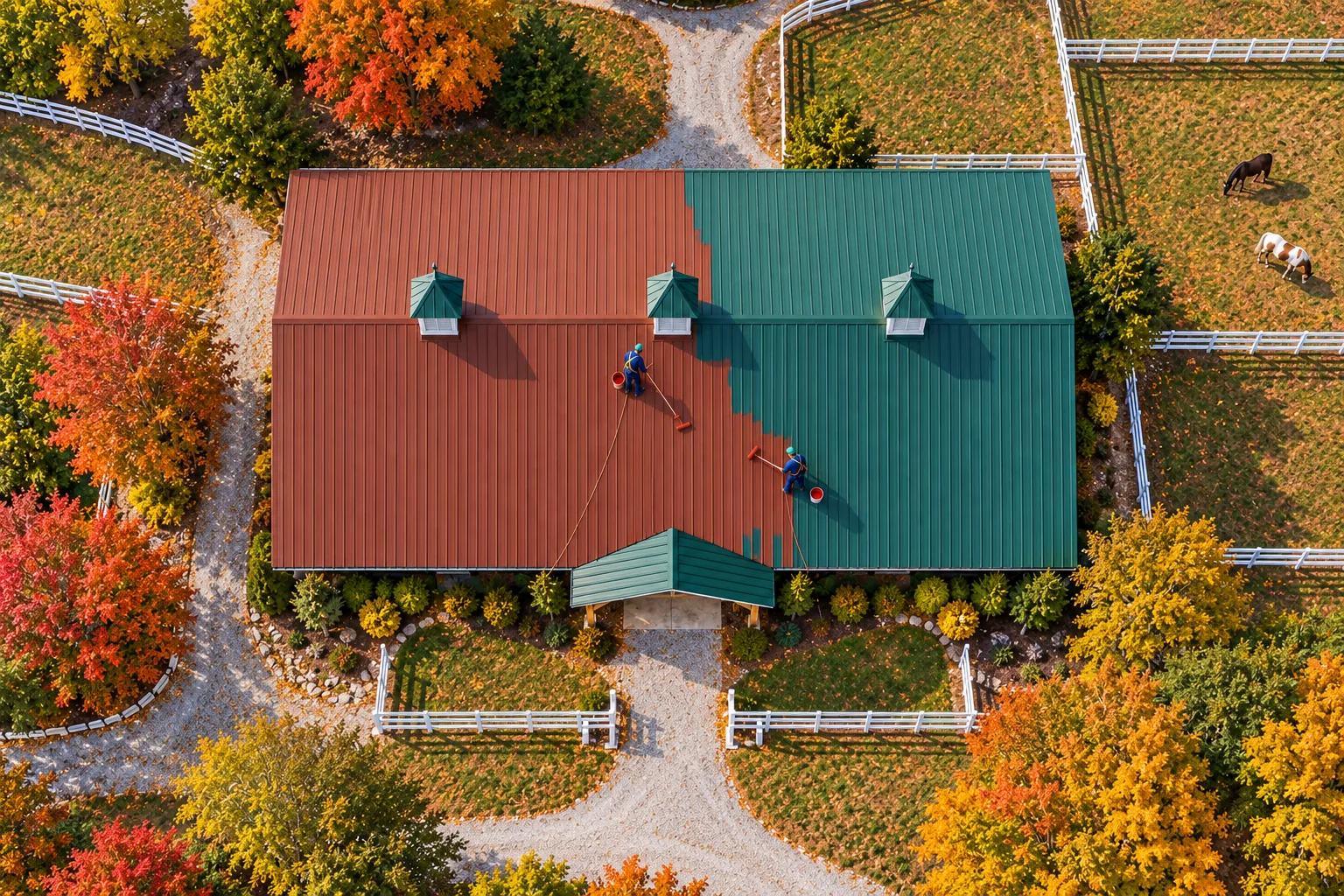
Exposed-fastener additions get screws, laps, and primer, then an acrylic or silicone field coat.
Flat, attached shingles with maker approval can be coated alongside the metal.
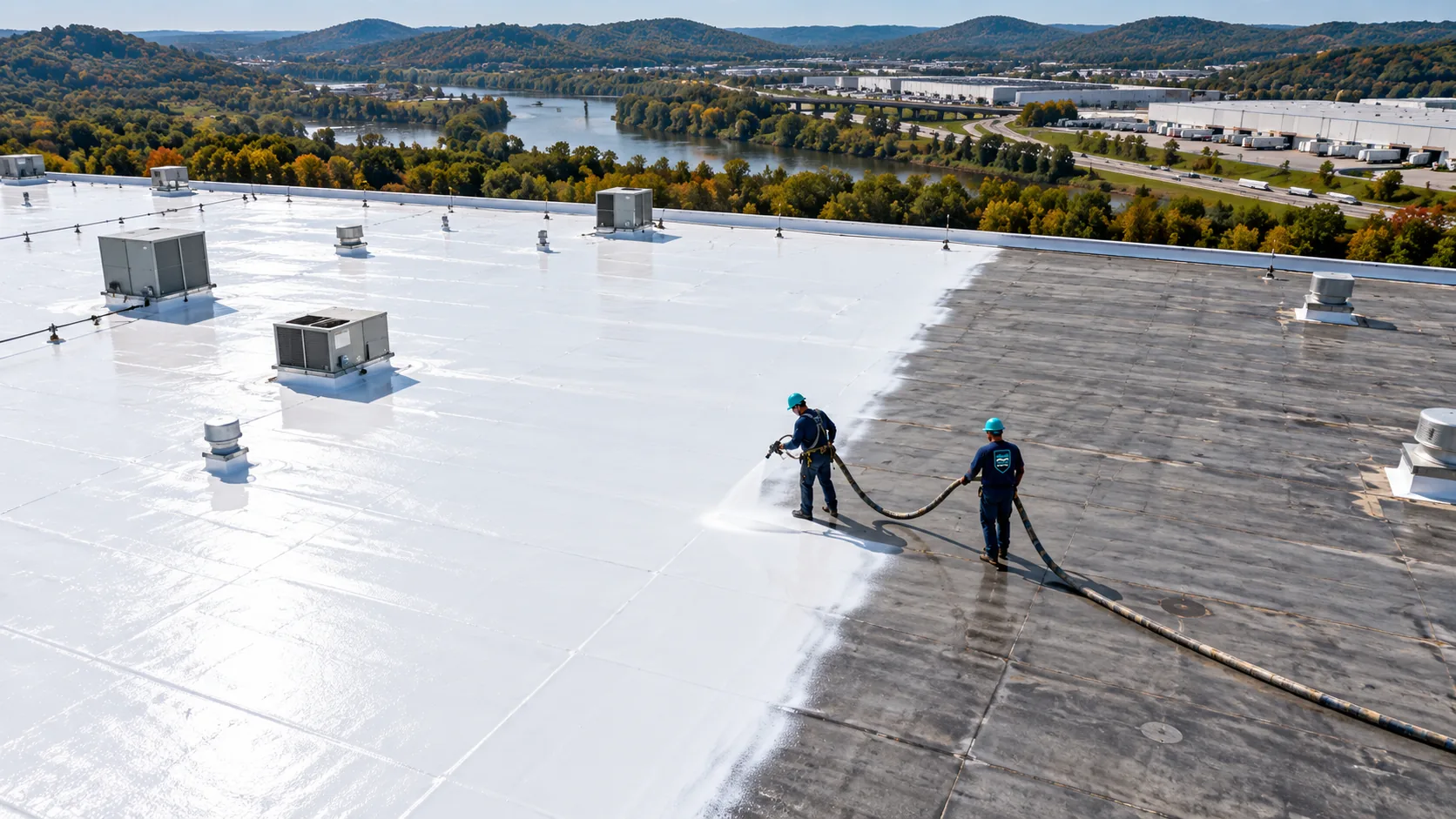
Low-slope roofs behind storefronts that hold water take silicone.
Solid gutters and eave trim are sealed at the seams and coated inside.
Tell us which roof sits higher and where the stain shows inside. That usually points straight to the flashing at the junction.
(502) 293-5676Five decisions, starting on the roof and ending at the city permit desk.
We walk each roof type separately, then trace the flashing where they meet, checking gutters, eave trim, and any curbs set near the junction.
Metal sections with solid panels move ahead. Shingle sections are coated only if flat, attached, and approved; otherwise they wait or get replaced.
The city's Building Code Department reviews work inside city limits. Panel swaps, raised curbs, or foam change the scope from a plain coating.
Transition flashing, gutter corners, and end laps on the addition get fabric-reinforced detail before any field coat goes down.
Lifts and roof material go away from entrances and drive lanes, and spraying near parked cars is scheduled when the lot is quiet.
We coat commercial roofs in Mount Washington and these nearby towns.
Building outside these towns? Call us or send us a message.
Older metal garages with layers of past patching.
Farm and shop roofs prone to condensation drip.
Several metal roofs sharing one unincorporated lot.
Storefront roofs permitted through Louisville Metro.
Roofs checked closely after hail for split coating.
Church and school-area roofs coated around occupancy.
Answers for owners with buildings in Mount Washington.
The city's own Building Code Department reviews, inspects, and approves construction inside city limits under the Kentucky Building Code, and its page says permits must be issued before work begins. Bring the roof area, panel type, coating product and number of coats, any panel or gutter replacement, and any new or raised curbs.
Institutional and state-licensed buildings, such as hospitals, nursing homes, and daycares, go through the Kentucky Department of Housing, Buildings and Construction even inside Mount Washington. Replacing panels over a daycare or adding curbs on a clinic can bring that state review. Keep the inspection records with the building files for insurers and buyers.
When the metal is still solid, yes, and coating seals leaking seams at gutter corners. Rusted-through bottoms and crushed downspouts get replaced first. Built-in gutters on older buildings hold water and leaves for weeks, so they are cleaned, rust-treated, and lined with a product rated for constant moisture.
It can. The metal section is coated as its own job, with the flashing at the junction detailed so a future shingle replacement ties in cleanly. Owners often go this way when the addition leaks now and the shingles still have years left in them.
Kitchen exhaust fans leave grease on the roof around their curbs, and coating will not bond to it. Those areas get a degreasing wash and a second check before primer, and the fan curbs get fabric-reinforced flashing because grease and heat wear coatings faster there.
Yes. Flat or nearly flat roofs behind a storefront often hold water near the back parapet, so they take silicone after the scuppers and drains are cleared. Curbs for rooftop units get fabric-reinforced flashing, and the joint where the low roof meets a taller wall gets its own detail coat.
Enter the roof size for a ballpark range, or call and tell us where the two roofs meet.
Leave a name and number and we will call you back about your commercial roof.
Or call now: (502) 293-5676