Age
Curled Or Cupped Tabs
You See
Tab edges lifting or bowing upward along the courses.
What It Means
Shingles have failed at the tab, and coating over them is ruled out.
Commercial Shingle Roofs, Narrow Gate
We apply shingle roof coating in Shepherdsville only where the shingles qualify. First we inspect tabs, granules, and decking; then we clean, detail, and coat.
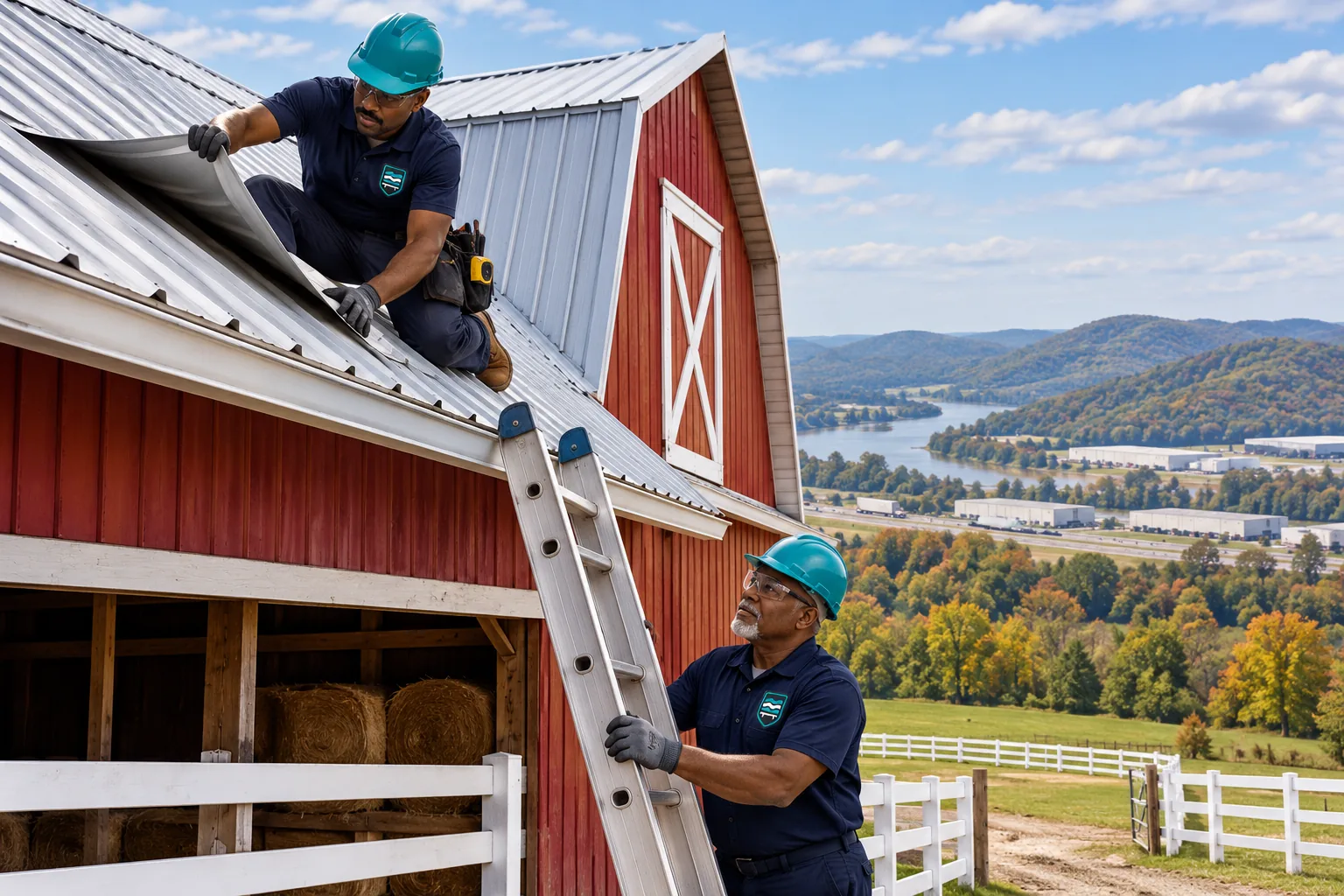
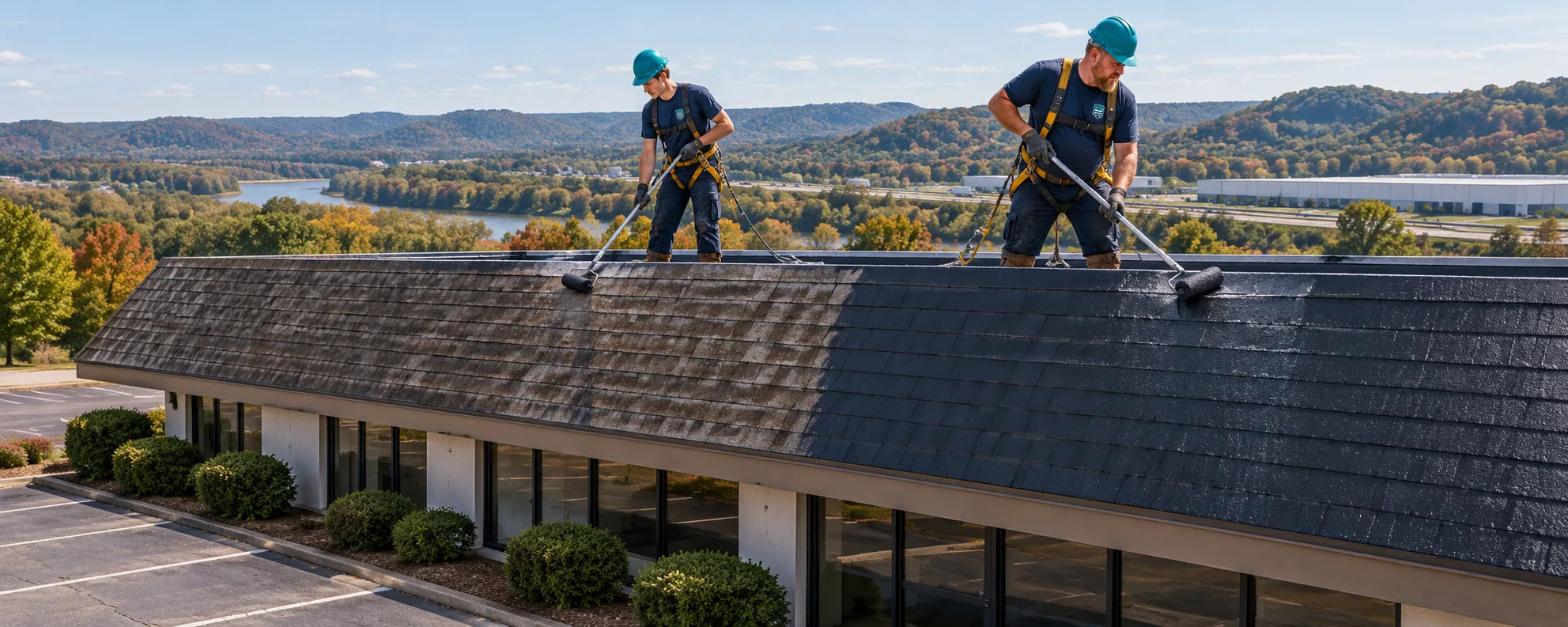
Shingle coating has a narrow gate. Most of the work is deciding honestly whether a roof passes it.
Shingles in that shape can take a coating that seals and reflects, if the maker approves.
Commercial shingle sections on these buildings are the usual candidates we inspect.
The transition flashing gets detailed first, then each surface is coated with its own system.
Failed shingles are past coating; a coating would only cover them.
Each condition below either clears a shingle roof for coating or rules it out.
Tab edges lifting or bowing upward along the courses.
Shingles have failed at the tab, and coating over them is ruled out.
Gritty, dark sand collecting at downspout outlets.
Bare spots are forming, so the shingle surface is wearing out underneath any coating.
Gaps in the courses after a windy storm.
Missing tabs need repair or replacement, and widespread loss rules out coating.
A thick, uneven edge where shingles sit on older shingles.
Multiple layers rule out coating; the roof needs tear-off and replacement.
Stains under the joint between a metal addition and the main roof.
The transition flashing is the leak point and gets detailed before either surface is coated.
Warm air trapped under the deck in summer.
Attic ventilation gets a look, since a coating changes how the shingle surface handles heat and moisture.
Shingle coating is one path for a commercial shingle roof. These are the options we weigh on the same building.
Flat, firmly attached shingles with maker approval get cleaned, detailed at flashings, and coated.
On mixed buildings, the metal addition can be coated while the shingle roof is left alone or replaced later.
Where metal meets shingle, the transition is rebuilt before anything else is planned.
Curled, bare, or double-layered shingles need replacement rather than a coating.
On shingles that qualify, a coating answers a short list of problems. Here they are.
Dark shingles soaking up sun over an office or sanctuary.
A reflective coating keeps the roof surface cooler in summer.
Shingles that still lie flat but look worn and dull.
The coating seals the surface while the shingles are still in good shape.
A shingle roof that would otherwise be stripped and hauled off.
Coating qualifying shingles in place keeps them out of the landfill for now.
Tell us the building type and how the shingles look from the ground. We will tell you plainly whether a coating is worth inspecting for.
(502) 293-5676Five decisions, and the first two settle most shingle jobs.
We check tabs for curling, gutters for granules, decking for soft spots between rafters, the number of shingle layers, and attic ventilation.
Flat, well-attached shingles with their granules move ahead. Any curling, bare spots, soft decking, or a second layer means replacement.
Some shingle warranties end once a coating is applied, so the warranty paperwork and the shingle maker's guidance are checked first.
Flashings, valleys, and any joint where a metal addition meets the shingles get detailed before the field coat goes on.
Coating buys time on shingles that still qualify. Twice-yearly walks keep an eye on flashings, valleys, and any spot where the coat wears.
Mixed buildings often need one of these on the other roof sections.
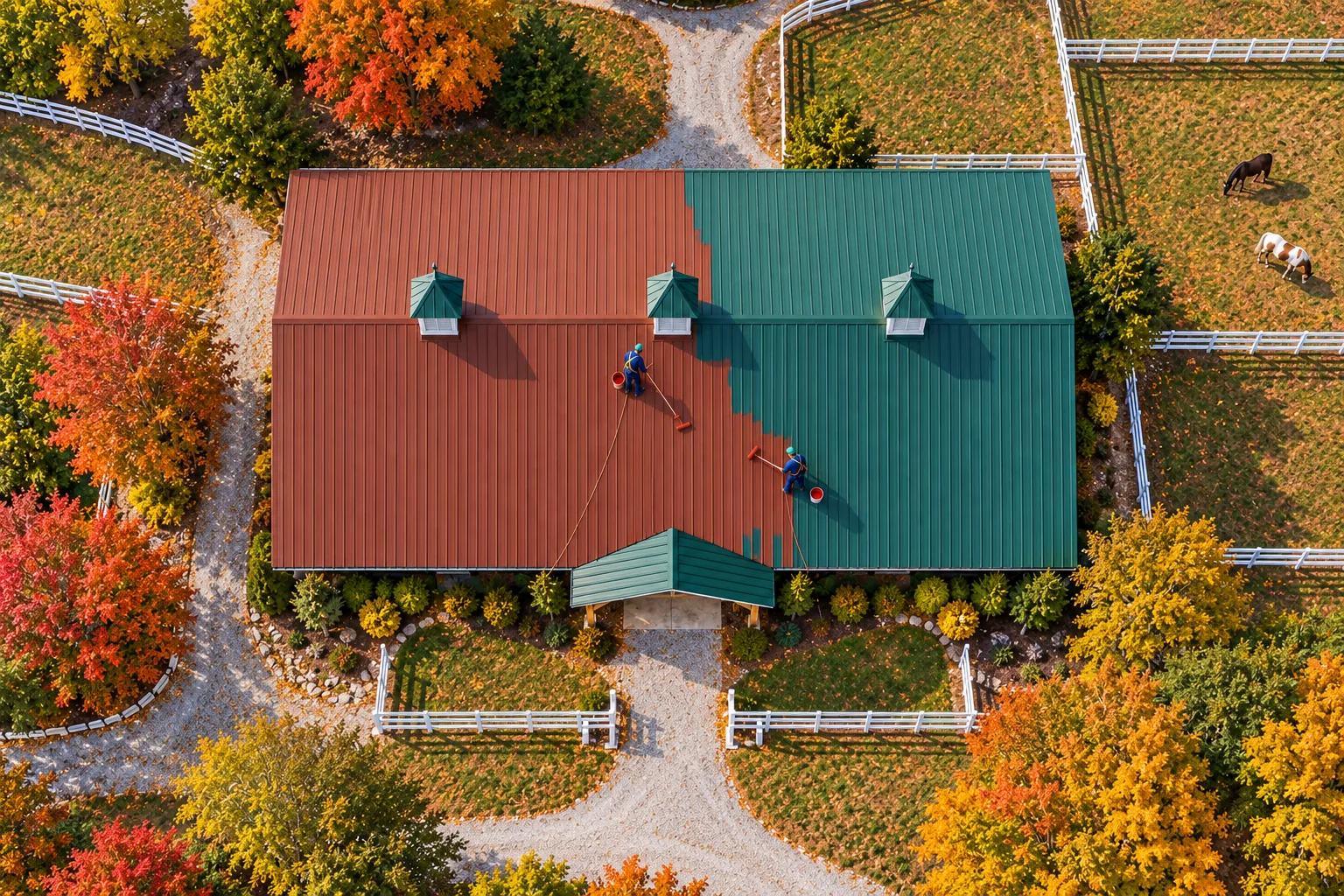
Screws, laps, and rust on exposed-fastener panels.
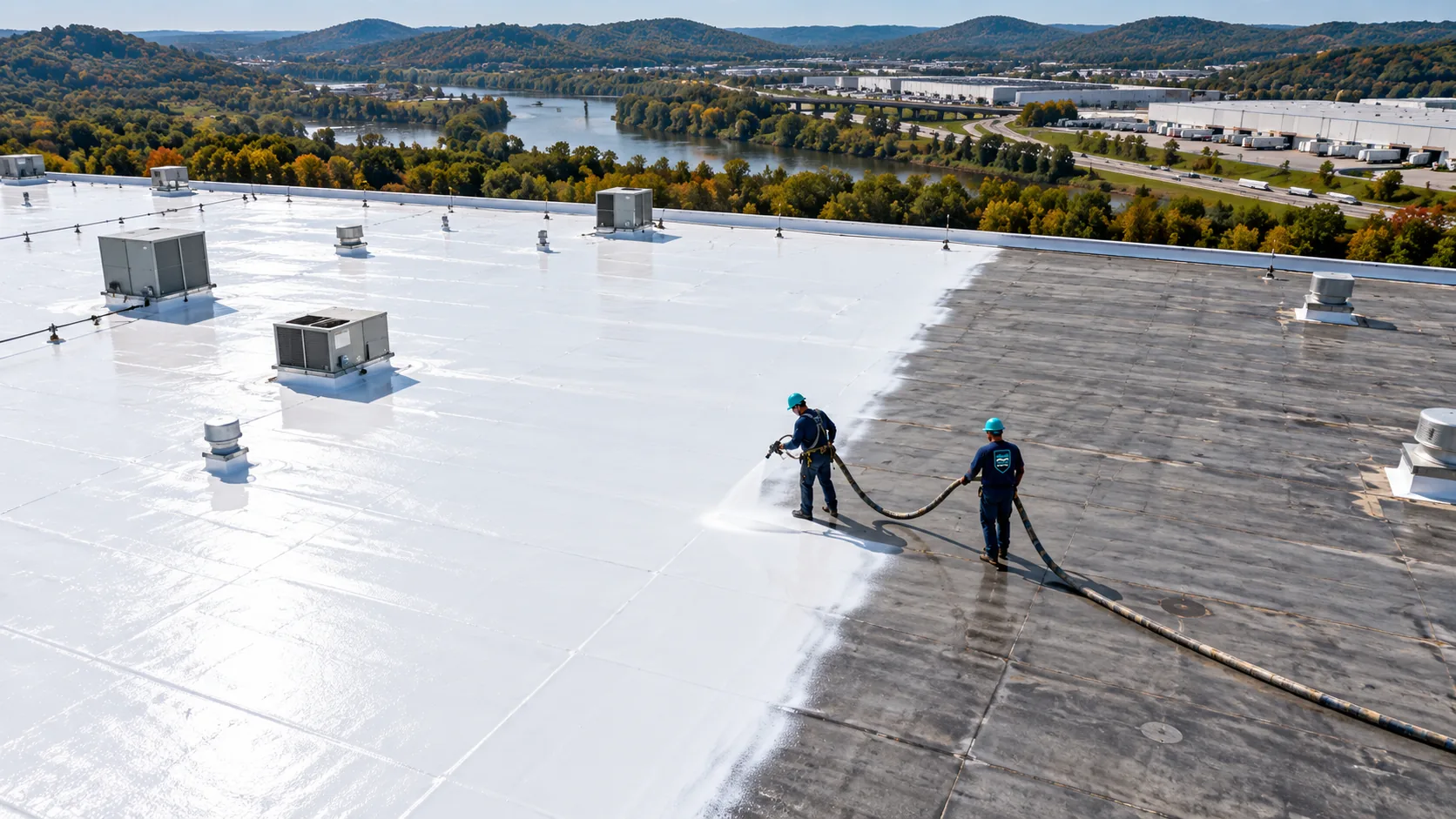
Standing water on low-slope panels calls for silicone.
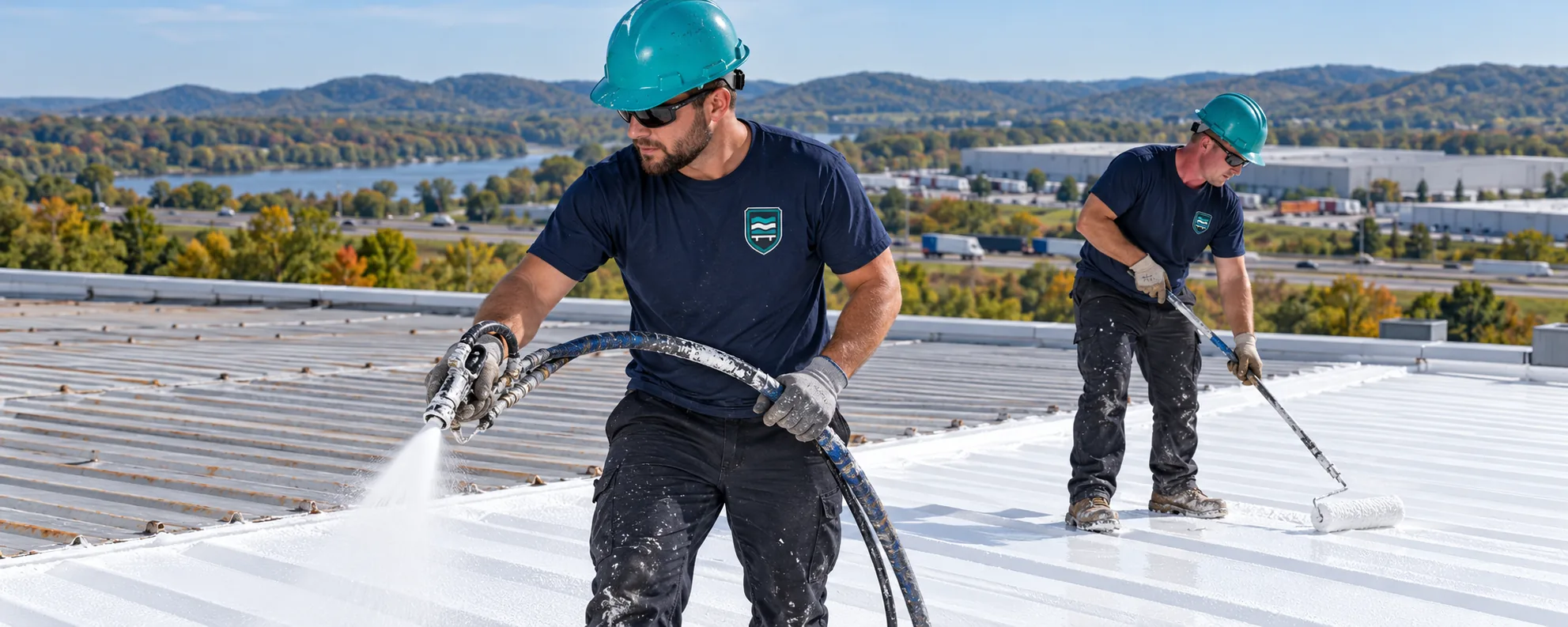
Pitched roofs that shed water fast suit acrylic.
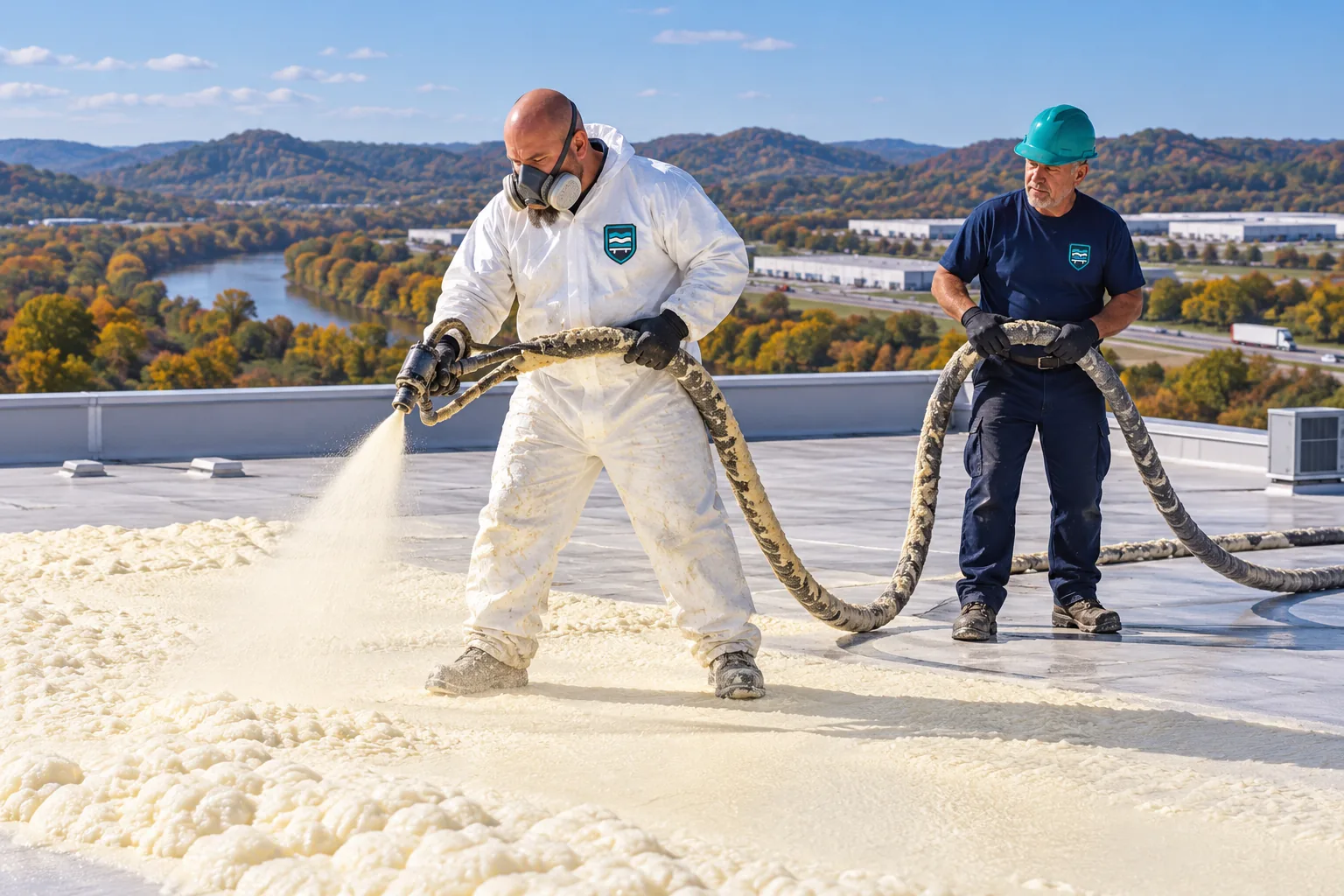
Insulation and added slope under a protective topcoat.
Plain answers about coating commercial shingle roofs.
Some can. Offices, strip centers, and churches with flat, well-attached shingles that the shingle or coating maker approves are candidates; the coating seals and reflects but does nothing for shingles that have already failed. Curled or missing tabs, bare spots, soft decking, or a second shingle layer rule it out.
Walk it twice a year and after major storms, and fix any cuts, peeled spots, or loose trim quickly, since small breaks let water back in. Check flashings, gutters, valleys, and the edges of any equipment curbs. Dated photos of the same spots each visit show how the coating is wearing and when a recoat is due.
Strip retail, offices, restaurants, and churches along the US 31E corridor in Mount Washington often carry shingle, metal, or low-slope roofs, sometimes all on one property. Shingle sections qualify only when flat, well attached, and approved by the maker; metal sections start with fasteners and laps, and the flashing between them comes first.
It can. Some shingle warranties end once a coating is applied, so the warranty paperwork and the shingle maker's guidance get checked before anything is scheduled. If the warranty still has real value, that is a reason to wait or to coat only the metal sections.
The roof has to be fully dry, including the layers under the tabs and the decking, which takes longer than the surface suggests after a soaking rain. Work also waits for temperatures inside the coating maker's limits and a forecast clear through the cure time.
Steep shingle faces such as mansards and entry canopies follow the same gate as the main roof: flat, attached shingles with maker approval. Access changes, though, since steep faces need lifts or staging, and those sections are often coated with brushes and rollers rather than spray.
Request an inspection, or call and describe the building and what you see from the ground.
Leave a name and number and we will call you back about your commercial roof.
Or call now: (502) 293-5676