History
Tar Over Screw Heads
You See
Black blobs of mastic covering fastener rows.
What It Means
The mastic hides the screw and bleeds through white coatings, so it comes off or gets a bleed-blocking base.
Older Metal Buildings, Past Patches
We coat older commercial metal roofs in Hillview. First we find every old tar, caulk, and panel patch; then we strip or prime them and coat the roof.
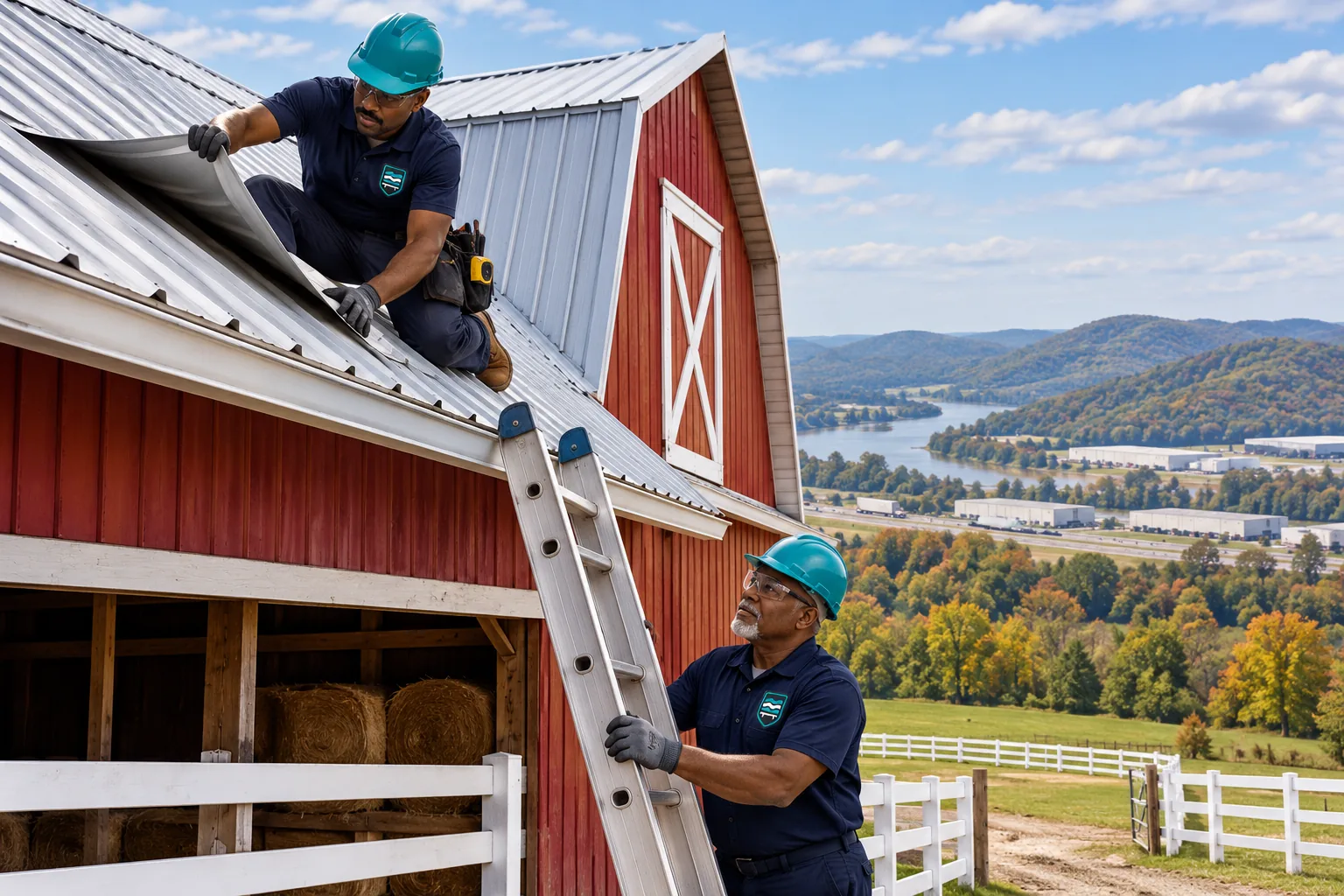
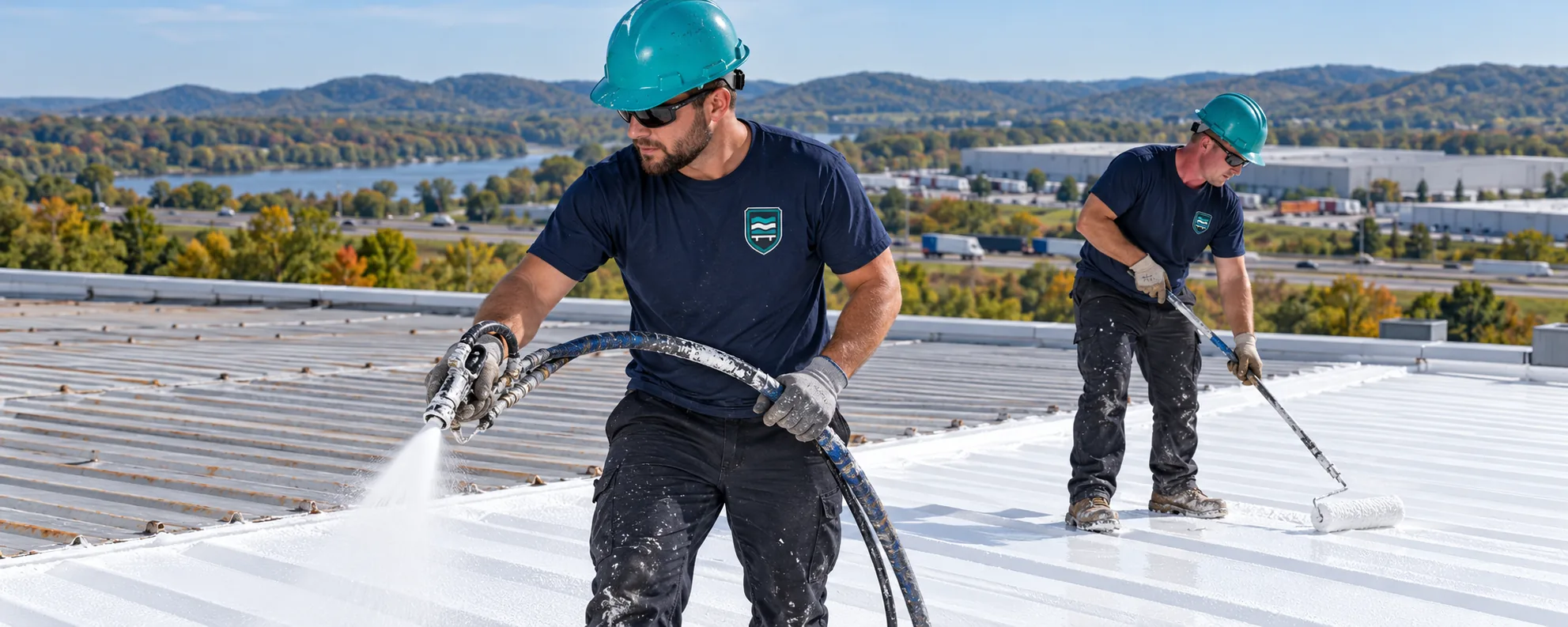
Service garages, small shops, and flex buildings in Hillview often carry decades of repairs: tar over screw heads, mismatched replacement panels, and caulk smeared along the laps.
Those repairs decide the prep. Tar and asphalt mastic bleed through light-colored coatings, so we scrape them back or seal them under a bleed-blocking primer the coating maker approves.
Four conditions we expect on Hillview's older metal buildings.
Black blobs of mastic covering fastener rows.
The mastic hides the screw and bleeds through white coatings, so it comes off or gets a bleed-blocking base.
A panel or two with a different rib shape or color.
Unlike ribs leave gaps at the laps that hold water, so those joints get extra sealant and fabric.
Cracked, dried caulk lines along the side laps.
Old caulk fails and traps dirt; it is cut out, and the lap is cleaned and detailed again.
Orange bleed seeping from the edge of a tar patch.
Water got trapped under the old repair, so the steel below is checked for section loss.
Three gains a coating brings to an older Hillview metal roof once the patches are dealt with.
A roof that gets a new tar patch every spring.
One continuous coat replaces the cycle of spot repairs with a single sealed surface.
Corrosion spreading under old repairs.
Removing the patches exposes the rust, which is primed and sealed instead of covered over.
An old roof that looks like it needs all new panels.
Panels that are still solid get coated in place, and only failed ones are swapped.
A roof that will keep aging after this job.
Later upkeep becomes a wash and a fresh compatible coat instead of another patch.
Four ways we handle older metal roofs in Hillview.
Tar patches come off, screws are replaced, laps are detailed, and an acrylic or silicone coat goes on.
Mastic that cannot come off cleanly is sealed under a primer the coating maker approves.
Rusted-through or mismatched panels are replaced with matching profiles before coating.
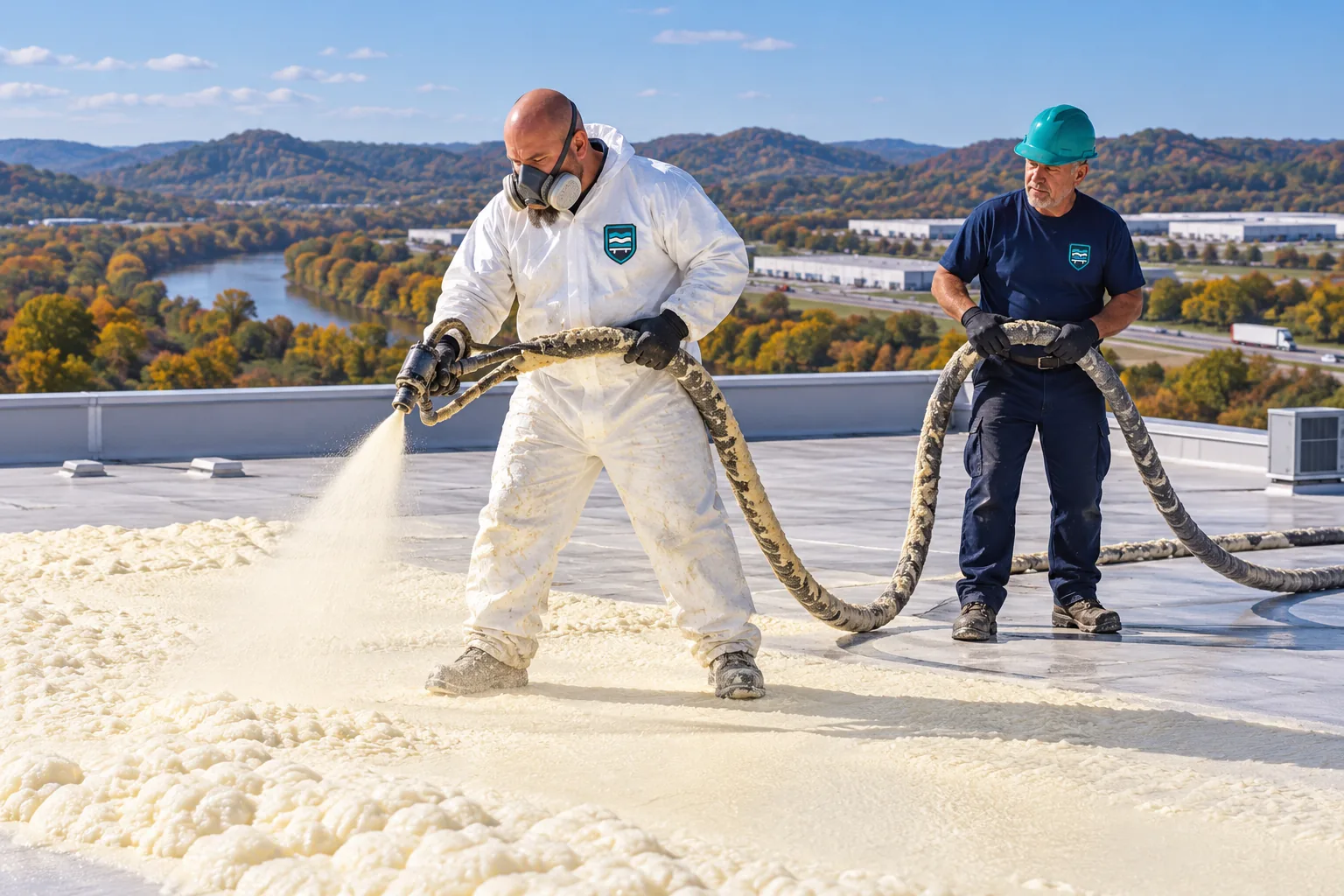
Uninsulated garages can take foam under a topcoat for insulation as well as sealing.
Tell us how many patches the roof has collected and roughly when the last one went on. That helps us plan the strip-back before the coat.
(502) 293-5676Five decisions that start with the old repairs.
We map every tar patch, caulked lap, and replacement panel, then check the steel under the worst patches for rust that has eaten through.
Patches that lift off cleanly are removed; well-stuck mastic gets a bleed-blocking base so it never stains the finished coat.
Most older garages and flex roofs drain well enough for acrylic; low sections that hold water take silicone instead.
Roof permits start with Hillview city hall and the Bullitt County building inspector; confirm the address, since some mailing addresses near Louisville name another city.
Strip-back labor is the big variable. Once coated, twice-yearly walks keep new patches from starting the cycle again.
We coat commercial roofs in Hillview and these nearby towns.
Not seeing your town here? Call us or send us a message.
Mixed metal and shingle roofs along US 31E.
Farm and shop roofs prone to condensation drip.
Several metal roofs sharing one unincorporated lot.
Storefront roofs permitted through Louisville Metro.
Roofs checked closely after hail for split coating.
Church and school-area roofs coated around occupancy.
Answers for owners of older metal buildings in Hillview.
Hillview is its own city in northern Bullitt County beside Louisville Metro, so start with Hillview city hall and the Bullitt County building inspector rather than a Louisville office. Describe the scope clearly: coating only or with panel and screw replacement, square footage and slope, units moved or raised, and gutter changes. Check the address near the Metro line.
The layers of past patching come first: tar over screw heads, mismatched replacement panels, and caulk along the laps. Tar and asphalt mastic bleed through many light coatings, so they are scraped back or sealed under an approved bleed-blocking base. Mismatched panels can leave gaps between unlike ribs, and those laps get careful sealing.
End laps and side laps get a reinforced detail, usually sealant or a base coat with polyester fabric embedded over the joint, before the full roof is coated. Old caulk is cut out and the joint cleaned and dried first, since laps move as the steel expands and contracts and need more material than flat panel areas.
Only after they are dealt with. Loose patches come off; patches stuck tight can stay if the coating maker approves a bleed-blocking primer over them. Coating straight over raw tar leaves brown stains bleeding through a white coat and can keep the coat from bonding to the panel.
Where we can reach the underside, yes. Rusted purlins, rotted wood framing on converted buildings, or daylight through the panels change the plan from coating to repair. Garages with interior ceilings get a look through access points, or from the roof at the eaves.
The field coat covers every panel in one color, usually white, so mismatched replacement panels disappear under it. The difference that matters sits at the laps: unlike rib shapes leave gaps that hold water, and those joints get sealant and fabric before the color coat goes on.
Enter the roof size for a ballpark range, or call and describe the repairs the roof has collected.
Leave a name and number and we will call you back about your commercial roof.
Or call now: (502) 293-5676