Age
Backed-Out Screws
You See
Screw heads standing proud of the panel along the high side.
What It Means
Years of heating and cooling walked them loose; they get tightened or replaced with a larger-diameter screw.
R-Panel And Standing Seam Roofs
We coat commercial metal roofs on Shepherdsville warehouses, plants, and shops. First we inspect every fastener row and lap; then we seal those details and coat the panels.
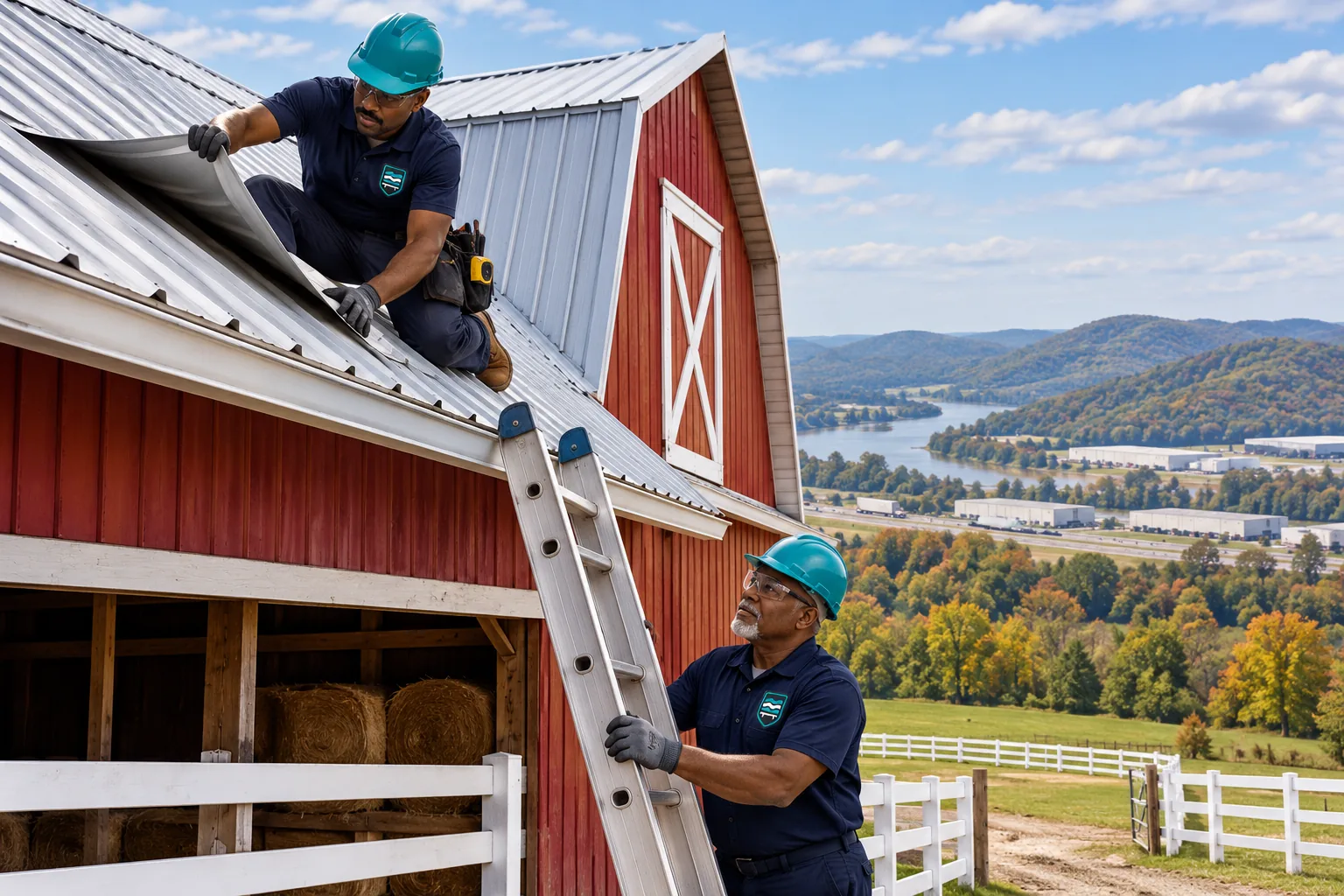
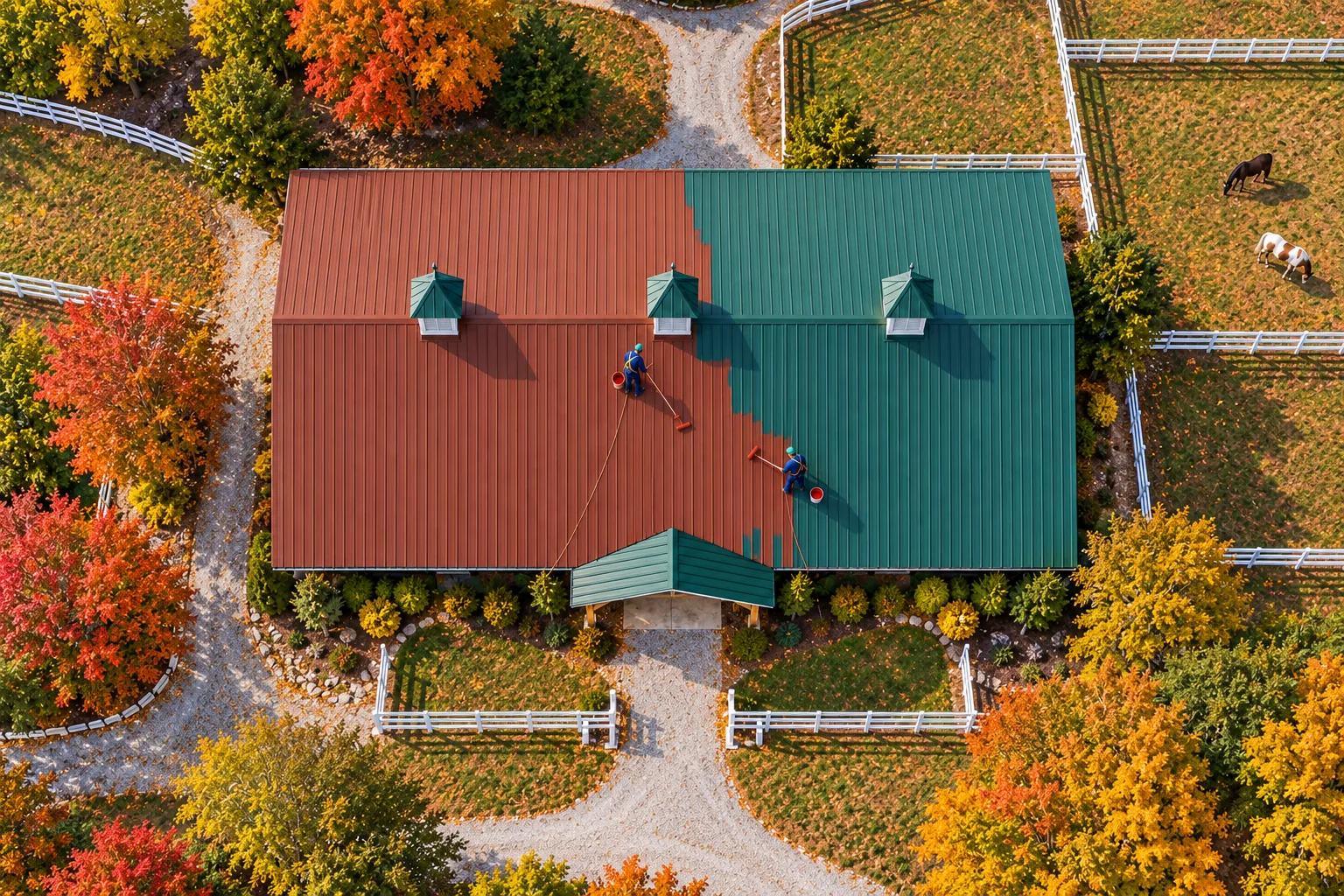
Four roof conditions we find on Shepherdsville metal buildings, and where each one starts.
Water is getting in at details the coating system seals with extra material, so this roof is a strong candidate.
Surface rust on firm steel brushes off and takes a rust-inhibitive primer before the field coat goes down.
Ponding on low-slope metal favors a silicone field coat, since acrylic softens under water that sits for days.
Rust-through across whole sections means the steel itself has failed, and a coating would only hide it.
These are the conditions we find most often on long-run metal roofs around Shepherdsville.
Screw heads standing proud of the panel along the high side.
Years of heating and cooling walked them loose; they get tightened or replaced with a larger-diameter screw.
Drips landing in aisles directly below a panel overlap.
Water sits on the upper panel edge and capillary action pulls it into the joint, so the lap gets a fabric detail.
Chalky gray or white residue on unpainted steel.
That is white rust. It is cleaned off and covered with a primer made for galvanized or Galvalume metal.
Brittle fiberglass panels set in rows across the roof.
Skylight panels stay uncoated; their edges and fasteners are sealed, and cracked ones are replaced first.
Water spilling over the eave edge during heavy rain.
Gutters are cleaned, rust-treated, and coated inside with a product rated for constant moisture.
Ceiling stains near loading docks under rooftop fans.
Curbs meet the panel ribs at an awkward angle, so they get fabric-reinforced flashing before coating.
Four ways we coat a metal roof here, chosen by slope, standing water, and insulation.
Gable warehouses and shop buildings that drain fast take a white acrylic field coat over primed laps and screw heads.
Near-flat panels where water lingers after storms get silicone, which holds its seal under standing water.
Rusted panels and failed screws are replaced, trim is reset, and then the whole roof is primed and coated.
Uninsulated steel buildings get sprayed foam over the ribs, then a protective coating over the foam.
Four gains a coating gives an exposed-fastener roof, each tied to a part you can point to.
Every exposed screw is a hole through the roof, and old washers crack.
Each head is sealed twice: once with sealant or a cap, once with the field coat.
Replacing panels means pulling steel off over occupied space.
Coating goes over solid panels in place, so less material comes off the building and less goes to the landfill.
Rust bloom moving outward from the laps each year.
Primer and a continuous coat keep rain and condensation off bare steel, which slows new rust.
Paint that will need attention again in time.
A coated roof can take a fresh coat of compatible material later instead of a replacement.
Tell us the panel profile and roughly how long the runs are. That shows whether the job starts with screws, laps, or panel replacement.
(502) 293-5676Five decisions, in the order we make them on a metal building.
We check sample screw rows for tightness and washer condition, probe rust at end laps and low panel ends, and run adhesion test patches for the primer.
Solid panels with surface rust move ahead. Panels that flex between purlins or crumble at the edges are replaced before any coating is planned.
Roof slope, standing water, and later recoats steer the choice between acrylic, silicone, and a urethane system for heavy foot traffic.
Screw heads, side laps, end laps, ridge caps, and curb flashings get sealant or fabric before the field coat, since those joints move the most.
Most of the price comes from screw count and linear feet of laps. Afterward, twice-yearly roof walks catch cuts and peeled spots before rust restarts.
When plain metal coating is the wrong match, one of these fits better.
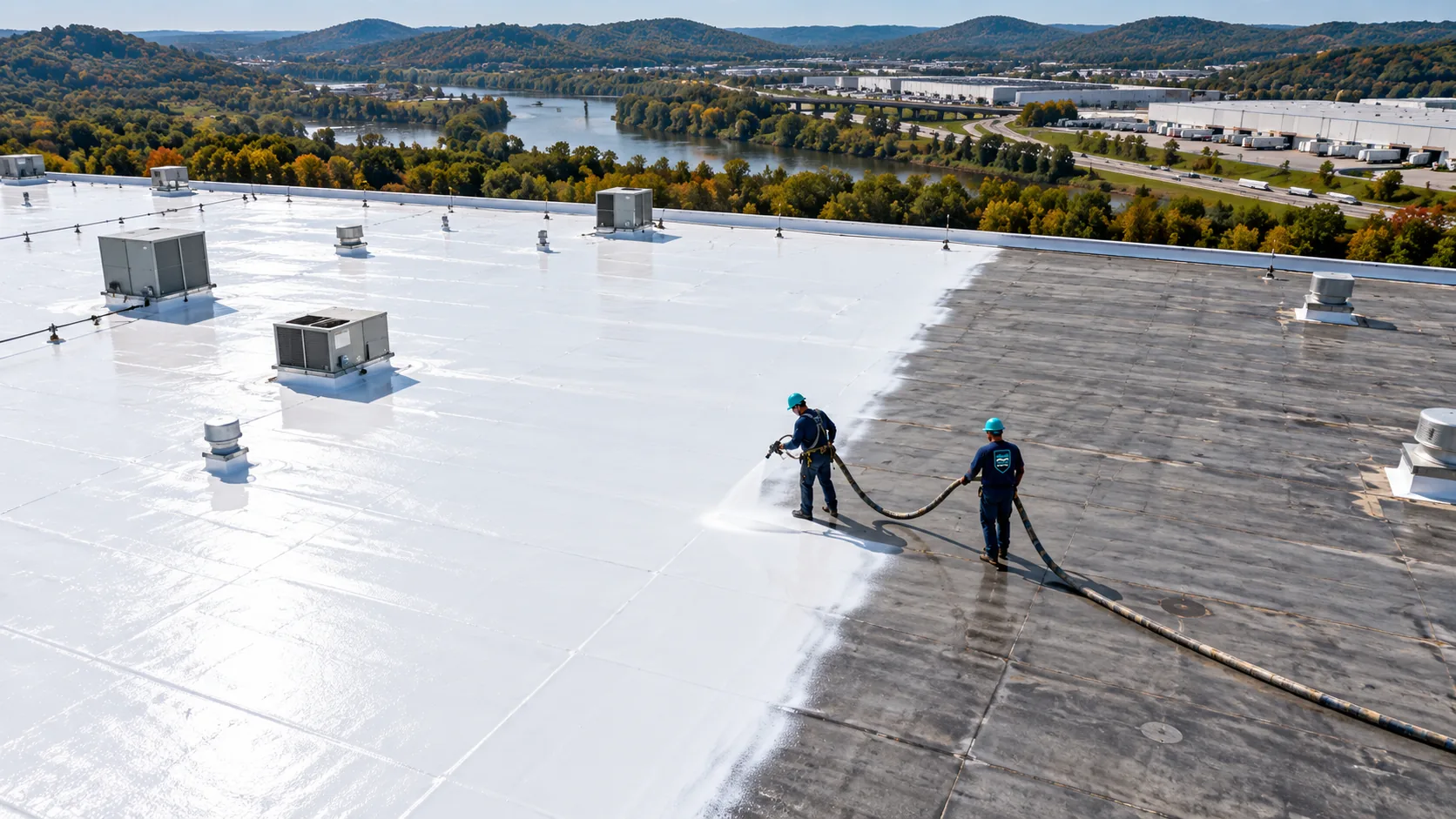
Standing water on low-slope panels calls for silicone.
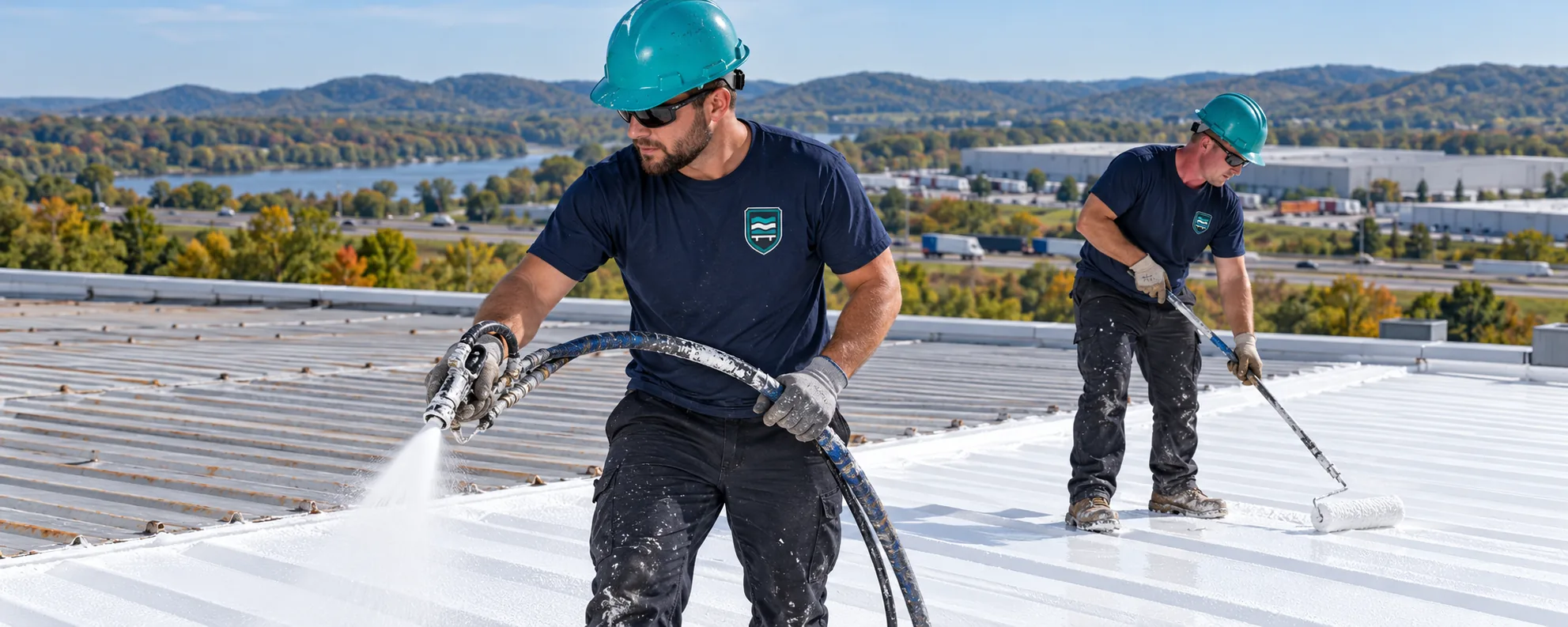
Pitched roofs that shed water fast suit acrylic.
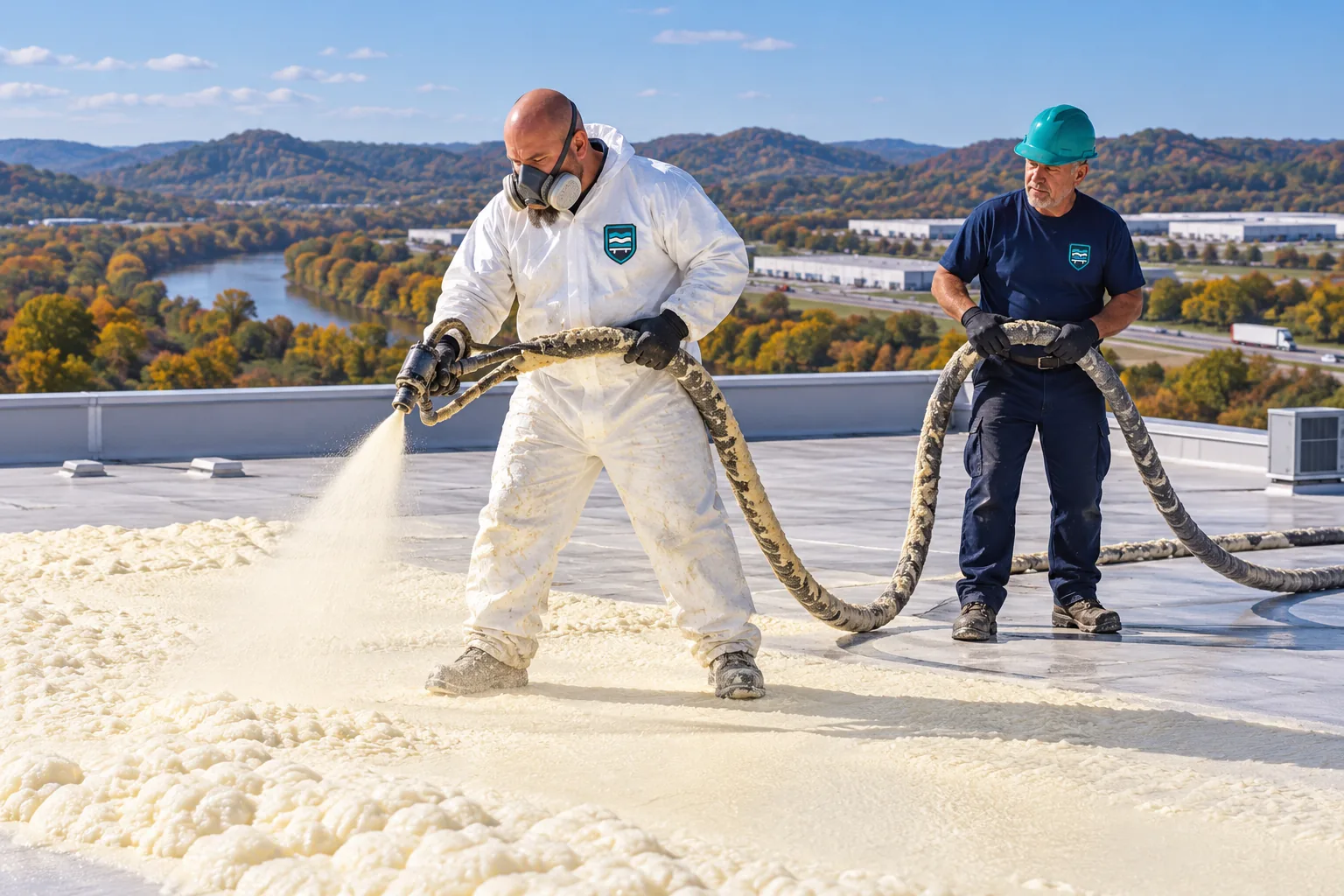
Insulation and added slope under a protective topcoat.
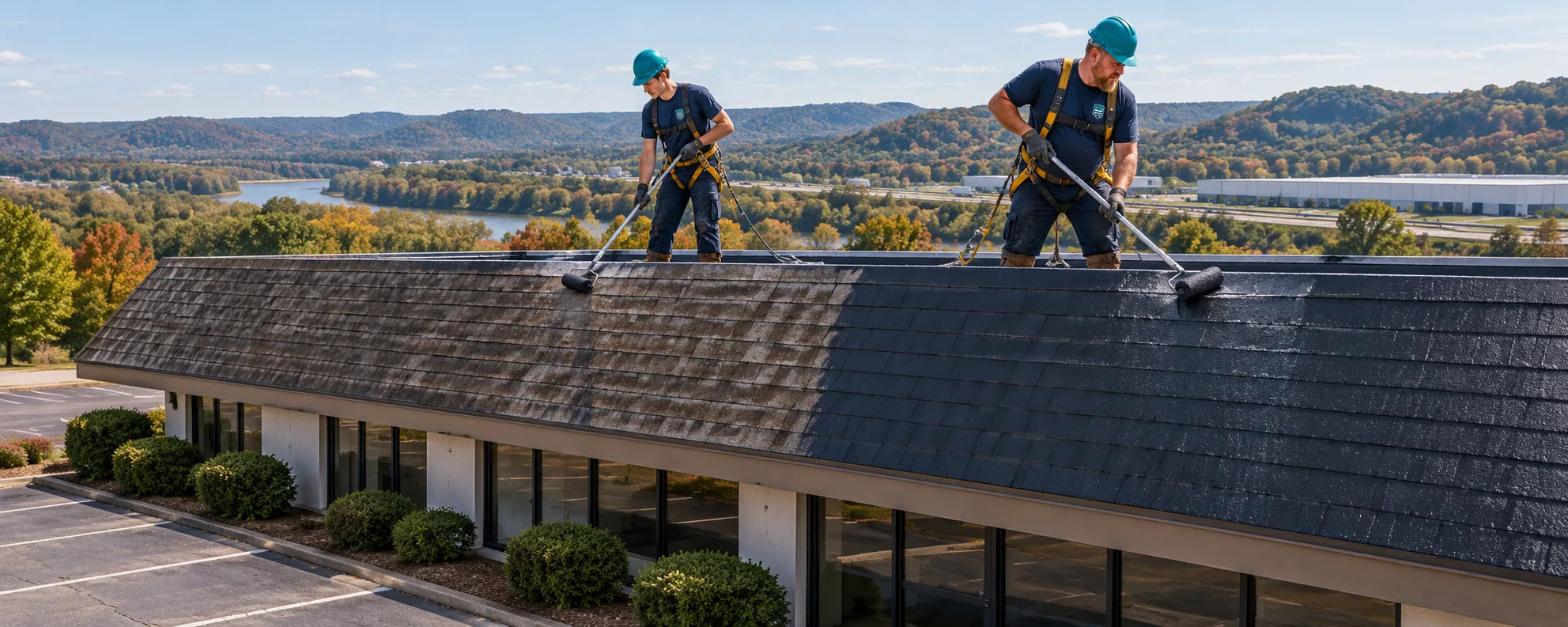
Flat, well-attached shingles the maker approves for coating.
Six answers about coating exposed-fastener and standing seam roofs.
Roofs with solid panels, light to moderate surface rust, and leaks concentrated at screws and laps. Warehouses, plants, shop buildings, church metal sections, and farm barns fit that description. Walk the roof first: holes a screwdriver goes through, panels that flex between purlins, or eaves sagging from bent framing point to panel work before coating.
Very different. An exposed-fastener R-panel roof has hundreds of screws, each one a leak point, plus sealant along every side lap. Standing seam hides its clips, so the work moves to seams, end laps, and trim, and the coating has to flex as panels float on their clips. Check the panel maker's coating guidance first.
Rust comes off down to firm metal, then a rust-inhibitive primer goes on. Light orange bloom is brushed and washed; scaly rust is ground or scraped; white powder on galvanized or Galvalume steel is cleaned and primed with a product for that metal. Holes get a metal patch or a new panel.
Many are. The long metal runs on distribution and fulfillment buildings along I-65, including those around Cedar Grove Business Park, leak mostly at end laps and fastener rows. We coat those roofs in zones so the aisles below can be cleared or covered, and we plan around the holiday shipping rush for work over active aisles.
Yes. A handful of rusted-through or crushed panels are swapped for matching profiles, and the laps around them are sealed before primer goes on. Once the new panels are in, the whole roof is coated as one system. Widespread section loss is a different situation and points to re-paneling.
Each curb gets its own fabric-reinforced flashing where it meets the panel ribs, because water changes direction there. Technicians cross the roof to reach those units, so screws along their path get a closer check, and a walkway pad can mark that path.
Send the roof size and condition for a ballpark range, or call to talk through the leaks on your Shepherdsville building.
Leave a name and number and we will call you back about your commercial roof.
Or call now: (502) 293-5676