Humidity
Morning Drip Inside
You See
Wet floors and tools under the purlins after a clear night.
What It Means
Warm, moist air is hitting cold steel, and foam outside the panels is the fix that reaches it.
Farm Buildings And Steel Shops
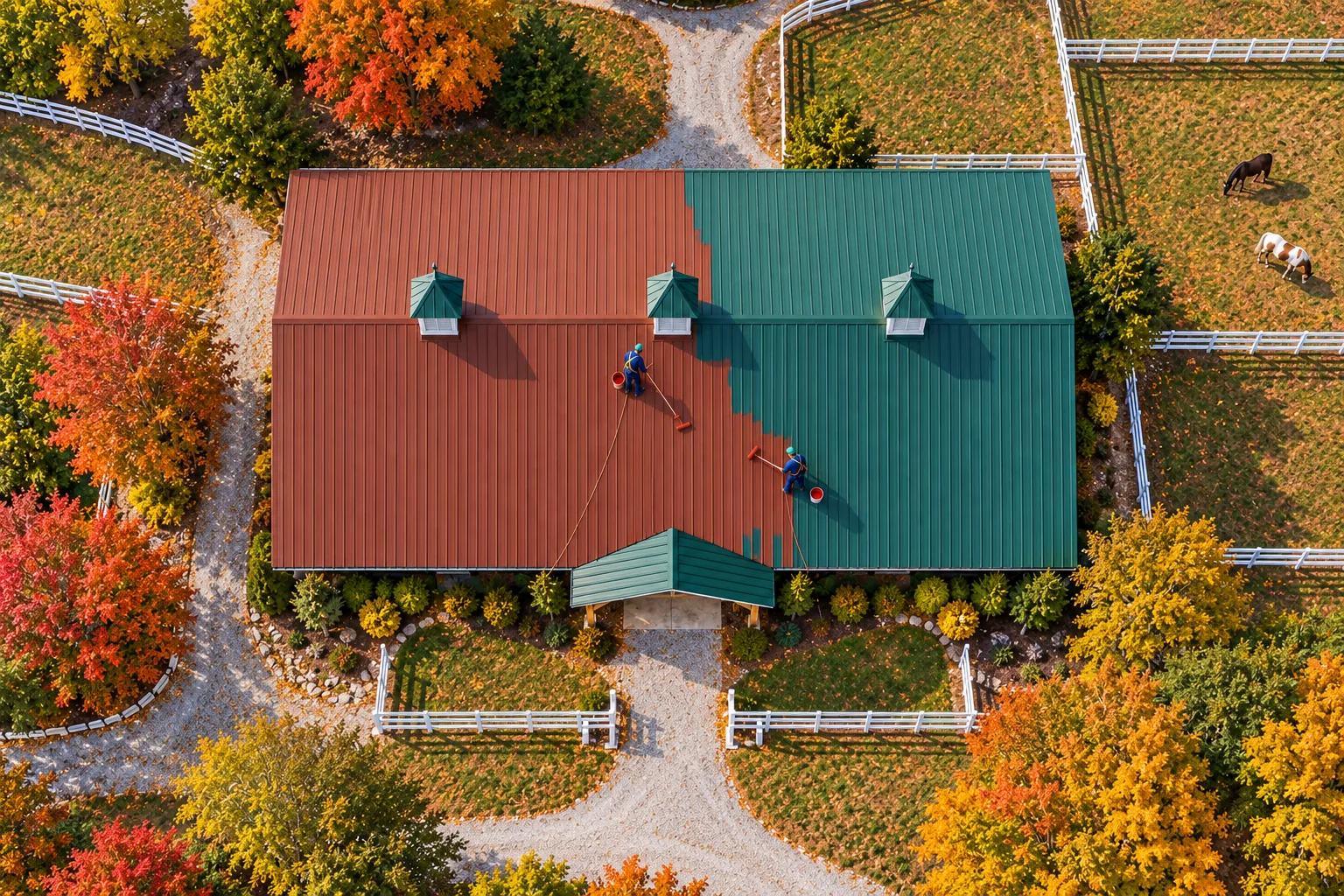
We coat metal roofs on farm buildings and shops around Lebanon Junction. First we check for condensation drip and rust; then we coat the roof or add foam.
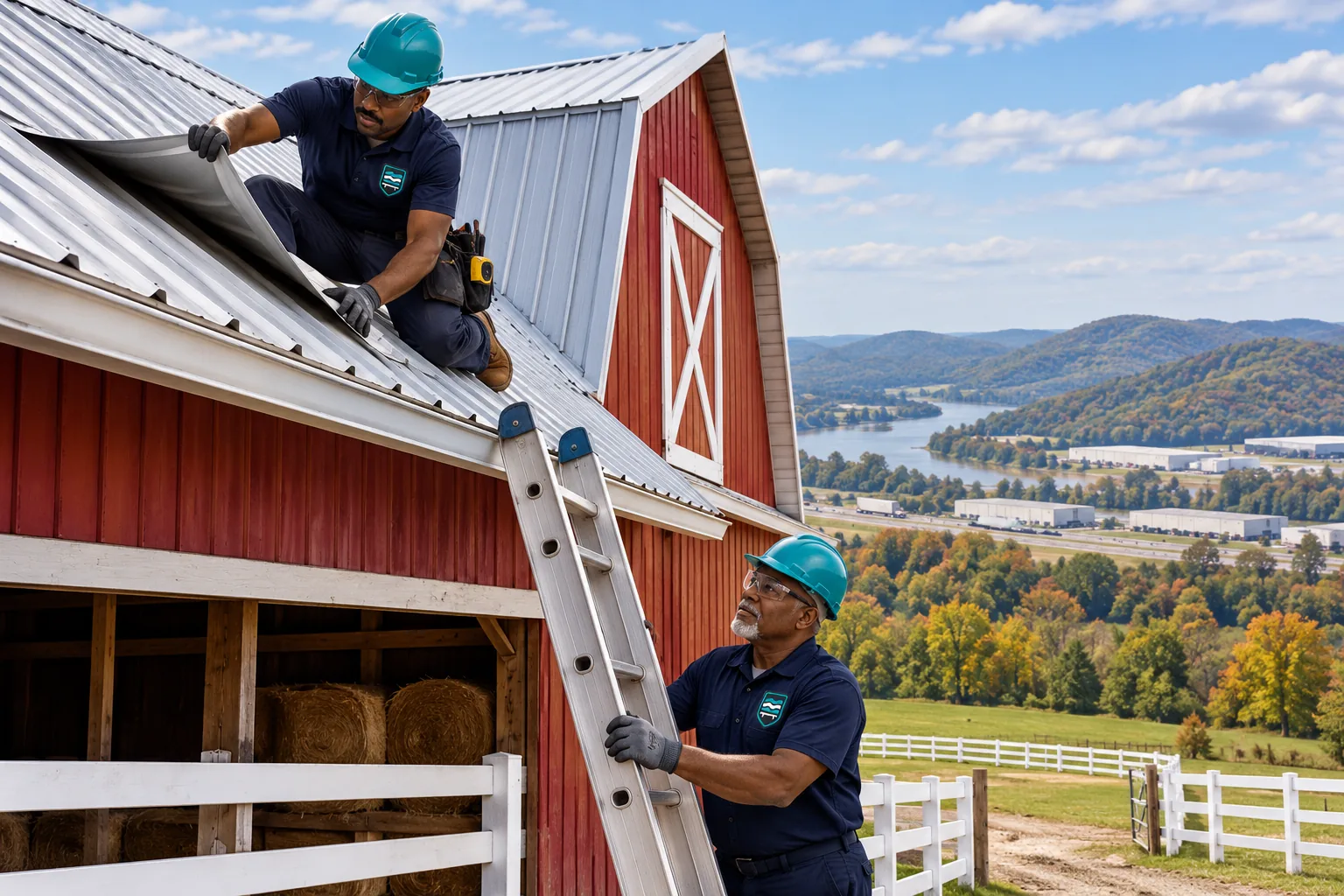
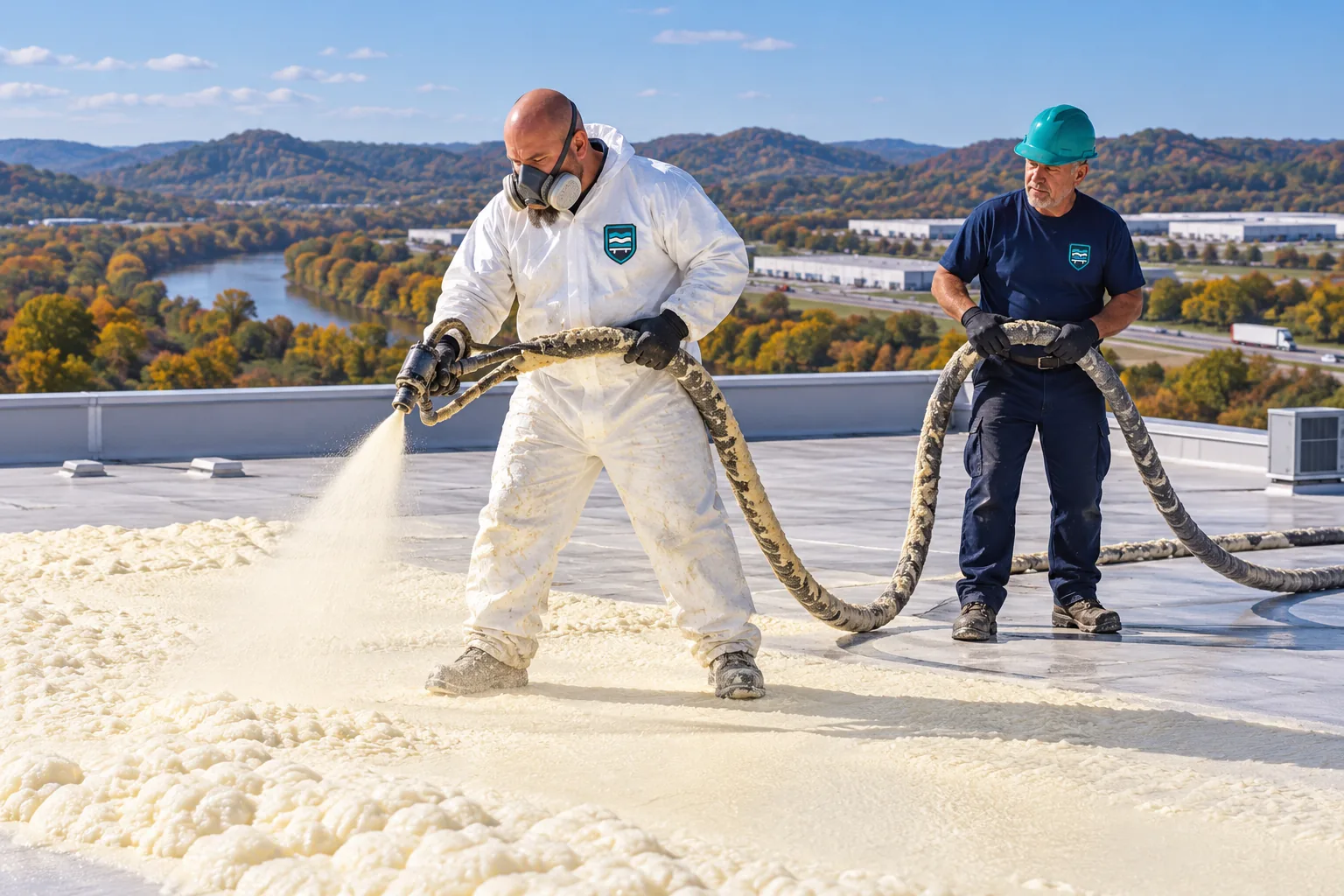
Uninsulated equipment sheds and steel shops around Lebanon Junction often drip on cool mornings with no rain at all. That water is condensation on the panel underside, and a coating alone does little about it.
When the goal is stopping leaks and rust, a straightforward coating fits. When the building also needs insulation, spray foam on the outside keeps the steel closer to inside temperature.
Four conditions we look for on metal buildings around Lebanon Junction.
Wet floors and tools under the purlins after a clear night.
Warm, moist air is hitting cold steel, and foam outside the panels is the fix that reaches it.
Orange edges where panels meet the ground or eaves.
Splash and standing moisture rust the lowest steel first; it is brushed and primed, or cut and replaced.
Birds nesting under the ridge cap.
Closures have shifted or crumbled; new ones go in and the cap fasteners are sealed before coating.
Clear panels that have yellowed and cracked.
Brittle panels are replaced first, since coating stays off them and they leak at the edges.
Three gains a coating or foam system brings to a farm or shop building.
Panel bottoms and eaves rusting faster than the field.
Primer and a continuous coat keep water off the steel that rusts first.
Condensation falling on equipment and stored feed.
Foam under the topcoat keeps the panels warmer, so less moisture condenses inside.
Pulling steel off an equipment shed full of machinery.
Coating or foam goes on over the existing panels, so equipment can stay inside.
A steel shop that turns hot by early afternoon.
A white topcoat reflects sunlight, and foam underneath adds insulation where it is wanted.
Four ways we handle farm and shop roofs here.
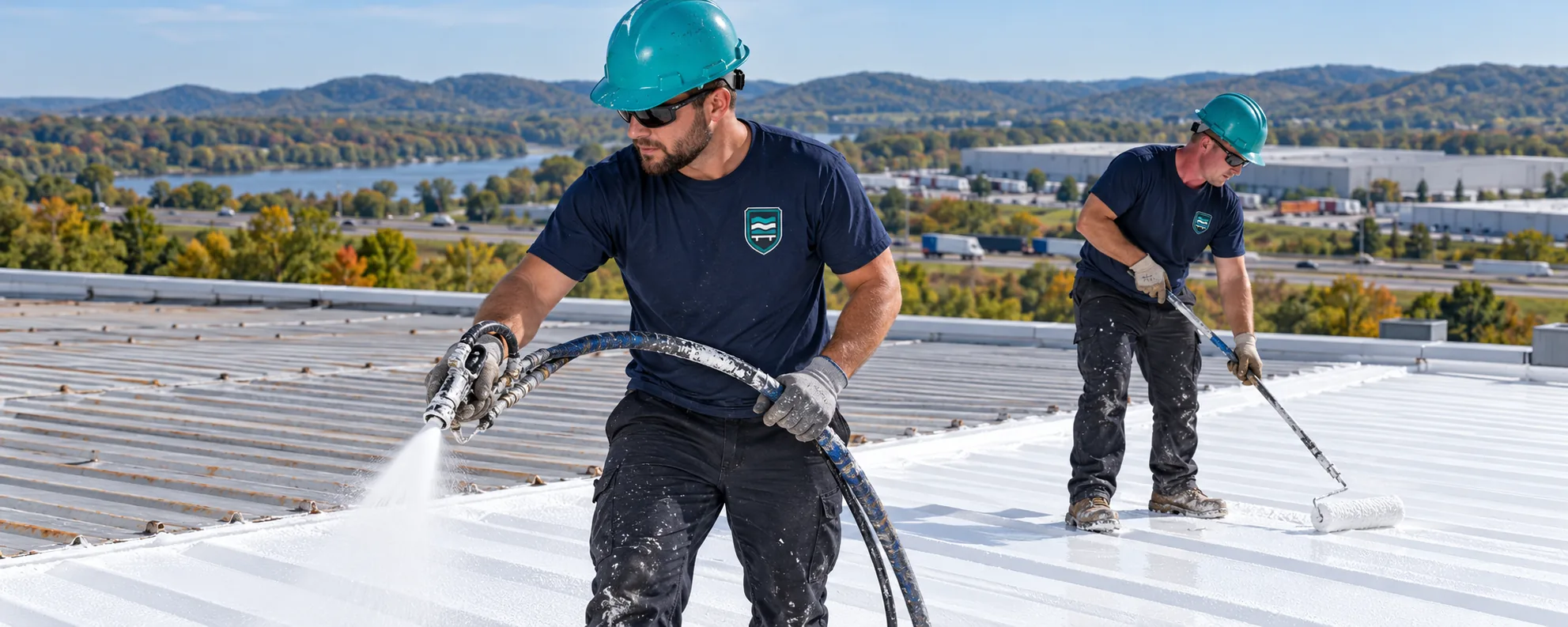
Leaks and rust on a building that needs no insulation get a primed, detailed coating system.
Shops that sweat or bake get foam over the panels and a coating over the foam.
Rusted panel ends near the ground are cut back or replaced before coating.
Steep gable barns that shed water fast take a white acrylic coat.
Tell us whether the building is insulated and when the drips show up. That tells us whether foam or a coating belongs in the plan.
(502) 293-5676Five decisions for a farm building or steel shop.
We check panel bottoms near the ground, ridge closures, barn skylight panels, and the underside for drip marks and rusted purlins.
Drips that follow rain point to laps and screws. Drips on dry, cool mornings point to condensation and toward foam.
Leaks and rust alone call for a coating. Insulation needs, condensation, or both make foam with a topcoat the better match.
Lebanon Junction city hall and the Bullitt County inspector cover roof work inside the city; rural lots outside city limits go straight to the county inspector.
Equipment and stored materials near the eaves get moved or covered, and roof spraying waits for calm wind on open farm lots.
We coat commercial roofs around Lebanon Junction and these nearby towns.
Farther out than these towns? Call us or send us a message.
Mixed metal and shingle roofs along US 31E.
Older metal garages with layers of past patching.
Several metal roofs sharing one unincorporated lot.
Storefront roofs permitted through Louisville Metro.
Roofs checked closely after hail for split coating.
Church and school-area roofs coated around occupancy.
Answers for farm and shop owners around Lebanon Junction.
Confirm permit needs with Lebanon Junction city hall and with the Bullitt County building inspector listed by the Kentucky Department of Housing, Buildings and Construction. Describe the scope accurately: how many panels are being replaced, whether ridge caps, trim, or gutters are reset, and whether foam is added, since foam raises the roof edge.
Bullitt County is in Salt River Electric's service area, a Bardstown-based co-op listed among East Kentucky Power Cooperative's owner-members; check your bill to confirm. Members can ask about commercial efficiency programs. Roof coatings are missing from the published rebate lists, so treat any incentive as unconfirmed until the utility approves it in writing.
A straightforward coating fits when the goal is stopping leaks and rust; foam fits when the building also needs insulation. Uninsulated equipment sheds and shops gain the most from foam, and condensation dripping from the panels on cool mornings points the same way, since outside foam keeps the steel closer to inside temperature.
Barns with solid panels can be coated the same way as a shop. Moisture from animals in a closed barn wears on the panel underside and purlins, so those get checked from inside before anything is planned, and animals are kept clear of the eaves during washing and spraying.
Rural roofs around Lebanon Junction are part of the work we take. Access matters more there: we look at where a lift can stand on firm ground, how far material has to travel, and whether gravel lanes can carry the truck after rain.
Open-sided sheds are coated from the top the same way, with extra attention at the eaves, where wind drives rain under the panel edges and the steel stays damp longest. Purlins and trusses are checked from below, since an open shed makes the underside easy to see.
Enter the roof size for a ballpark range, or call and tell us whether the building drips on dry mornings.
Leave a name and number and we will call you back about your commercial roof.
Or call now: (502) 293-5676