Rain
Ponding Rings
You See
Dark circles of dirt where puddles dried on the panels.
What It Means
Water sat there long enough to leave a mark, which tells us where the roof needs a coating that tolerates ponding.
Low-Slope Roofs That Hold Water
We apply silicone roof coating in Shepherdsville where water sits after storms. First we find every low spot and wet joint; then we clean, prime, and spray the silicone.
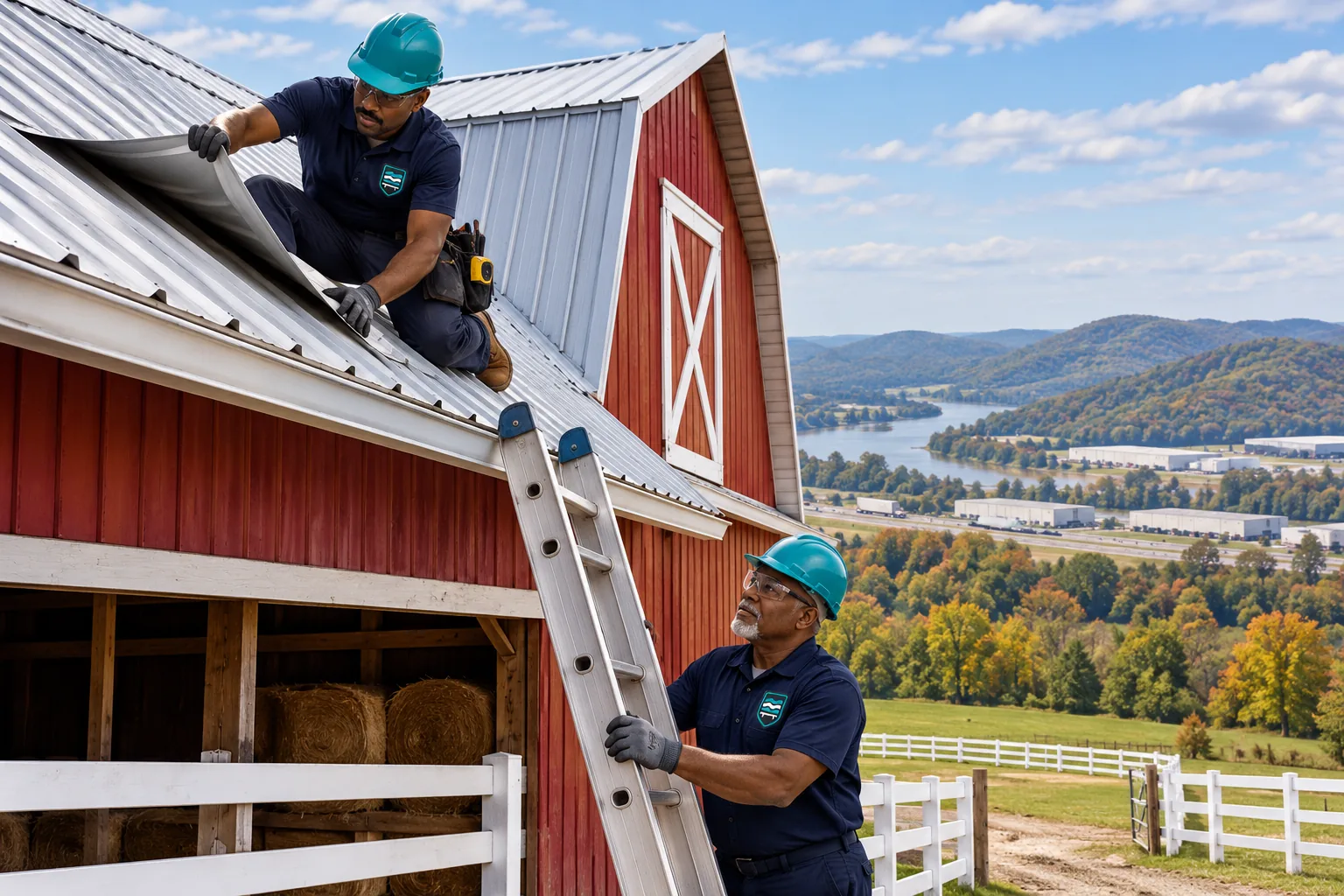
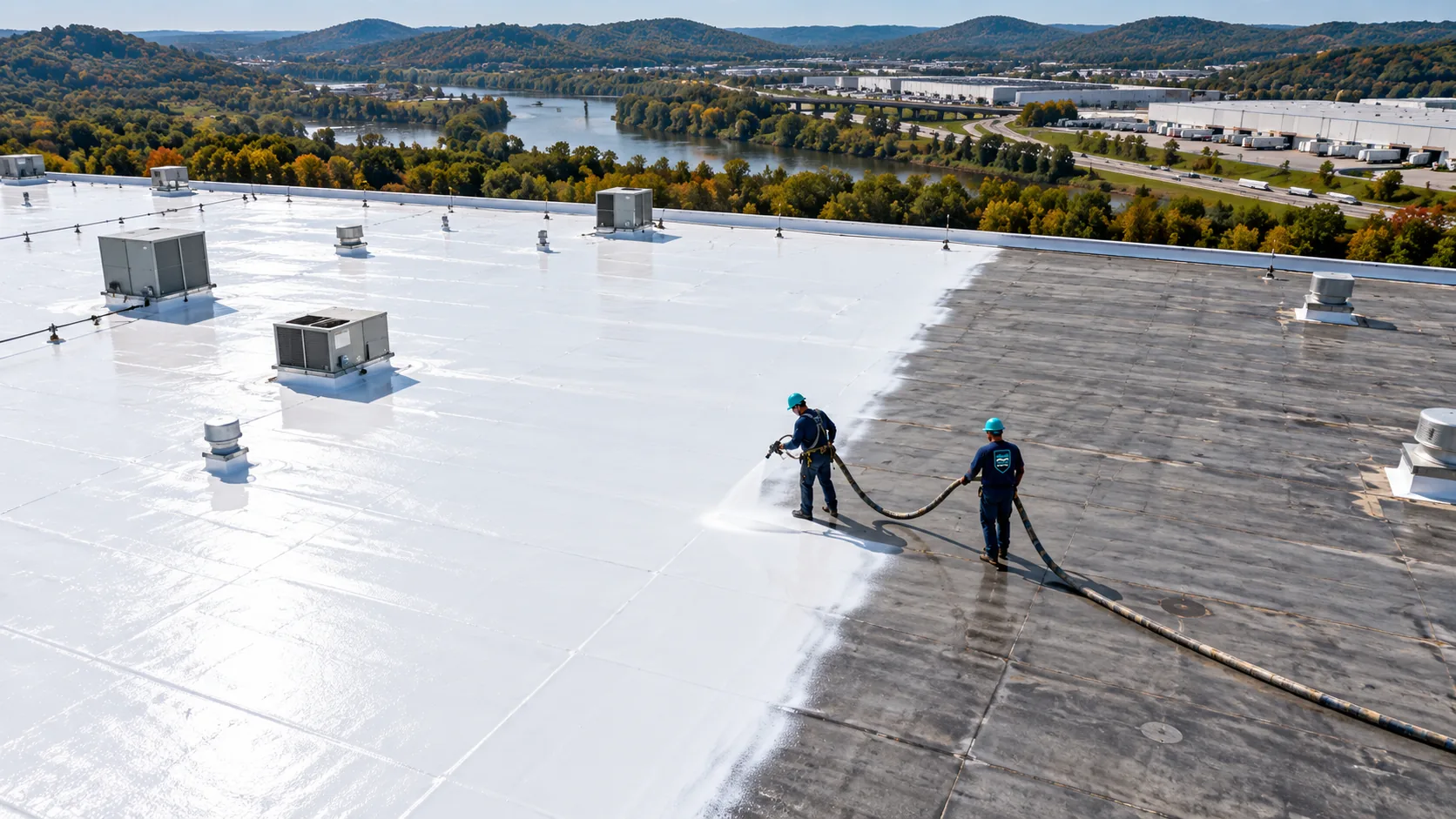
Silicone earns its place on a few specific roofs. These four conditions show where it starts and where it stops.
Silicone keeps its seal under standing water, where an acrylic would soften and wear first.
Dips between purlins on long warehouse runs collect water that this coating tolerates well.
Cooler, humid weather still lets silicone cure, and it sets quickly, so a passing shower has less chance to wash it off.
A softer silicone surface scuffs along busy service paths, and a urethane system resists impact better there.
Water that lingers is the common thread. These are the conditions that bring owners to silicone.
Dark circles of dirt where puddles dried on the panels.
Water sat there long enough to leave a mark, which tells us where the roof needs a coating that tolerates ponding.
Water still pooled at the eave an hour after the rain ends.
Outlets or gutters are undersized or clogged; they get cleared and checked before any coating goes down.
Beads of moisture across the roof until mid-morning.
Coating starts only after the ribs and laps are dry, which often means a late-morning start in cool months.
Green growth along shaded panel edges and laps.
Moss holds water against the steel; it is scrubbed off and the area washed with an approved cleaner.
Slick brown residue around restaurant and retail fans.
Silicone will not bond over grease, so those areas get a degreasing wash and a second check before primer.
Black mastic smeared over screws and laps.
Asphalt bleeds through light coatings; patches come off or get a bleed-blocking primer the coating maker approves.
Silicone is one of four systems we use over metal here. These are the options that compete for a low-slope roof.
Low-slope panels with surface rust get a rust-inhibitive primer, detailed laps, then silicone at the specified thickness.
End laps on long runs get polyester fabric embedded in a base coat before the silicone field coat.
Sections with steady slope and no ponding can take acrylic, which costs less per gallon.
Where dips hold water, foam can be tapered toward drains before a topcoat goes over it.
Silicone's strengths line up with the problems standing water causes. Here are the four that matter most.
Puddles lingering on flat sections for days after a storm.
Silicone holds its seal under ponding, so low spots stay protected between rains.
Afternoon storms rolling in during a coating day.
It sets quickly once applied, so a passing shower has less chance to wash it off.
Low-slope roofs that would otherwise come off in sections.
The coating goes over the existing panels, keeping that steel out of a dumpster.
A coating that will wear thin someday.
A silicone roof can be refreshed later with new silicone over a cleaned surface.
Tell us where the water sits and how long it stays. That helps us size up drainage, slope, and whether silicone is the right coat.
(502) 293-5676The five calls we make on every low-slope roof before silicone goes on.
We map where water ponds, check gutter and scupper flow, look for wet insulation from inside, and note grease, moss, and old asphalt patches.
Dry, firm panels move ahead. Wet insulation or sagging framing is fixed first, because silicone sealed over a wet roof traps the moisture.
Silicone wins where water sits; drained, pitched sections of the same building may take acrylic instead to keep the cost down.
Laps, screw heads, curbs, and skylight edges get primer and fabric-reinforced detail before the silicone field coat.
Dirt pickup dulls silicone, so plan on gentle washing to restore brightness, and on silicone for any later recoat.
If silicone is the wrong match, these systems cover the other cases.
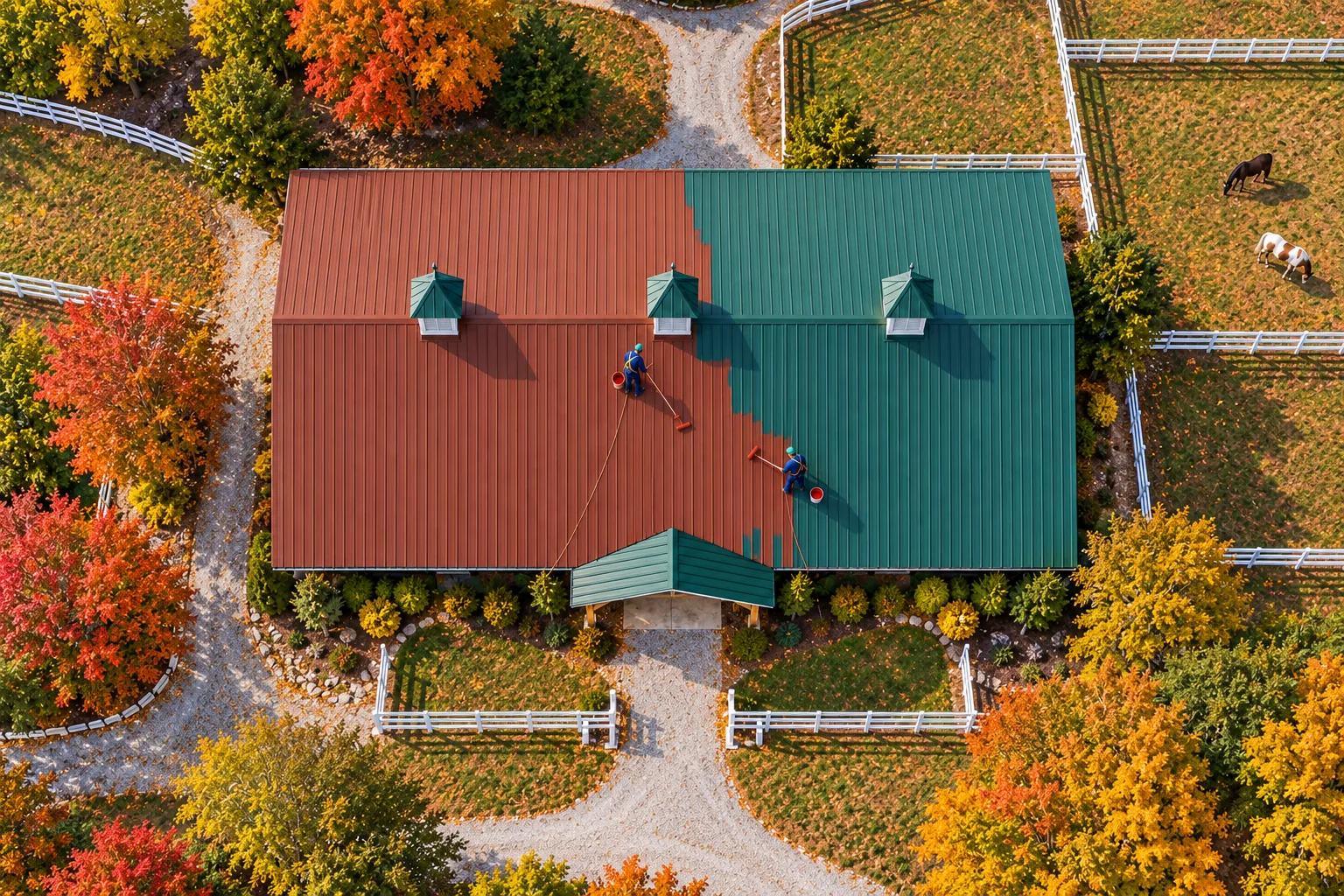
Screws, laps, and rust on exposed-fastener panels.
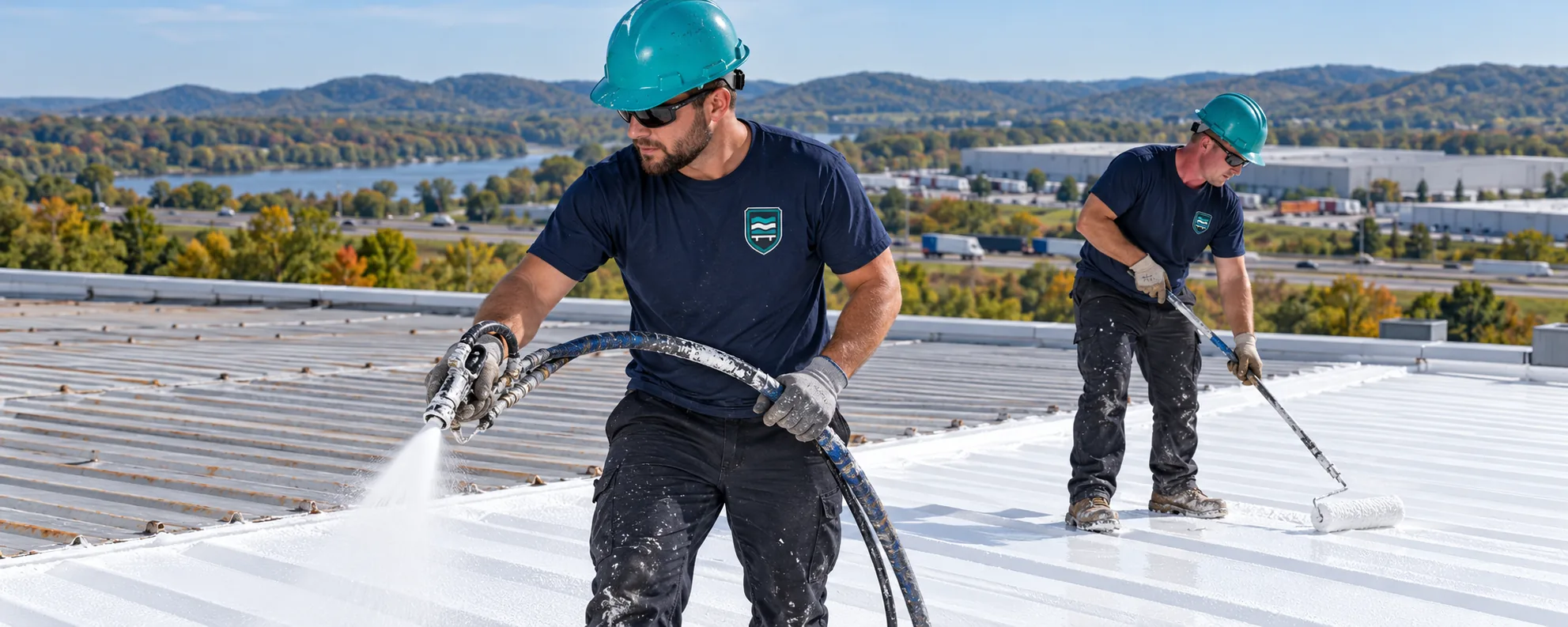
Pitched roofs that shed water fast suit acrylic.
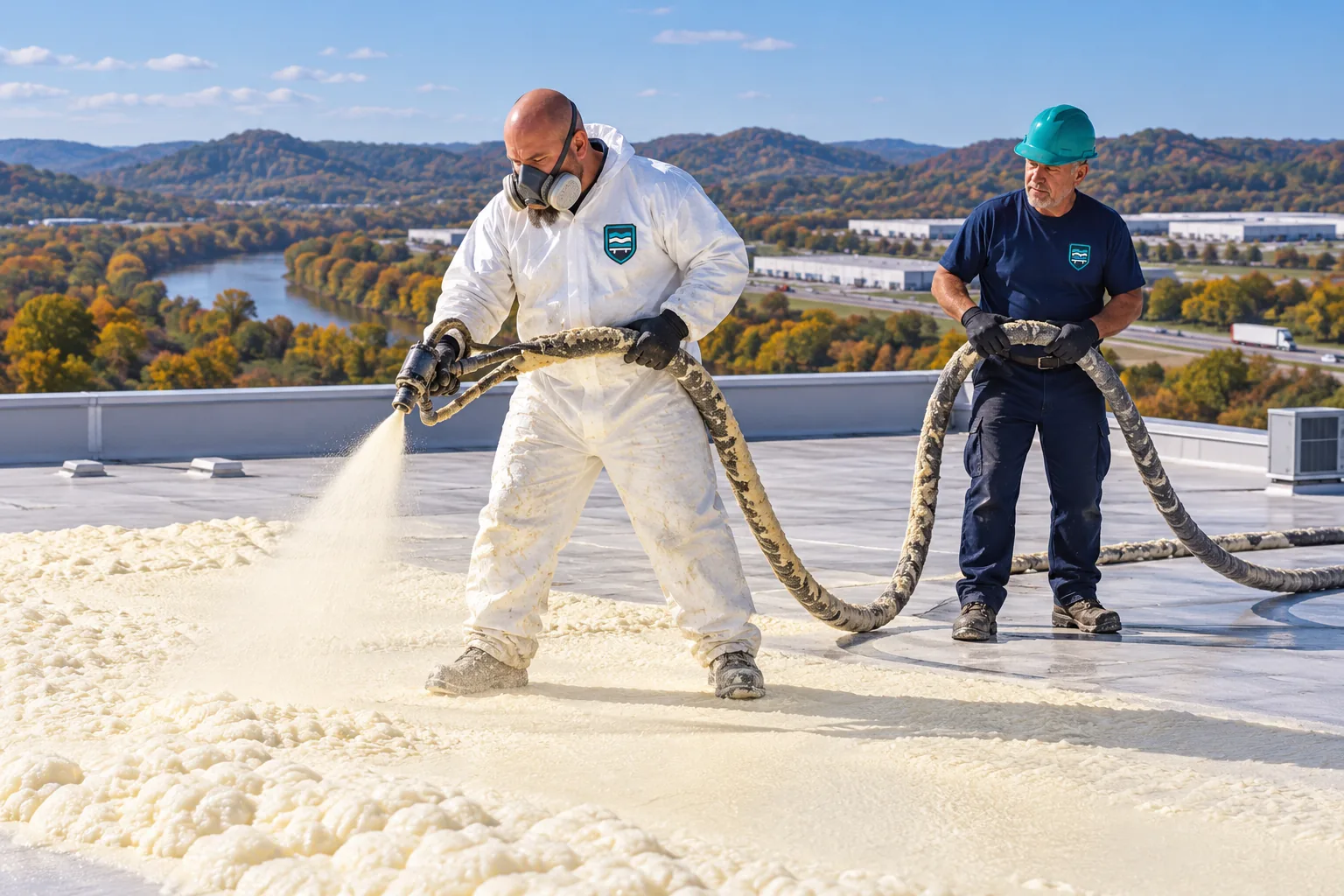
Insulation and added slope under a protective topcoat.
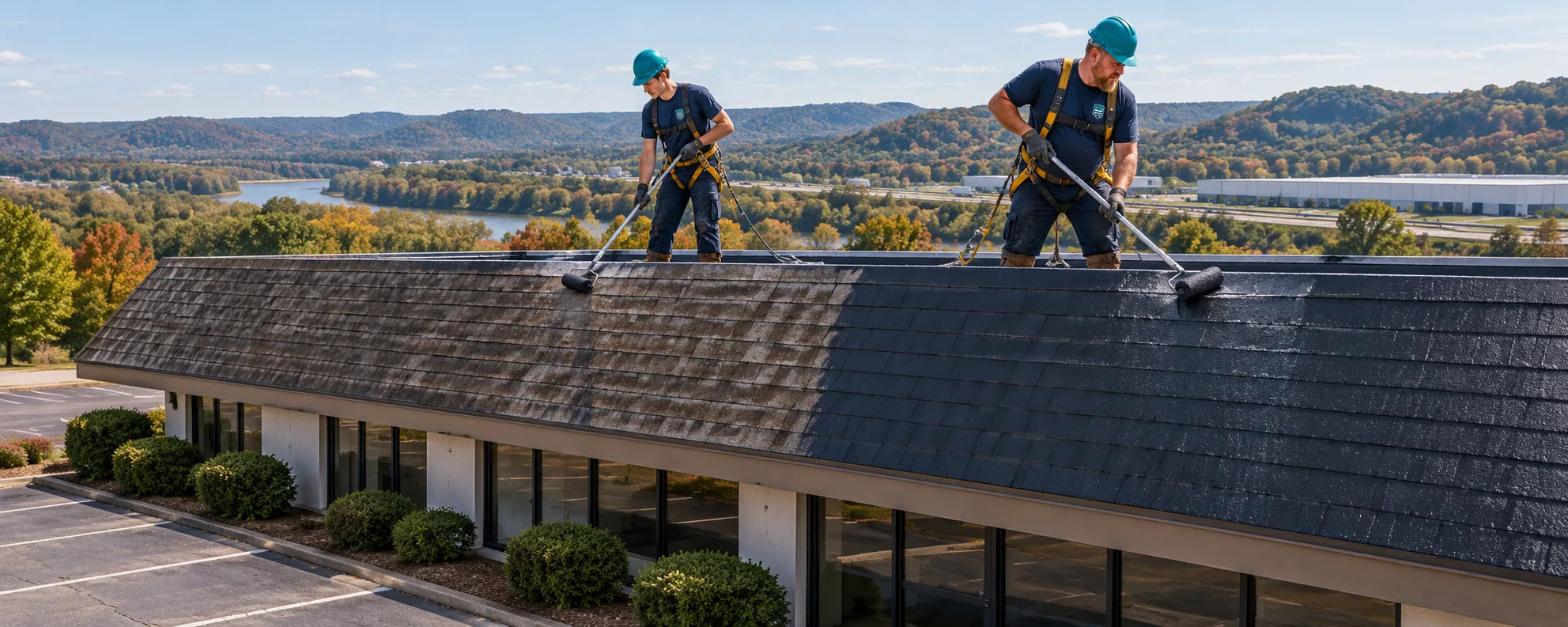
Flat, well-attached shingles the maker approves for coating.
Answers about silicone on Shepherdsville metal and low-slope roofs.
Low-slope metal, flat spots that hold water, and roofs that stay wet with morning dew are where silicone fits, because it keeps its seal under standing water. Long, nearly flat warehouse roofs with sagging purlins are a common case. The tradeoff is dirt pickup, and every later recoat has to be silicone too.
Hail usually dents the steel without splitting a cured silicone coat, since the coating stretches with the panel. Large stones can still crack it at sharp dents or break aging skylight panels. After a storm, walk the roof for dents with exposed primer, take photos for any insurance claim, and recoat the damaged spots.
A pressure washer and a cleaner the coating maker approves remove dirt, chalky paint, and loose rust. Grease near kitchen fans, bird droppings along ridge caps, and moss on shaded slopes get extra scrubbing. Then everything has to dry, including water hiding in end laps, or it bleeds out and blisters the fresh coat.
Often it can, once the acrylic is clean, firmly attached, and primed if the coating maker calls for it. Adhesion test patches settle the question on your roof. The reverse is harder: acrylic and most other coatings fail to bond to silicone, which is why a silicone roof stays silicone.
Silicone collects dust and pollen, so it dulls over time and loses some reflectance. Gentle washing with an approved cleaner brings much of the brightness back. Roofs near gravel lots or busy truck aprons pick up grime faster, which is worth weighing against acrylic on sections that drain well.
Thickness follows the coating maker's specification for that system and that roof. During application the crew checks it with a wet-film gauge, then walks the roof for thin or missed spots before calling a section done. Laps and screw heads carry extra material from the detail coat underneath.
Enter the roof size for a ballpark range, or call and describe where the water stands after a storm.
Leave a name and number and we will call you back about your commercial roof.
Or call now: (502) 293-5676